

/images/ppid_a911dc6a-image-177105956122469810.webp)
The crowds at the janaza for Bangladesh’s first woman Prime Minister, Khaleda Zia, ran into the lakhs. Local TV stations broadcast every detail of the funeral rites, and all New Year’s Eve celebrations were cancelled across the city. Many would wonder whether this turnout was for a sitting Prime Minister or the head of a party that has been out of power for years.
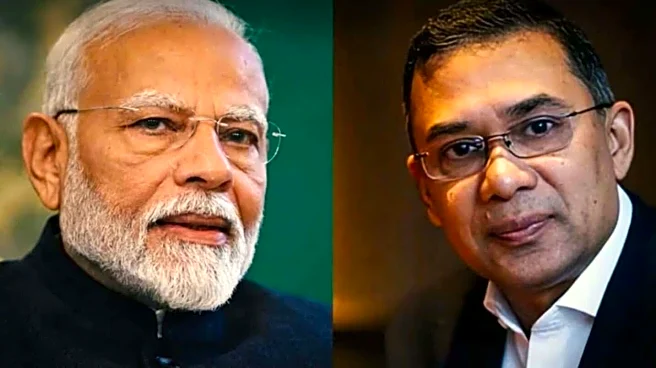
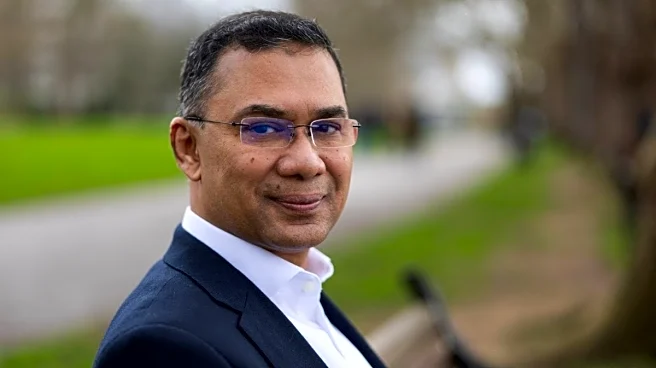
However, the attention that BNP leader Khaleda Zia received, along with the fact that dignitaries from Pakistan and India made a point of attending and offering condolences to Tarique Rahman, her son and now the apparent heir of the BNP, shows that many recognise the potential for the BNP to emerge as the winner in next year’s 12th February polls.
In India, concerns are rising over attacks
on minorities, including both Hindus and Christians. Additionally, the issue of infiltration has become a major political topic, especially in Bengal. India has limited options regarding whom to support for the formation of the next government in Bangladesh. The main options are the BNP, the NCP, and Jamaat-e-Islami. It is impossible for India to do business with Jamaat due to their strong anti-India stance and radical views on minorities. As such, the BNP remains the most viable option.
Tarique Rahman, too, is under pressure to fulfil his promise of offering a “new Bangladesh.” But he finds himself in a dilemma. During her time in power, Khaleda Zia was criticised for allying with Jamaat, a decision that hurt her politically. For Tarique to completely distance himself from Jamaat would be difficult. However, to ensure foreign aid and development, Tarique must advocate for a government that does not discriminate, as global opinion is becoming increasingly cynical.
Meanwhile, waiting in the wings is Bangladesh’s large youth population of over 46 million, many of whom participated in the uprising that led to the downfall of Sheikh Hasina’s government last year. Among them emerged the National Citizen Party (NCP), which has allied with the radical Jamaat, who hold significant influence in rural areas.
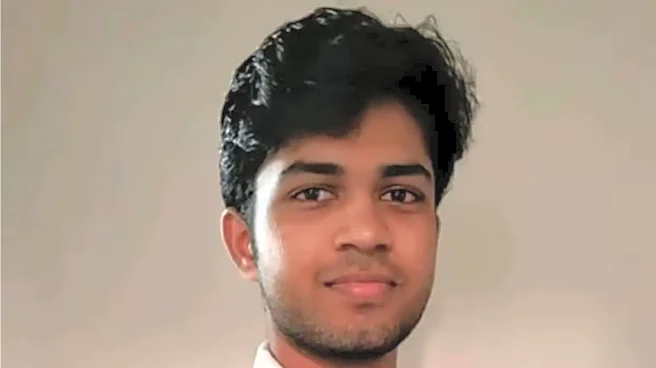
Anti-India sentiment is gaining momentum, particularly with Sheikh Hasina still in power in Delhi. This youth movement has rallied around Osman Hadi, whose brutal murder has sparked a campaign under the slogan “I too am Hadi.” While Hadi was seen as anti-India and radical by some, he was undeniably a leader that many young and aspirational Bangladeshis gravitated towards.
The question remains: can Tarique, a relatively younger leader, fill this aspiration? Or will the NCP-Jamaat coalition tap this vote?
The struggle for democracy in Bangladesh could be violent and challenging.
/images/ppid_a911dc6a-image-177106302538573741.webp)