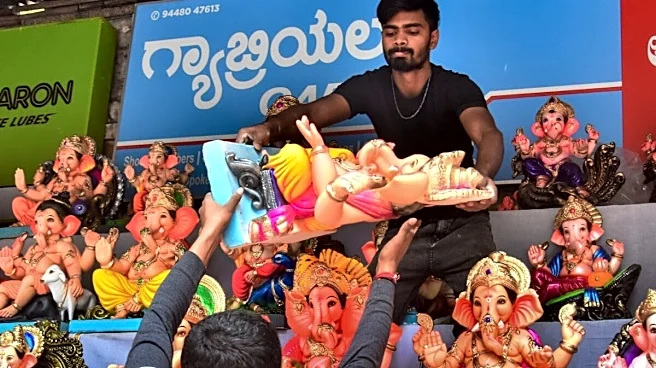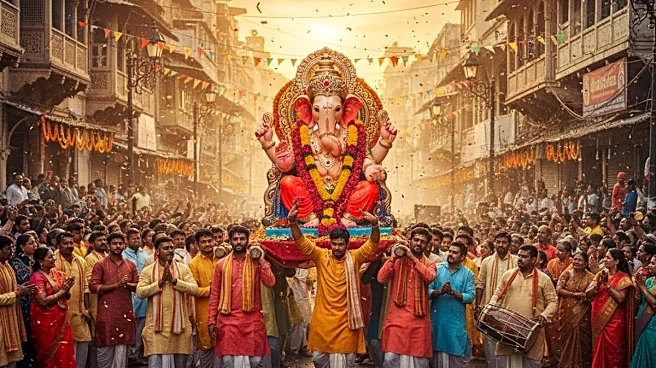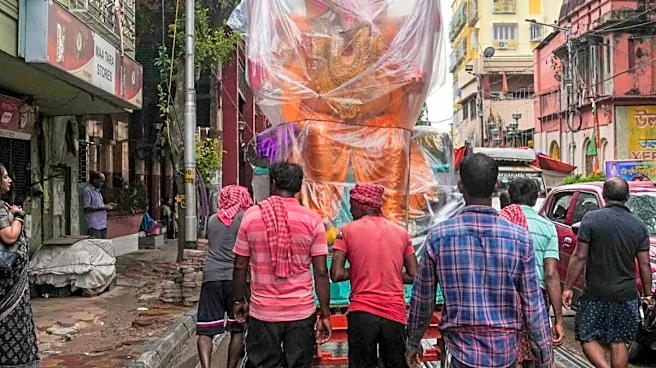



Ganesh Chaturthi is a festival of devotion, family, celebration and renewal, during which devotees welcome Lord Ganesha into their homes and community pandals. The arrival of Ganpati Bappa marks the beginning of a period of prayers, aarti, offerings and togetherness. But why do some families keep Ganesha for one-and-a-half days while others celebrate for three, five, seven or the full ten days?
The answer lies in India’s diverse regional and family traditions. Each duration is followed as a customary choice, culminating in Ganpati Visarjan. Ganesh Chaturthi will be celebrated on Monday, September 14, beginning another festive cycle.
Why do we bring Ganpati Bappa home?
Bringing Lord Ganesha home during Ganesh Chaturthi is traditionally understood as welcoming the deity into the household.
Ganesha is worshipped as the remover of obstacles and as the deity associated with wisdom, auspicious beginnings and prosperity.
Read More: Ganesh Chaturthi 2026: When To Bring Ganpati Bappa Home On September 13 Or 14?
For many families, Ganpati Bappa’s arrival is therefore more than an annual ritual. It becomes a time when family members come together for puja, aarti, bhog and prayer.
The festival also carries an important philosophical idea: arrival and departure are both part of the cycle of life.
The idol is installed and worshipped during Ganpati Sthapana, the ritual ceremony of placing Lord Ganesha’s idol in the home or pandal. After the celebrations, the idol is immersed in water during Ganpati Visarjan.
What does Ganpati Sthapana symbolise?
Ganpati Sthapana is the ritual installation of Lord Ganesha’s idol in the home or a public pandal.
The idol becomes the focus of worship during the family’s chosen period of celebration.
Read More: Ganesh Chaturthi 2026: Where To Place Lord Ganesha Idol At Home?
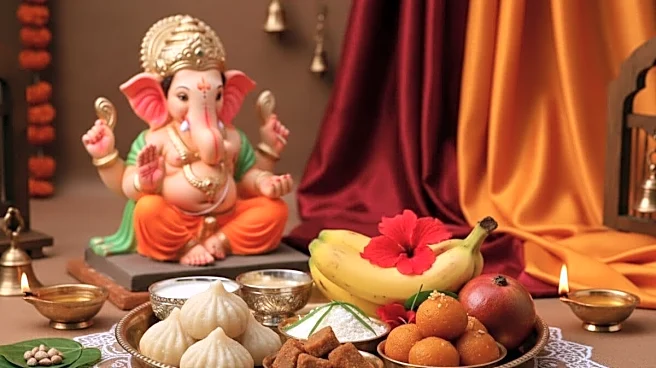
Devotees perform puja, offer flowers and durva, prepare modaks and other bhog, and conduct aarti.
The installation is traditionally associated with invoking Ganesha’s presence and seeking his blessings at the beginning of an auspicious period.
Why does Ganpati leave after a few days?
The temporary nature of the Ganpati idol is an important part of the festival.
After the period of worship, devotees perform Ganesh Visarjan, immersing the idol in water.
The ritual is traditionally understood as a symbolic return of Ganesha to his divine abode while reminding devotees of the impermanent nature of the physical world.
Read More: Ganesh Chaturthi 2026: What To Offer To Lord Ganesha? Bhog, Naivedya And Prasad List
In this sense, Ganesh Chaturthi has both a celebratory beginning and an emotional conclusion.
The popular farewell expression “Ganpati Bappa Morya, Pudchya Varshi Lavkar Ya” captures this sentiment, the devotees bid farewell while expressing the hope that Bappa will return the following year.
How many days is Ganpati kept at home?
There is no single mandatory duration followed by every Ganpati devotee.
Depending on regional and family traditions, Ganesha may be worshipped for:
- One-and-a-half days
- Three days
- Five days
- Seven days
- Ten days
Some families may also follow other immersion schedules.
Therefore, a one-and-a-half-day Ganpati is not less traditional than a ten-day celebration. The duration reflects the family’s established practice, convenience and local custom.
Read More: Ganesh Chaturthi 2026: Famous Pandals To Visit In Mumbai And Pune | Photos
Why is Ganpati kept for 1.5 days?
The one-and-a-half-day Ganpati is particularly common in Maharashtra.
In this tradition, Ganesha is brought home on Ganesh Chaturthi and worshipped through the following day before the Visarjan ceremony.
The exact timing of immersion depends on the family’s tradition and the applicable Panchang.
For households with limited time or those following a longstanding family custom, the one-and-a-half-day celebration provides a complete festival cycle without requiring the idol to remain at home for the entire Ganeshotsav.
It should not be interpreted as a shortened or incomplete form of worship.
Read More: Ganesh Chaturthi 2026 Wishes In Different Indian Languages: Messages, Greetings And Quotes
What is the significance of 3-day Ganpati?
Some families keep Lord Ganesha for three days.
The idol is installed on Ganesh Chaturthi, worshipped through the designated period and immersed on the family’s chosen third-day Visarjan.
Three-day celebrations are followed in different households and regions.
The duration allows families to perform several rounds of daily puja and aarti while maintaining a shorter celebration than the traditional ten-day Ganeshotsav.
There is no universal religious rule requiring every household to keep Ganesha for exactly three days.
Why is Ganpati kept for 5 days?
A five-day Ganpati is another widely followed tradition.
Families keeping Bappa for five days generally perform daily worship, offer bhog and conduct aarti before taking the idol for Visarjan.
Five days also allow extended family members and friends to participate in the celebration.
Read More: Hartalika Teej And Ganesh Chaturthi 2026: 4 Rare Coincidences, 3 Auspicious Yogas, Puja Time
For some households, this duration provides a balance between the shorter one-and-a-half or three-day observance and the full ten-day festival.
What is the significance of 7-day Ganpati?
Some devotees choose a seven-day Ganpati celebration.
The idol remains in the home or pandal for a week of devotional activities before immersion.
As with the other durations, the significance comes largely from the family’s or community’s established tradition rather than from a universal rule that says Ganesha must remain for exactly seven days.
The longer stay also gives devotees more opportunities to participate in daily aarti, bhog and community celebrations.
Why is Ganpati celebrated for 10 days?
The ten-day Ganeshotsav is the best-known extended form of Ganesh Chaturthi.
The festival begins with Ganesh Chaturthi and culminates on Anant Chaturdashi, when many devotees perform the final Visarjan.
The ten-day period allows communities and families to organise extensive devotional and cultural programmes.
Public Ganpati celebrations in particular have developed into major community festivals featuring decorations, cultural events, devotional programmes and social activities.
What is Anant Chaturdashi?
Anant Chaturdashi is the fourteenth day of the bright fortnight and is traditionally associated with the conclusion of the ten-day Ganesh festival.
It is an important day for Ganpati Visarjan.
In 2026, Anant Chaturdashi falls on Friday, September 25.
However, households following one-and-a-half, three-, five- or seven-day traditions will perform Visarjan earlier according to their chosen schedule.
Ganesh Chaturthi 2026: Date and Muhurat
In 2026, Ganesh Chaturthi will be celebrated on Monday, September 14.
The Chaturthi Tithi is given as:
- Chaturthi Tithi begins: 7:06 AM on September 14
- Chaturthi Tithi ends: 7:44 AM on September 15
- Madhyahna Ganesha Puja Muhurat: 11:02 AM to 1:31 PM
- Puja duration: Approximately 2 hours 28 minutes
What happens during the days Ganpati stays home?
The days between Sthapana and Visarjan are generally filled with devotional activities.
Families perform:
Daily puja: Lord Ganesha is worshipped each day with flowers, durva, diya, incense and other traditional offerings.
Aarti: Many households perform morning and evening aarti.
Bhog and prasad: Modaks, fruits, sweets and other vegetarian preparations are offered to Ganesha and subsequently distributed as prasad.
Family gatherings: Ganpati celebrations often bring together relatives, friends and neighbours.
Community worship: In public celebrations, devotees may participate in cultural programmes, devotional music and other community activities.
Why is Visarjan important?
Ganesh Visarjan is the concluding ritual in which the Ganesha idol is immersed in water.
At first glance, the ritual can seem contradictory: devotees spend days welcoming, decorating and worshipping the deity, only to eventually immerse the idol.
But that apparent contradiction is central to the symbolism of the festival.
The physical idol is temporary. The devotion represented by it is not.
Visarjan can therefore be understood as a reminder of impermanence, renewal and the cyclical nature of existence.
Ganpati Visarjan: What does it symbolise?
The immersion traditionally represents Lord Ganesha’s return after his stay among devotees.
The festival thus follows a cycle:
Welcome – Worship – Celebration – Farewell – Return
This cycle is one reason Ganesh Chaturthi carries such emotional significance for devotees.
The farewell is not viewed simply as an ending. It contains the expectation of Ganesha’s return in the following year.
Is 10-day Ganpati more auspicious than 1.5-day Ganpati?
Not necessarily. This is an important distinction.
The number of days a family keeps Ganpati is generally determined by family tradition, regional custom and personal circumstances.
A family that has always celebrated one-and-a-half-day Ganpati is not required to keep the idol for ten days to make the worship more meaningful.
Likewise, families that traditionally celebrate the full ten-day festival can continue that practice.
The devotional significance does not depend solely on the number of days.
Can Ganpati be kept for only one day?
Yes, some devotees may follow a one-day or shorter observance according to their family or regional practice.
The important consideration is to follow a consistent and respectful tradition for Sthapana and Visarjan.
Rather than treating the duration as a competition, devotees can choose the schedule that works for their household while respecting their religious customs.
Why does Ganpati return every year?
The annual arrival of Lord Ganesha is part of the emotional and devotional structure of Ganesh Chaturthi.
After Visarjan, devotees look forward to welcoming Bappa again the following year.
The cycle gives the festival its distinctive character: joy at arrival, devotion during the stay and emotion at departure.
The phrase “Ganpati Bappa Morya” is therefore closely associated with both celebration and farewell.
Ganpati at home: A simple daily routine
Families keeping Ganesha at home can maintain a simple routine:
- Clean the puja area.
- Bathe and wear clean clothes before worship, according to tradition.
- Light the diya.
- Offer flowers and durva.
- Offer modak, fruits or other naivedya.
- Recite Ganesha prayers or mantras.
- Perform aarti.
- Distribute prasad.
There is no requirement for every household to perform an elaborate ceremony every day.
Ganesh Chaturthi 2026: How to decide the number of days?
Families planning their Ganpati celebration can consider:
- Family tradition: Follow the duration historically observed by the household.
- Regional custom: Local traditions can influence the preferred immersion day.
- Practical considerations: Work, school, travel and other commitments may affect the schedule.
- Puja arrangements: Longer celebrations require arrangements for daily worship, bhog and the eventual immersion.
- Visarjan facilities: Families should also consider safe and environmentally responsible immersion arrangements available in their area.
Eco-friendly Ganpati Visarjan
An environmentally conscious celebration can begin with choosing a natural clay or shadu maati idol.
Families can also minimise plastic decorations and use reusable or biodegradable festive materials.
Where available, artificial immersion tanks or designated community immersion facilities can be used according to local rules.
The idea is to preserve the devotional meaning of Visarjan while reducing avoidable environmental impact.
Ganpati’s arrival and departure: The deeper meaning
The most enduring lesson of Ganesh Chaturthi may be found in its cycle.
- Ganesha arrives.
- The family welcomes him.
- Devotees worship him.
- People gather together.
- Then the idol is immersed.
The physical form disappears, but the faith and memories remain.
This is why the different durations—1.5, 3, 5, 7 or 10 days—should not be viewed simply as different levels of devotion. They are different ways in which families and communities participate in the same larger festival.
/images/ppid_59c68470-image-178923003935669190.webp)

/images/ppid_59c68470-image-178928002254429131.webp)