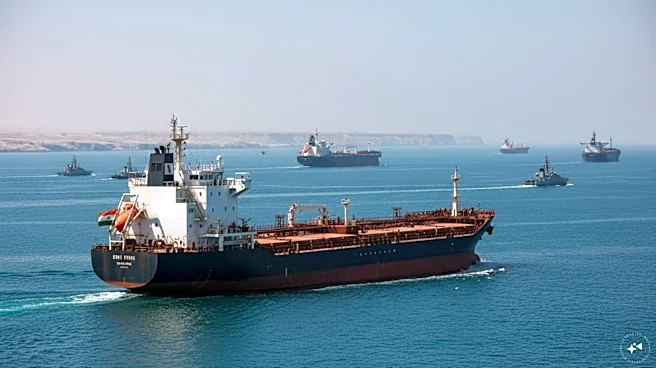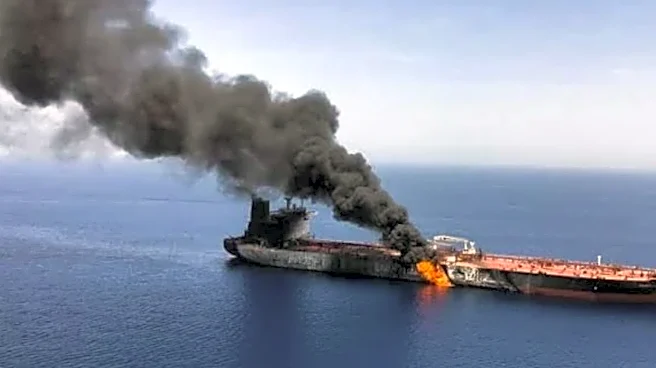




The death of an Indian seafarer after an Indian-flagged cargo vessel was struck by an unidentified aerial object off the coast of Oman has once again brought the dangers facing merchant navy personnel in West Asian waters into sharp focus. The November 2 attack on MSV Al Jusufi, which was carrying 14 Indian crew members, is the latest in a series of deadly incidents involving commercial shipping since the US and Israel launched strikes on Iran on February 28, 2026.
One Indian sailor, identified as Gandhar Nahim Ajij from Gujarat, succumbed to his injuries, while the remaining 13 crew members were rescued by the Omani Coast Guard. Union Shipping Minister Sarbananda Sonowal confirmed the death on Tuesday, November 3, expressing condolences to the bereaved
family and assuring assistance to the survivors.
The Ministry of External Affairs (MEA) has described the latest incident as deeply concerning and renewed India’s call for an immediate end to attacks on commercial vessels and civilian infrastructure in the region. It also urged all parties involved to pursue dialogue and diplomacy, restore peace and ensure free and unimpeded navigation through international waterways.
The latest death takes the number of Indian seafarers killed in attacks on commercial vessels in the Gulf region since the war began to 12. From explosive-laden unmanned boats and projectiles to missile strikes and attacks during naval blockade operations, the incidents have exposed the growing risks faced by civilian crews navigating one of the world’s most strategically important shipping corridors.
March 1: MKD Vyom – First Indian casualty
The first reported Indian seafarer fatality came just a day after the US and Israel launched their strikes on Iran. The Marshall Islands-flagged oil tanker MKD Vyom was attacked approximately 52 nautical miles northwest of Muscat, off Oman’s coast.
According to Oman’s Maritime Security Centre, the vessel was struck by an unmanned surface vehicle, triggering an explosion and fire in its engine room. One Indian crew member, identified in reports as Amrit Lal Solanki, was killed in the incident.
The attack marked an early warning of how quickly the military confrontation could spill over into commercial shipping lanes.
March 1: MV Skylight – Two Indian sailors killed
On the same day, the Palau-flagged tanker MV Skylight came under attack near Khasab, off Oman’s Musandam Peninsula. The vessel was struck by a projectile, causing a fire onboard.
Two Indian seafarers were reported killed in the incident, while four other crew members sustained injuries. The attack, occurring within hours of the MKD Vyom incident, reinforced concerns about the safety of civilian vessels navigating waters close to the Strait of Hormuz.
March 11: MT Safesea Vishnu – One Indian sailor killed
The attacks spread beyond the immediate waters around the Strait of Hormuz. On March 11, the Marshall Islands-flagged oil tanker MT Safesea Vishnu was struck by an unidentified object while conducting ship-to-ship cargo loading operations near Khor Al Zubair Port, close to Basra in Iraq.
Preliminary information released by India’s Directorate General of Shipping indicated that an unmanned speedboat carrying explosives approached the vessel and rammed it, triggering a major fire.
The 28-member crew, including 16 Indians, abandoned the burning tanker and were rescued. However, one Indian seafarer, identified as Deonandan Prasad Singh, an additional chief engineer, died in the attack. The remaining Indian crew members were evacuated to safety.
May 8: Wooden dhow attack – One Indian sailor killed
After a relatively quieter period, another Indian seafarer lost his life on May 8 when a wooden dhow carrying Indian crew members caught fire near the Strait of Hormuz. The sailor, identified as Altaf Talab Ker from Gujarat, died in the incident. The circumstances surrounding the fire were reported amid the continuing military confrontation in the region, although the precise cause and responsibility were not conclusively established in the initial accounts.
The incident highlighted that the threat was not confined to large oil tankers and commercial cargo vessels. Smaller traditional vessels carrying Indian sailors were also exposed to the dangers of operating in the conflict-affected waters.
June 9: MT Settebello – Three Indians killed in US strike
One of the deadliest incidents involving Indian seafarers occurred on June 9, when US forces struck the Palau-flagged tanker MT Settebello off the coast of Oman.
Three Indian crew members – Aditya Sharma, a deck cadet; Shivanand Chaurashiya, a fitter; and Patnala Suresh, the vessel’s chief engineer – were killed in the operation.
The US said the vessel had attempted to breach its blockade of Iranian ports and had ignored repeated warnings. The deaths brought renewed attention to the risks faced by civilian crews caught between competing military operations and restrictions on shipping.
The International Maritime Organization (IMO) condemned the attack, confirming three seafarer fatalities and calling for the protection of civilian shipping and personnel.
July 12: MV GFS Galaxy – Indian engineer confirmed dead
On July 12, the Cyprus-flagged container vessel MV GFS Galaxy was struck by an unidentified projectile while sailing near Omani waters in the Strait of Hormuz.
The attack caused a fire in the engine room and left the vessel without propulsion. Most of the crew, including 10 Indian nationals, were rescued. However, third engineer Heramb Karmarkar, who had gone missing following the attack, was subsequently confirmed dead by his family and the authorities.
The vessel had 11 Indian crew members among its 24-member crew. Karmarkar’s death was another reminder of the dangers faced by engineers and other personnel working in the most vulnerable sections of commercial vessels.
July 13-14: Mombasa B and Al Bahyah – One Indian sailor killed
The next deadly incident involved two UAE-flagged oil tankers, Mombasa B and Al Bahyah, which were struck by Iranian cruise missiles while transiting the Strait of Hormuz in Omani waters.
The UAE said the missiles had hit the two vessels, causing significant damage and fires. One Indian crew member was killed, while eight others, including six Indians and two Ukrainians, were injured.
The incident prompted India to summon Iran’s Deputy Chief of Mission, Mohammad Javad Hosseini, to convey its strong protest over the attack and the loss of an Indian life.
September 23: MV Cape Dao – One Indian sailor killed
On September 23, the Antigua and Barbuda-flagged bulk carrier MV Cape Dao was attacked while sailing towards India near the coast of Oman. The vessel was reportedly struck by projectiles, triggering a fire in its engine room. One Indian seafarer, identified as Suraj Yadav from Uttar Pradesh, died in the attack.
Of the 20 Indian nationals initially reported to be aboard, 19 were rescued. The Indian Embassy in Muscat coordinated with Omani authorities for the evacuation and repatriation of the surviving crew.
India condemned the attack and reiterated that commercial shipping and civilian infrastructure must not be targeted.
November 2: MSV Al Jusufi – Latest Indian casualty
The latest incident occurred on November 2, when the Indian-flagged multi-purpose support vessel MSV Al Jusufi was struck by an unidentified aerial object near the coast of Oman, close to Limah.
The vessel was carrying 14 Indian seafarers. While 13 crew members were safely evacuated and rescued by the Omani Coast Guard, Gandhar Nahim Ajij from Gujarat succumbed to his injuries.
Confirming the death on November 3, Sonowal said the Ministry of Ports, Shipping and Waterways and the Indian Embassy in Oman were coordinating with local authorities to assist the survivors and facilitate the repatriation of the crew and the mortal remains of the deceased sailor.
The MEA reiterated its concern over the continuing attacks, saying the targeting of commercial shipping, seafarers and civilian infrastructure must end. It called for the restoration of free and unimpeded navigation and commerce through international waterways in accordance with international law.
India’s Growing Concern Over Safety Of Seafarers
The latest death comes against the backdrop of an expanding maritime security crisis in West Asia. The Strait of Hormuz, the crucial passage connecting the Persian Gulf to the Gulf of Oman, has been at the centre of the conflict. The waterway is a critical route for global oil and gas shipments, making any disruption consequential for international trade and energy security.
For India, the stakes are high. Indian nationals form a significant part of the global merchant shipping workforce, with thousands serving aboard vessels registered in countries across the world. This means that Indian sailors can be exposed to conflict-related risks even when they are not working aboard Indian-flagged ships.
The government has also stepped up monitoring of Indian seafarers and vessels operating in high-risk waters. However, the repeated attacks underline the limitations of existing safety measures when commercial vessels are caught in the crossfire of military operations.
The death of Ajij aboard Al Jusufi has once again raised the question of how civilian sailors can be protected in waters where the distinction between commercial shipping routes and conflict zones is becoming increasingly blurred.