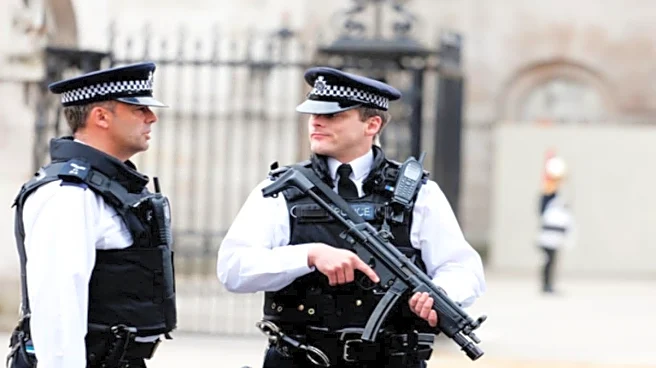


The UK will get its own FBI soon as the government plans to create a new National Police Service (NPS) to take over major investigations and allow local police to focus on everyday crime. Home Secretary Shabana Mahmood said the move would free local forces to deal with offences such as shoplifting, phone theft and anti-social behaviour.
Speaking to the BBC, Mahmood described the NPS as a “British FBI”. She said the plan was “absolutely not” about saving money but about building a new policing model for England and Wales, which she said is currently “broken”.
What the National Police Service will do?
The NPS will take responsibility for counter-terrorism, fraud and organised crime investigations. It will bring together the work of existing bodies such as the National Crime Agency (NCA)
and regional organised crime units under one organisation.
National functions currently handled by local forces will also move to the NPS. This includes counter-terror policing, which is now led by the Metropolitan Police, the National Air Service run by West Yorkshire Police, and National Roads Policing overseen by Sussex Police.
The new service will buy technology, including facial recognition systems, on behalf of all forces. Intelligence and resources will be shared in stages to ensure the same level of security for the public “no matter where they live”, according to the Home Office.
The NPS will cover England and Wales but will be able to operate across the wider UK. It will set national standards and training and will be led by a national police commissioner, who will become the most senior police chief in the country.
The Home Office also said it will look to bring in new talent from outside policing for senior leadership roles.
Mahmood said local officers have been “burdened” with tackling serious crimes without proper training, leaving them unable to deal with everyday offences. She described an “epidemic of everyday crime” that often goes unpunished.
She said the new system would allow everyday crime to be properly dealt with, while national and international criminals would be targeted by the NPS. Although she said everyday crime is rising, overall crime, including serious offences, has fallen.
Wider police reforms planned
The NPS is part of a wider package of police reforms for England and Wales, which Mahmood will outline on Monday. Other proposals already announced include cutting the number of police forces from 43 to around 12 larger “mega” forces.
All police officers will be required to have a licence to practise. Ministers will also gain stronger powers to intervene when police or fire chiefs are judged to be failing.
In November, ministers announced plans to scrap police and crime commissioners in 2028 to save at least £100 million and redirect funding to neighbourhood policing.
The government says facial recognition technology has helped reduce crime, leading to around 1,700 arrests in the past two years. However, campaigners have raised concerns about bias and privacy linked to its use.
Political and policing reaction
Graeme Biggar, director general of the NCA, supported the plan, saying the policing system is out of date. He said crime and technology have changed and now require national and international responses.
Shadow home secretary Chris Philp warned the reforms must not weaken local policing. He said large-scale reorganisation risks harming efforts to catch criminals and may not improve policing on the ground.
The Police Federation said fewer forces do not guarantee better policing for communities. The Association of Police and Crime Commissioners also warned the changes could be costly, slow to deliver and risk distancing police from the public.
Mahmood is seeking new powers to sack police chiefs. She said accountability is essential because the home secretary is ultimately blamed when policing fails.
She said she would have dismissed former West Midlands Police chief Craig Guildford, who initially refused to resign after criticism over a decision to ban Israeli football fans from a match.
The reforms mark another attempt to create a national crime-fighting body. Similar efforts in the past, including the Serious and Organised Crime Agency and the NCA, were also described as a “British FBI”.
/images/ppid_59c68470-image-177077754454222790.webp)





/images/ppid_59c68470-image-177071003473193707.webp)

/images/ppid_59c68470-image-177060263036020993.webp)