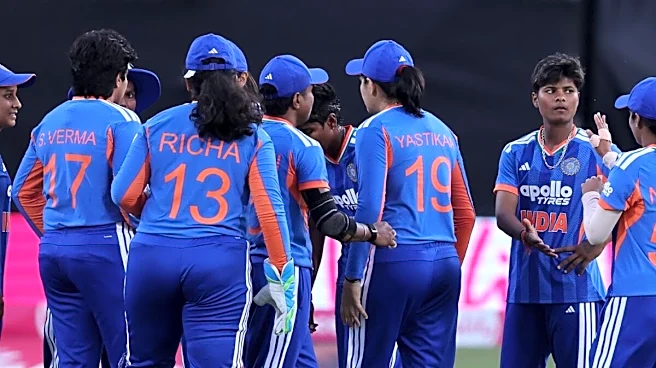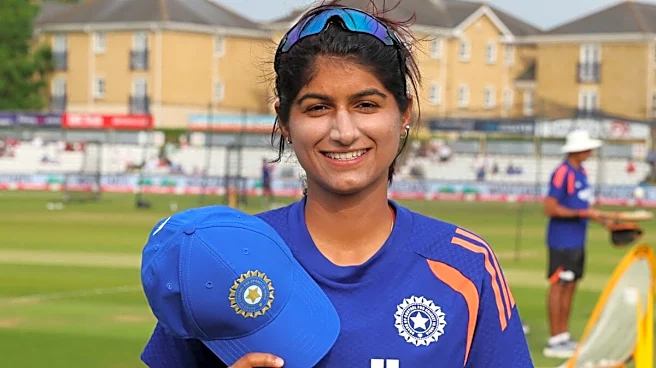

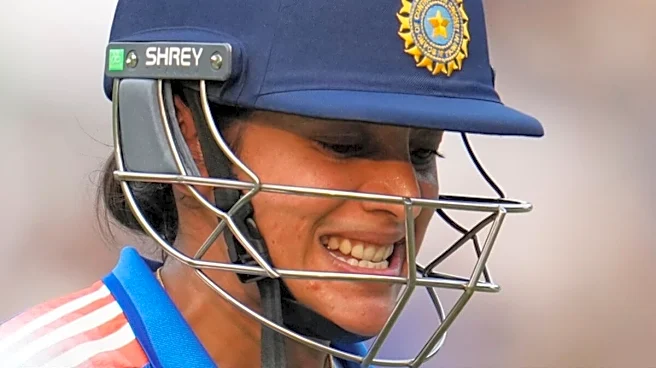
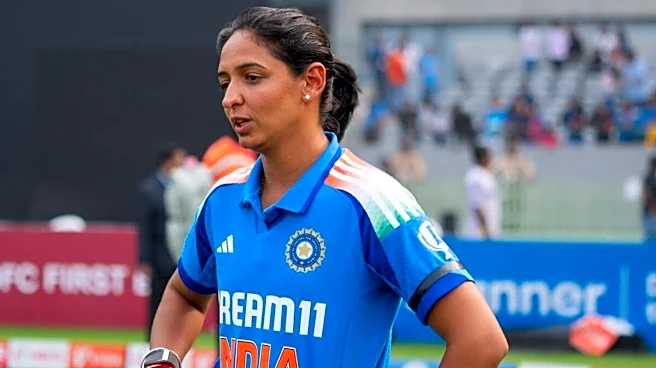
Nandni Sharma continues to make strong first impressions. The rising Indian fast bowler first came into the spotlight earlier this year through the Women’s Premier League (WPL) and has once again made headlines with a match-winning performance on her international debut. The right-arm pacer picked up a three-wicket haul on T20I debut against England, helping India secure a comfortable 38-run victory on Thursday.
At the County Ground in Chelmsford, Nandni returned figures of 3/34 in her four overs, becoming only the second India women pacer to take a three-wicket haul on T20I debut.
The only other Indian to achieve this feat is Soniya Dabir, who returned 3/23 in March 2010, incidentally also against England, in Mumbai.
Best Bowling Figures on India
Women’s T20I Debut (Pacer)
- Soniya Dabir – 3/23 in four overs vs England (Mumbai)
- Nandini Sharma – 3/34 in four overs vs England (Chelmsford)
- Jhulan Goswami – 2/14 in four overs vs England (Derby)
Who is Nandni Sharma?
Born in Chandigarh, the 24-year-old was picked up by Delhi Capitals for Rs 20 lakh ahead of WPL 2026. She quickly grabbed attention after becoming the first Indian to take both a hat-trick and a five-wicket haul in just her second WPL appearance.
She went on to enjoy a standout debut season, finishing with 17 wickets, the joint-highest in the competition, as DC ended the tournament as runners-up.
Her performances earned her a place in the India A squad for the Asia Cup Rising Stars in Thailand. Later, injuries to Amanjot Kaur and Kashvee Gautam opened the door for a maiden T20I call-up, with Nandni included in the ongoing bilateral series against England as well as the upcoming World Cup next month.
Accuracy and variation are her biggest strengths.
In an interview with ESPNcricinfo, Nandini explained how playing with boys led her to work on pace and variations.
“I used to practice with a coach first and then he taught me how to bowl the bouncer,” Nandini said. “In between, I changed my coach after the lockdown. When I was there, I used to play with boys, but they used to pick my ball easily. So, I learned to bowl faster and also develop variations. Because they used to hit easily. Then I learned variations because I was getting hit.”