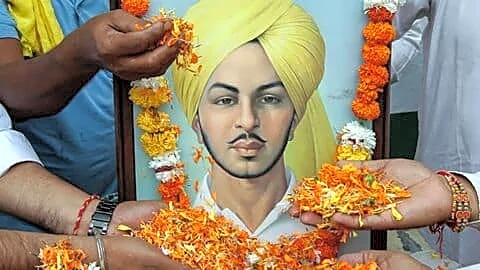



Lucknow, Sep 28 (PTI) Bhagat Singh is remembered across India as the revolutionary who went to the gallows at 23. But a lesser-known chapter of his life connects him closely with Lucknow — through the Kakori train action, its revolutionaries and the writings in which he chronicled their fate.
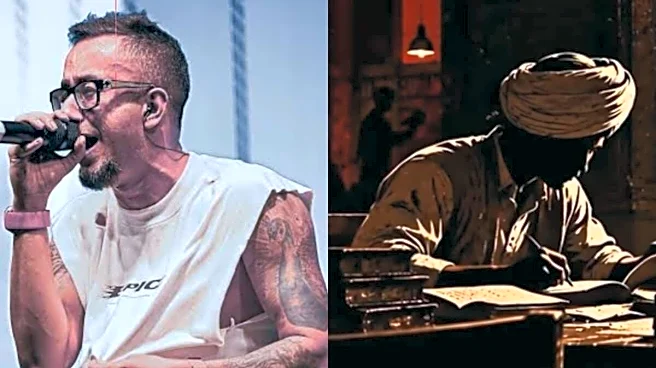
The connection assumes significance on his birth anniversary on September 28, with Lucknow-based Dastangoi artists Pragya Sharma and Himanshu Bajpai bringing together this chapter of his life in a forthcoming Dastan on Bhagat Singh.
On August 9, 1925, Ram Prasad Bismil, Ashfaqulla Khan and their revolutionary associates stopped a train near Kakori, close to Lucknow, and looted the government treasury to fund their revolutionary activities. Except Chandrashekhar
Azad, others involved were subsequently arrested.
Bhagat Singh was living in Kanpur at the time and had already joined the Hindustan Republican Party. The crackdown following Kakori became an important turning point in his political evolution. He was not even 18 at that time.
In May 1927, writing under the pseudonym ‘Vidrohi’, Bhagat Singh published in Punjabi an article titled ‘Kakori Ke Veeron Se Parichay’ (An introduction to the heroes of Kakori). This article finds place in ‘Bhagat Singh Ke Poorn Dastavez’ edited by Chaman Lal.
His own description of the proceedings against the revolutionaries reveals the admiration and emotional attachment he felt towards them.
Recalling the day the verdict was pronounced, he wrote that the revolutionaries arrived singing: “Sarfaroshi ki tamanna, ab hamare dil mein hai, Dekhna hai zor kitna bazu-e-qatil mein hai!”
He described them hearing their sentences “carelessly” and laughing, before the moment came when those who had “launched their boats together into the sea” were to be separated.
Bhagat Singh wrote that ordinary people could not understand the profound love among revolutionaries.
“Those who have stepped into the lane of love after laying down their heads – how can wretched people like us understand their greatness?” he wrote, adding that their mutual affection was so deep that “we cannot know it even in our dreams”.
He then recorded the sentences handed down: three were sentenced to death, one to transportation for life, one to 14 years’ imprisonment, four to 10 years, and the remaining revolutionaries to rigorous imprisonment ranging from five to 10 years.
Bhagat Singh recalled the judge telling them that they were “true servants and self-sacrificing men”, but had chosen the wrong path. “Only in poor India can this be the fate of true patriots,” he wrote.
Describing the final moments of separation, he wrote of the younger revolutionaries bowing before the elders, receiving their blessings and embracing one another with sighs.
He particularly remembered Bismil’s farewell: “Daro-o-deewar pe hasrat se nazar karte hain, Khush raho ahle watan, hum to safar karte hain.”
Bhagat Singh ended his account with a reflection on the sacrifice of the Kakori revolutionaries and the indifference of those outside prison.
“We sigh once and think our duty is done. We do not catch fire, we do not writhe in anguish; we have become so dead,” he wrote, urging people to recognise the suffering of those who had sacrificed themselves.
The article was published under the name ‘Vidrohi’. According to the editorial note in the book, Bhagat Singh was arrested soon after its publication, and the famous photograph of him sitting handcuffed on a charpoy was taken during this period.
Citing ‘Bhagat Singh Ke Sampoorna Dastavez’ edited by Chaman Lal, Sharma said Bhagat Singh was already associated with the revolutionary organisation when the Kakori crackdown took place.
Bajpai, citing another book of significance, ‘Bhagat Singh: Kranti Ka Sakshya’, edited by Sudhir Vidyarthi, said Bhagat Singh’s engagement with the Kakori episode extended beyond political activity to writing and documentation.
“The Lucknow connection therefore was not merely geographical. Kakori, near Lucknow, became an episode that Bhagat Singh observed, studied and wrote about as his own political thought was developing,” Bajpai said.
The forthcoming Dastan on Bhagat Singh, prepared by Sharma and Bajpai, is scheduled to premiere on December 19 in Lucknow. The date marks the martyrdom day of Bismil, Ashfaqulla Khan and Roshan Singh, who were executed on December 19, 1927.
Sharma and Bajpai have previously taken stories of India’s freedom movement and its protagonists to wider audiences through their Dastans, covering figures including Mahatma Gandhi, Wajid Ali Shah, Begum Hazrat Mahal, Netaji Subhas Chandra Bose, Birsa Munda, Chandrashekhar Azad, Jawaharlal Nehru and Kaifi Azmi, besides performing Dastans on the Kakori action.
Their Bhagat Singh Dastan is the latest in this continuing body of work, but the Lucknow connection it explores belongs first to Bhagat Singh himself – the young revolutionary who became a reader, writer and chronicler of the men whose fate in the Kakori case helped shape his own political journey. PTI KIS KSI
KSI