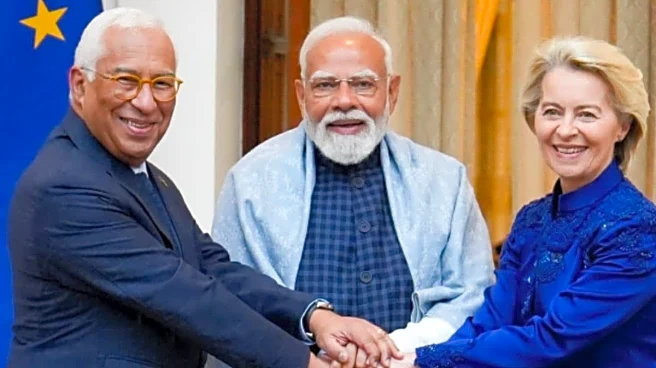

The free trade agreement between India, the world’s fourth largest economy, and the European Union (EU), the second largest economy, is set to consolidate their strengths. Heralding the new era in India-EU
relations, Prime Minister Narendra Modi said the FTA during the visit of European Council President Antonio Luis Santos da Costa and European Commission President Ursula von der Leyen symbolise the unprecedented alignment taking place between the world’s two largest democratic powers. Representing a combined 25% of Global GDP, the two giants have cemented a trusted partnership that fundamentally recalibrates the global trade order.
ALSO READ | BMW, Lamborghini, Porsche To Cancer Medicines: India-EU Trade Deal Will Make These Items Cheaper
This landmark FTA serves as a gateway to unprecedented marketaccess, granting over 99% of Indian exports preferential entry into the EU and catalysing a new era of industrial growth. With an estimated INR 6.41 lakh crore (USD 75 billion) in exports ready for take-off, India’s vital labour-intensive sectors, from textiles and leather to marine products and jewellery, are positioned to thrive under this strategic preferential regime.
How every sector will benefit from India-EU FTA
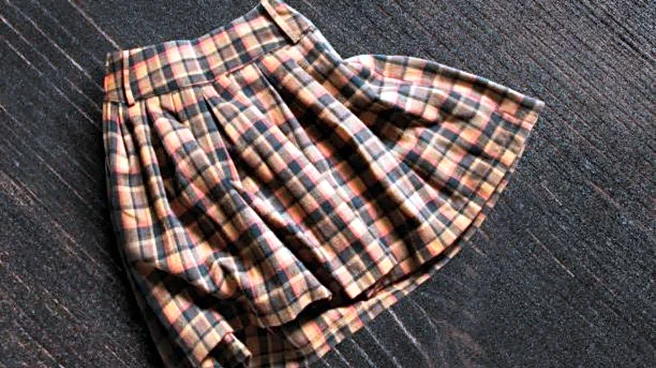
TEXTILE, APPAREL AND CLOTHING
EU tariff down to 0% from 12%
This is a major win for labour-intensive exports and MSMEs, with strong upsidein India’s garment and textile clusters. Zero duty makes Indian garments and textiles meaningfully cheaper on European shelves, which can quickly translate into bigger buyer contracts, longer production runs, and steadier factory utilisation. It opens India’s path to the USD 263.5 Billion EU textile market for imports, where current exports stand at just USD 7.2 Billion.
Key beneficiaries include Tiruppur in Tamil Nadu, Ichalkaranji in Maharashtra, Surat in Gujarat, Ludhiana in Punjab, and Hyderabad-Warangal in Telangana, where easier access can translate into larger EU orders and more factory jobs across spinning, weaving, processing and stitching.
Sharing my remarks during the India-EU Business Forum. https://t.co/MXJIaE7eE4
— Narendra Modi (@narendramodi) January 27, 2026
LEATHER AND FOOTWEAR
EU tariff down to 0% from 17%
Moving from steep duties to zero is a decisive competitiveness jump for Indian footwear and leather products, especially in a sector where margins are tight and price points influence buyer sourcing decisions. This shift can help Indian firms win new EU orders in both mass and mid-premium segments, while supporting formal jobs and MSME participation. India stands ready to elevate its presence in the USD 100 billion EU’s leather and footwear market for imports.
Major clusters set to gain include Vellore-Ambur in Tamil Nadu and Kanpur and Agra in Uttar Pradesh, where improved competitiveness can lift exports across tanning, finishing, components and final footwear manufacturing.
ELECTRONICS
EU tariff down to 0% from 14% on 99.6% of India’s electronics exports
Near-zero duties on most electronics lines act like a growth catalyst for India’s electronics manufacturing story, not just for finished products but also for components, sub-assemblies, and industrial electronics. This is where trade access can reinforce “build in India” supply chains, linking large manufacturerswith MSME suppliers, testing and repair services, tooling, packaging, and logistics.
Export growth is expected from Pune in Maharashtra and Rajkot in Gujarat, alongside Noida in Uttar Pradesh, Hyderabad in Telangana, and Visakhapatnam in Andhra Pradesh, linking large manufacturers with MSME suppliers and downstream services.
GEMS AND JEWELLERY
EU tariff down to 0% from 4%
Zero duty strengthens India’s edge in design-led and precision-driven jewellery exports where speed, craftsmanship, and reliability matter as much as price. Lower landedcosts can expand EU demand across plain gold and studded categories, while encouraging deeper relationships with European wholesalers and brands. Since the sector is MSME-heavy and artisan-supported, the employment multiplier is significant, with gains likely in cutting, polishing, setting, and finishing.
The most visible gains will come from Mumbai in Maharashtra, Surat in Gujarat, and Jaipur in Rajasthan, where established export ecosystems can scale faster with improved price competitiveness and simpler market entry.
CHEMICALS
EU tariff down to 0% from 12.8% on 97.5% of India’s chemical exports
This cut supports one of India’s most export-ready manufacturing segments and can drive scale-up in bulk chemicals and specialty chemicals. The biggest cluster gains are expected in Bharuch-Vadodara in Gujarat and Maharashtra’s chemical belt, strengthening downstream manufacturing and ancillary jobs connected to industrial clusters.
PHARMACEUTICALS AND MEDICAL DEVICES
Preferential access to the EU pharma market; improved competitiveness for medical devices.
Preferential FTA access strengthens India’s ability to expand in the EU’s large pharma market, while also improving the outlook for medical devices where competitiveness matters. The strongest export push is expected from Thane-Raigad in Maharashtra, Bengaluru-Tumakuru in Karnataka, Hyderabad in Telangana, and Visakhapatnam in Andhra Pradesh, supported by clusters of suppliers, packaging, testing and logistics services.
ENGINEERING GOODS
Preferential access; larger EU opportunity for engineering exports
Engineering exports gain from tariff reductions and improved market access across a wide basket of products, and this is where multiple state manufacturing bases can scale simultaneously. Key clusters include Pune in Maharashtra, Rajkot in Gujarat, Chennai-Coimbatore in Tamil Nadu, Bengaluru-Tumakuru in Karnataka, and Mandi Gobindgarh in Punjab, helping MSME ancillaries grow alongside larger exporters.
AGRICULTURE-LINKED EXPORTS AND MARINE PRODUCTS
The agreement also supports farm and coastal incomes through expanded access for food and agri-linked exports. Assam tea from Dibrugarh-Jorhat and spices from Upper Assam are positioned for higher demand, while spices like pepper and cardamom from Idukki and Wayanad in Kerala can gain from improved entry into the EU market. On the marine side, export growth is expected from Visakhapatnam and Kakinada in Andhra Pradesh, Veraval in Gujarat, Kochi and Alappuzha in Kerala, and Digha and Haldia in West Bengal, supporting fisheries, processing and logistics jobs.
HANDICRAFTS, FURNITURE AND SPORTS GOODS
Improved access can be especially meaningful for artisan and MSME clusters that exportin smaller consignments but create significant local employment. Saharanpur in Uttar Pradesh and Jodhpur in Rajasthan can expand furniture and handicrafts, while bamboo-based furniture and crafts from Barpeta and Nalbari in Assam gain new opportunities. Jalandhar in Punjab and Churu in Rajasthan can also see a lift in sports goods exports as EU market access becomes easier.
/images/ppid_a911dc6a-image-177095803945834897.webp)

/images/ppid_a911dc6a-image-17709580293397222.webp)
/images/ppid_59c68470-image-177095764644795315.webp)

/images/ppid_59c68470-image-177095772128260787.webp)
/images/ppid_59c68470-image-17709576039333966.webp)
/images/ppid_59c68470-image-177095767987982667.webp)
/images/ppid_59c68470-image-177095752630142947.webp)
/images/ppid_59c68470-image-17709575691924647.webp)