



With winter approaching, India’s October air is turning increasingly unhealthy, with Delhi, Mumbai and Kolkata all seeing air quality deteriorate as the post-monsoon season sets in.
Delhi’s average AQI rose from 111.4 in September 16–30 to 165.4 during October 1–25, a 48.5% increase. Mumbai recorded an even sharper deterioration, with its average AQI more than doubling from 49.3 to 101.2 during the same periods, while Kolkata’s AQI rose 62.8%.
The deterioration has become particularly visible in recent days. On October 23, Kolkata recorded an AQI of 177, followed by Delhi at 168 and Mumbai at 165 in IQAir’s live global ranking of major cities. By October 27, Delhi’s AQI had reached 238, classified as ‘Severe’, with PM2.5 at 175.62 µg/m³, according
to real-time AQI data.
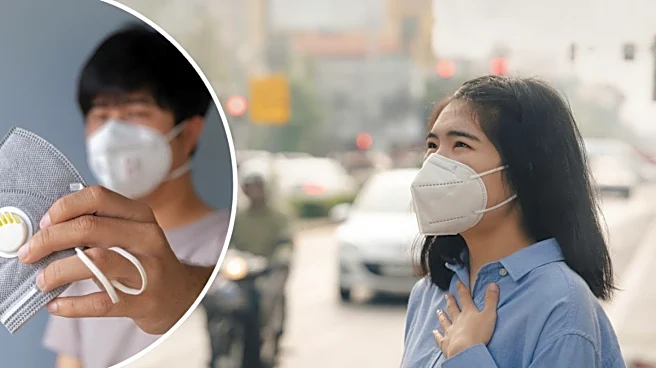
As these conditions begin trapping more pollutants closer to the ground, stepping outdoors can mean greater exposure to fine particulate matter. A mask may seem like an easy first line of protection, but choosing between an N95, N99 or FFP2 respirator can be confusing. And does a higher price always mean better protection? Dr. Sharad Yadav, Incharge and Senior Consultant ICU, Ruby Hall Clinic, Pune, explains what to consider before buying one.
How To Choose The Right Mask During High-Pollution?
Not every face covering is designed to filter fine air pollutants. Cloth masks and loose-fitting surgical masks may offer limited protection against fine particulate matter, whereas certified respirators are designed to filter smaller airborne particles.
“Look for respirators: Masks like N95 or FFP2 are made to block tiny particles. These include PM2.5, which are small enough to get deep into the lungs,” says Dr. Yadav.
N95 and KN95 respirators are designed to filter at least 95% of airborne particles under specified testing conditions, while FFP2 respirators filter at least 94%. These ratings do not mean that the mask removes 95% of every pollutant in real-world conditions.
Dr. Yadav advises buying from trusted sellers and checking whether the product meets recognised standards. A mask’s label, certification and manufacturer details matter more than its appearance or marketing claims.
The Fit Of Your Mask Matters
Even a high-filtration mask may offer limited protection if polluted air leaks through gaps around your face. Your mask should cover your nose, mouth and chin, with no noticeable gaps around the cheeks or nose.
“Fit matters as much as filtration,” says Dr. Yadav. “A mask must sit tightly on your face. It should cover your nose, mouth and chin completely. There should be no gaps around the edges.”
Choose a design with an adjustable nose clip and straps that keep the respirator securely in place. Facial hair around the sealing area can prevent a tight fit and reduce protection.
A simple check before heading outdoors is to breathe normally and check for air escaping around the edges. Follow the manufacturer’s instructions for checking the seal, as a fit check cannot guarantee a perfect fit.
Head Straps Mask Vs Ear Loop Mask
The design can influence how securely a mask stays in place, particularly during a commute or several hours outdoors.
“Choose the design: Masks with head straps usually fit better than ear loops. They stay in place easily and create a tighter seal,” says Dr. Yadav.
Some respirators have exhalation valves that make breathing feel easier by allowing air to escape. However, unfiltered exhaled air can pass through these valves, making them unsuitable when the goal is also to reduce the spread of particles to other people.
When Should You Replace Your Anti-Pollution Mask?
Disposable respirators should be replaced according to the manufacturer’s instructions, especially if they become dirty, wet, damaged or difficult to breathe through. Do not wash or reuse a disposable respirator unless its instructions explicitly permit it.
For reusable masks, follow the recommended cleaning and filter-replacement schedule, and store the mask in a clean, dry place between uses.

Should People With Asthma Or COPD Wear N95 Masks?
People with asthma, chronic obstructive pulmonary disease (COPD) or other conditions that make breathing difficult should consult a healthcare professional before using a respirator, particularly for prolonged periods. A tight-fitting mask may feel uncomfortable for some people, and individual advice is important.
“People who have asthma, COPD or other breathing problems should talk to a doctor before using a mask,” says Dr. Yadav. “A fitting mask can cut down on exposure to pollution. It cannot remove all risks.”
It is also important to remember that particulate respirators do not protect against every harmful gas or vapour. An N95 mask, for instance, is not a complete shield against all components of air pollution.
Is Wearing A Mask Enough To Protect Yourself From Poor Air Quality?

A mask should be one part of a broader effort to reduce exposure. Check local Air Quality Index (AQI) updates, limit outdoor activity when pollution levels are high and avoid strenuous exercise outdoors during severe pollution episodes. Where possible, improve indoor air quality with suitable filtration.
“The best way to stay safe is to avoid being outside when air quality’s bad. Check local air quality reports. Limit time when pollution levels are high,” says Dr. Yadav.
A well-fitting, certified respirator can reduce exposure to fine particles when going outdoors is unavoidable. But choosing the right mask and knowing its limitations, is just as important as wearing one.