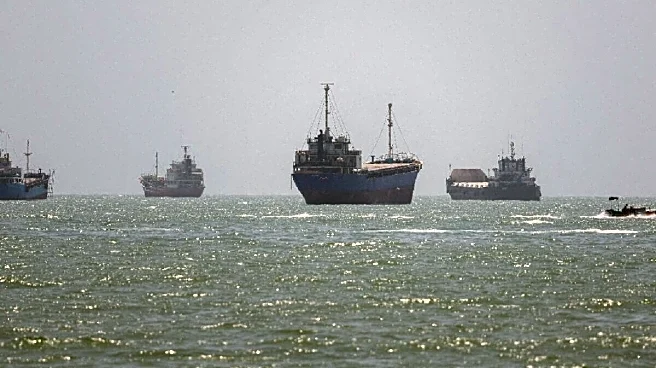


For months, the Strait of Hormuz has been Iran’s most potent bargaining chip against the United States, a narrow waterway through which Tehran could threaten global oil flows, push up energy prices and raise the cost of Washington’s war.
But that pressure point may be starting to weaken.
Oil traffic through the Strait is recovering, the US is clearing and protecting shipping routes, and Iran’s own trade is being squeezed by a renewed naval blockade. The imbalance was on display again on Sunday, when the US struck Iranian rocket launchers on Larak Island that American officials said were being prepared to deploy sea mines into the Strait.
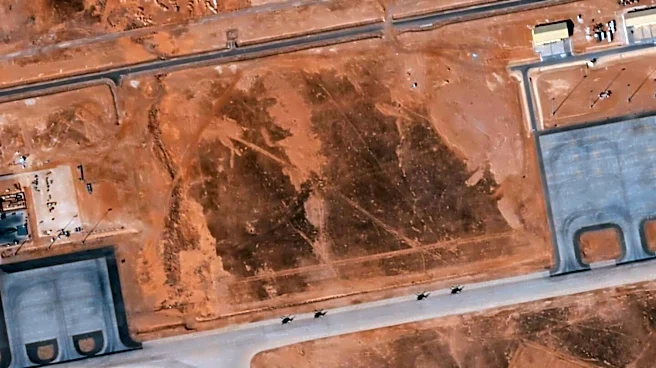
Iran retaliated by firing missiles towards US forces in Jordan, which were intercepted with no impacts reported,
according to CNN. The exchange showed that Tehran can still threaten Hormuz, but the bigger question now is whether that threat can still force Washington to blink.
Why The Strait Of Hormuz Has Been Iran’s Biggest Pressure Point
Iran’s leverage over the Strait does not depend entirely on shutting it down.
The threat of mines, missile attacks and strikes on commercial vessels can itself make shipping more difficult and expensive, while creating uncertainty in global energy markets.
Tehran’s strategy during the conflict has relied in part on threatening commercial traffic through Hormuz, raising energy costs internationally and increasing pressure on Washington to change course.
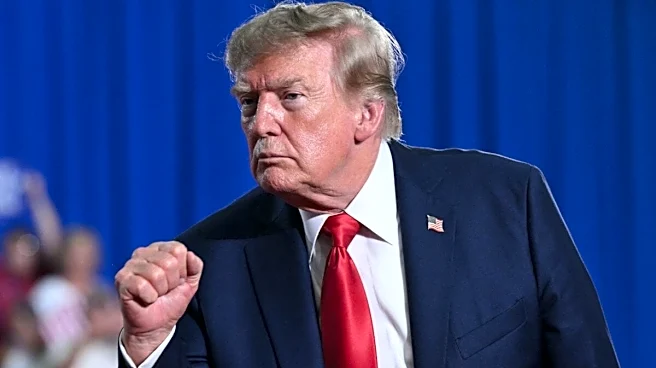
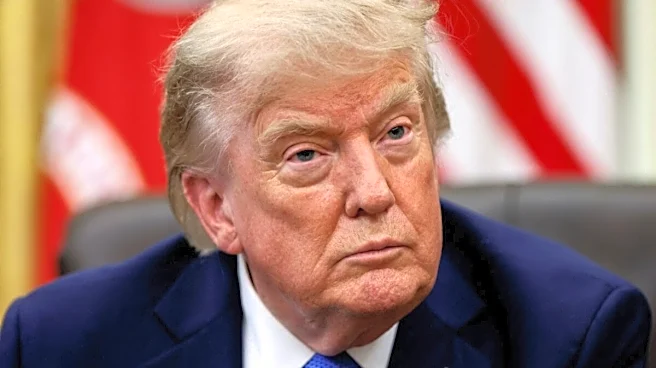
US President Donald Trump had himself warned over the summer of severe economic consequences if the Strait remained shut. That made Hormuz one of Iran’s most consequential bargaining tools.
The calculation was simple: if Tehran could make continued conflict economically painful enough for the US and other countries, Washington might face greater pressure to negotiate or scale back military action.
What Has Changed In The Strait?
The biggest change is that substantial volumes of oil are moving through Hormuz again.
According to Goldman Sachs, total exports of crude and oil products from the region have recovered to around 15 million to 16 million barrels a day. Kpler estimated that oil flows from the Persian Gulf had recovered to around 70% of pre-war levels.
US officials told Axios that around 10 million barrels of oil a day were being transported out of the Strait through a southern route along Oman that is being defended by the US military.
How The US Is Trying To Keep Hormuz Open
The US strategy has been to make the Strait progressively harder for Iran to disrupt while creating safer routes for commercial traffic.
American forces have cleared sea mines from international shipping lanes and are defending the southern route along Oman, which is now carrying a substantial share of the recovering oil traffic.
US strikes have also degraded parts of Iran’s radar and maritime surveillance systems, Fortune reported. That has made it easier for some tankers to move through the Strait at night with their transponders switched off, while others have used shuttle runs to transfer oil to vessels operating outside the most dangerous areas.
Together, these measures have allowed more traffic to return even as Iran continues to attack ships, weakening Tehran’s ability to turn disruption in Hormuz into a sustained chokehold.
Iran’s Bigger Problem: Its Own Trade Is Being Squeezed
Iran itself is under increasing pressure from the US blockade. Iran’s August crude export loadings had fallen by more than 80% compared with a year earlier, according to Kpler data.
Since the naval blockade was reimposed, US forces have redirected 82 commercial vessels, disabled three and boarded two to ensure compliance, the US Central Command said on Friday.
Iran is also struggling with imports. President Masoud Pezeshkian acknowledged in an interview with state media that goods, including gasoline, were not entering the country at previous levels. He estimated that Iranian trade had fallen between 25% and 35%, with imports falling more sharply than exports.
Pezeshkian’s Comments Show Growing Economic Strain
The pressure is also becoming harder for Tehran to downplay at home.
In the interview, Pezeshkian acknowledged the scale of the country’s economic problems, even as he insisted that public support remained intact.
“We have many problems,” he said. “There’s inflation, economic issues, employment and many other problems, but the people are with us.”
The numbers underline that strain. Inflation has climbed above 80%, prices of some food staples have doubled, and the International Monetary Fund said in April that Iran’s economy was expected to contract by 6.1% this year. A labour ministry official also estimated that more than one million jobs had been lost by late May, according to Fortune.
Pezeshkian appeared to acknowledge that sanctions were adding to those pressures.
“Some people say that sanctions have no effect at all,” he said. “I really don’t know what to tell these people. I just want to say this, saying that sanctions have no effect is not consistent with these facts.”
He also warned that the government had limited room to impose further hardship on ordinary Iranians.
“People are on the edge now; if I put more pressure on them, they might fall off the edge,” Pezeshkian said. “We have to be careful that no one falls off.”
Perhaps most strikingly, he also questioned how far military capability could compensate for economic weakness. “We may have many things; we may even have missiles and bombs, but they are of no use,” Pezeshkian said.
Has Iran Overplayed Its Hormuz Card?
Gregory Brew, an Iran and oil expert at Eurasia Group, argued that Tehran may have miscalculated when it resumed attacks on shipping along the Strait’s southern route in July.
“The result: the MOU is dead, the blockade is back in place, and the US is succeeding (to a partial, but notable extent) at reopening the strait without another deal,” Brew wrote on X.
“Perhaps the status quo swings back in Iran’s favor, but right now this looks like a miscalculation to me.”
However, that does not mean Tehran has run out of options.
Iran Can Still Escalate
Iran continues to retain the ability to attack shipping and threaten energy infrastructure in the Gulf. CNN noted that Tehran could again target Gulf energy facilities, while the Houthis in Yemen could threaten commercial traffic through the Red Sea using missiles and drones.
Iranian Foreign Minister Abbas Araghchi has also rejected the idea that economic and military pressure will force Tehran to change course. Araghchi said last week that the blockade and sanctions pressure were “bound to fail”.
Is Hormuz Still Iran’s Trump Card?
Hormuz remains a major source of risk, but recovering oil traffic and mounting pressure on Iran’s own trade suggest Tehran is finding it harder to use the Strait as sustained leverage against Washington.
/images/ppid_59c68470-image-17881500393816472.webp)

/images/ppid_59c68470-image-178815503273544470.webp)
/images/ppid_59c68470-image-178814002548641493.webp)

/images/ppid_59c68470-image-178789508463184599.webp)
/images/ppid_59c68470-image-178802252664647280.webp)
/images/ppid_59c68470-image-178793502513852881.webp)