
/images/ppid_59c68470-image-177873516754756331.webp)
/images/ppid_59c68470-image-177872506415175787.webp)
/images/ppid_59c68470-image-177873253755951441.webp)
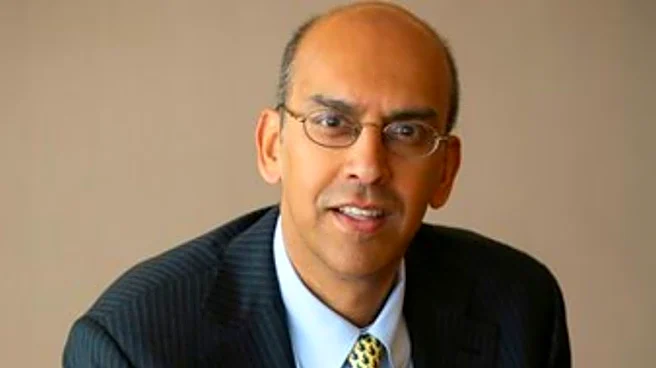
Indian-American financier Nirmal Narvekar is preparing to retire in 2027 after nearly a decade leading Harvard University’s $57 billion endowment, bringing to a close a major chapter in modern university finance.
Widely known as “Narv” in Wall Street and Ivy League circles, Narvekar reportedly informed Harvard’s governing board of his plans while allowing time for a succession process. His exit comes as Harvard’s endowment, the world’s largest university fund and roughly 3.5 times larger than India’s central education budget, faces scrutiny amid federal funding cuts introduced under US President Donald Trump’s administration, the Times Of India reported.
Narvekar’s tenure also highlighted the vast scale of American university endowments, a system
that remains relatively underdeveloped in India. In the US, universities use endowments as long-term investment engines, spending only a part of yearly returns while preserving capital for future generations.
India has traditionally followed a different path, with most public universities depending heavily on government funding and private institutions relying mainly on tuition fees and philanthropic trusts. Institutions such as IIT Mumbai, IIT Delhi and Ashoka University have only recently started building alumni-driven endowments, though Indian funds remain far smaller than those in the US.
Narvekar joined Harvard in 2016 after previously managing Columbia University’s endowment. At the time, Harvard’s investment arm was struggling with weak returns and leadership instability following a 27 per cent loss during the 2008 financial crisis.
Over the following years, he restructured the endowment by shifting from internal asset management to outsourcing nearly 90 per cent of investments to hedge funds, venture-capital firms and private-equity managers.
He also adopted the “Yale model” pioneered by investor David Swensen, which focused on alternative investments such as venture capital, hedge funds and real estate instead of traditional stocks and bonds.
Under Narvekar, Harvard expanded its exposure to private equity and hedge funds, securing investments in firms including SpaceX and Stripe. The approach later delivered strong results, with Harvard posting annualised returns of 8.1 per cent over the past three years, outperforming Yale and Princeton.
At the same time, his strategy drew criticism from some conservative commentators and Harvard insiders who argued the university had become overly dependent on illiquid investments such as hedge funds and private equity.
Former Treasury Secretary and ex-Harvard president Lawrence Summers once remarked that Harvard could have been nearly $20 billion richer had it matched the investment performance of its Ivy League peers.
Despite his influence in university finance, Narvekar remained known for keeping a low public profile. Born into an Indian family, he studied at Haverford College before earning an MBA from the Wharton School and built a reputation as a disciplined institutional investor rather than a celebrity financier.
/images/ppid_59c68470-image-177882502920381447.webp)

/images/ppid_59c68470-image-17788226349763957.webp)

/images/ppid_59c68470-image-177881752968243834.webp)
/images/ppid_59c68470-image-177881259940588197.webp)

/images/ppid_59c68470-image-17787450354865433.webp)
/images/ppid_59c68470-image-177872253423222771.webp)
/images/ppid_59c68470-image-177874009243914717.webp)