



For most adults, between 18 and 45, adulthood starts to turn into a checklist- Build a career, become financially independent, build your own home, find a partner, have children, support parents, stay healthy, travel and look happy while doing it all.
Ambition itself is not the problem. The constant, unspoken demand to achieve everything at once often is.
On World Suicide Prevention Day, this pressure deserves a closer look, not because ambition causes suicidal thoughts, but because relentless expectations, emotional isolation and difficulty asking for help can become part of a much larger and more complex picture of mental distress.
We spoke with Dr. Hamza Hussain, Psychiatrist and Head of the Mental Health Department at Ruby Hall Clinic, Pune,
about how this “have it all or nothing” mindset is quietly affecting emotional wellbeing. His reflections offer both clarity and compassion.
Why Can Adulthood Start Feeling Like A Race Against Time?
For people in their 20s, 30s and early 40s, several major life transitions can happen at once. Starting a career may be followed by changing jobs, getting married, raising children, paying EMIs or other household expenses, and caring for ageing parents.
As Dr Hussain explains, life between 18 and 45 can feel like a race against an unseen clock. There is often an unspoken idea of where a person should be by a certain age: financially secure, professionally successful, settled in a relationship and visibly fulfilled.
Why Does The Sense Of ‘Falling Behind’ Affect Mental Health So Deeply?
One of the less-discussed struggles is the internal narrative of being “behind.” Seeing friends buy homes, advance at work, travel, marry or reach financial milestones can create a painful comparison. The hurt is not in seeing them move forward but the feeling that everyone else is moving ahead but me.
Dr. Hussain notes that this perception is common and often unspoken. “When you see friends buying houses, getting ahead at work, traveling, getting married or becoming financially stable, you may feel that everyone else is moving forward faster. These ordinary setbacks can feel like failure.”
A person may continue going to work, meeting deadlines, attending family events, paying bills and responding to messages while privately feeling exhausted, anxious or hopeless. “The pressure can also make people hide their problems,” Dr. Hussain observes. “A person may keep working, meet duties and look fine while inside they feel tired, anxious or hopeless. This is why mental health problems cannot always be seen by looking at how well someone looks on the outside.”
Mental health, therefore, cannot always be assessed by looking at someone’s achievements, productivity or appearance.
When Perfectionism Become Emotionally Exhausting
Wanting to do well is different from believing that anything short of success makes you inadequate. When achievement becomes tied closely to self-worth, mistakes can feel harder to tolerate. A missed promotion, financial difficulty, relationship breakdown or career change may no longer feel like one difficult experience. It can begin to feel like a verdict on the person.
A study at the University of Ontario in Canada introduces a cautionary note: perfectionism might have an unseen price tag. Published in the Journal of Personality, puts it: perfectionists “are their own worst critics; good enough is never enough.”
This is particularly relevant when someone has internalised an all-or-nothing definition of success: either I have achieved what I was supposed to achieve, or I have failed.
The healthier alternative is not to abandon goals. It is to allow room for uncertainty, setbacks and different timelines.
What Mental-Health Changes Should Family and Friends Take Seriously?
Changes in behaviour can sometimes be more meaningful than whether someone appears outwardly successful. Dr. Hussain is clear, “Importantly, lasting changes like pulling back, feeling hopeless, having trouble sleeping, losing interest or talking about death should not be ignored. Early talks and quick professional help can make a difference.”
These signs- withdrawal from people or activities, persistent hopelessness, sleep difficulties, loss of interest in things once enjoyed, or expressions of wanting life to end, are invitations to reach out, not reasons for shame. Conversations with trusted people and timely professional support can interrupt distress before it intensifies. Recovery is possible, and many people who experience these feelings go on to rebuild meaningful, connected lives.
These signs do not automatically mean that someone is suicidal. They do, however, deserve attention, particularly when several changes appear together or persist.
A simple conversation can be an important starting point. Asking someone how they are coping, listening without immediately judging or trying to fix the situation, and encouraging professional support can help reduce the isolation that often surrounds emotional distress.
WHO also states that talking openly about suicide does not cause someone to become suicidal. Asking directly about suicidal thoughts can instead help a person feel understood and create an opportunity to connect them with support.
Success Need Not To Have Only One Timeline
Let me put it as simple as it comes, if the pressure to ‘have it all or none’ is causing hopelessness and crushing your will, just note and remember there is no absolutely universal age by which a person must have a particular job, income, relationship, home or family structure. Careers change, relationships change, financial circumstances change, people can leave to come back or because you were to meet a new version of ‘healing’ self. Yes, you can recover, restart and redefine what matters to you at any point in life.
Dr Hussain suggests, families, workplaces and communities have a role in creating environments where asking for help is accepted rather than judged.
That means making space for conversations that go beyond performance: How are you coping? Are you sleeping? Do you feel overwhelmed? What support would make things easier? It also has to include whether they are able to move through the journey while protecting their mental health.
Feeling overwhelmed does not have to be handled alone. A psychiatrist, psychologist, counsellor or other qualified mental-health professional can help assess what is happening and identify appropriate support.
If someone is in immediate danger or feels they may act on thoughts of suicide, they should seek urgent help through local emergency services or a crisis service and stay connected to a trusted person rather than facing the crisis alone.
For people supporting someone else, listening without judgement and helping them reach professional care can be more useful than trying to provide all the answers themselves.
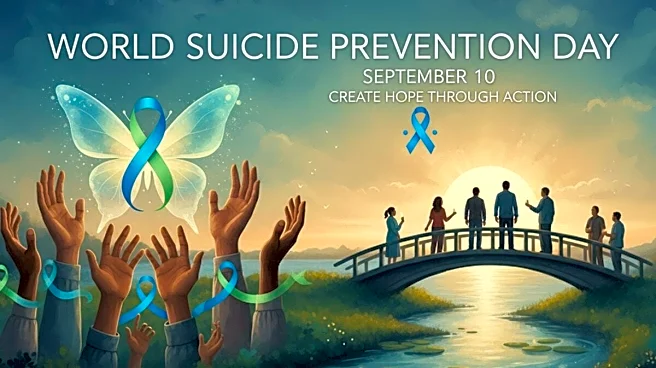
World Suicide Prevention Day is therefore not simply about talking about suicide. It is also about questioning the pressures that make people feel they must constantly prove their worth, recognising distress earlier and making help-seeking a normal part of looking after mental health.
Disclaimer: If you or someone you know needs help, call any of these helplines: Aasra (Mumbai) 022-27546669, Sneha (Chennai) 044-24640050, Sumaitri (Delhi) 011-23389090, Cooj (Goa) 0832- 2252525, Jeevan (Jamshedpur) 065-76453841, Pratheeksha (Kochi) 048-42448830, Maithri (Kochi) 0484-2540530, Roshni (Hyderabad) 040-66202000, Lifeline 033-64643267 (Kolkata)








/images/ppid_59c68470-image-17891975284205884.webp)