
/images/ppid_59c68470-image-17833175250569925.webp)




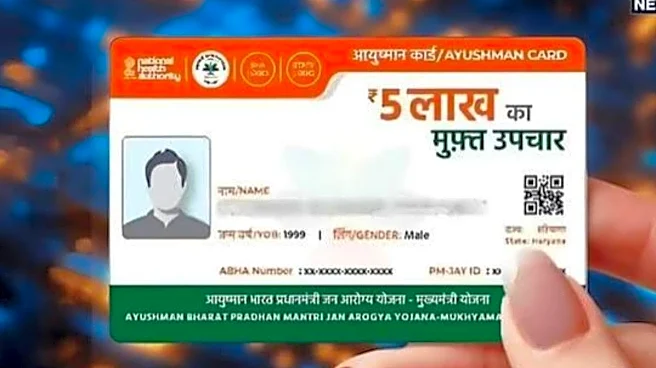
The Centre is actively using Artificial Intelligence (AI) and Machine Learning (ML) to prevent, detect, and deter scams under the Ayushman Bharat Pradhan Mantri Jan Arogya Yojana (AB-PMJAY).
Managed by the National Health Authority (NHA) through its National Anti-Fraud Unit (NAFU), these technologies process over 40,000 daily claims to flag systemic leakages, overbilling, and ghost beneficiaries.
HOW AI DETECTS AND FLAGS MALPRACTICES
The AI-driven fraud analytics framework operates across multiple areas to identify suspicious patterns in real time. Multilingual OCR (Optical Character Recognition) scans low-quality records to cross-check compliance with treatment guidelines. Advanced computer vision analyses X-rays, CT scans, and MRIs to verify whether the diagnosis aligns with the hospital’s
financial claim. Algorithms identify manipulated discharge summaries, forged signatures, and deepfake-generated or altered medical documents. Hospitals are required to submit an on-bed photo of the patient. The system flags cases where a single ICU patient’s photograph is recycled across different claims using altered names to illegally secure higher ICU-tier payouts. AI flags temporal anomalies—such as claims submitted after a patient’s recorded date of death or before a formal diagnosis. It also tracks geo-tagging data to flag surgeries performed on the same patient simultaneously in different geographic locations. The system also evaluates clinical parameters. For example, it analyzes laboratory datasets to ensure blood reports genuinely justify major procedures like dialysis and flags instances where a minor fever is “upcoded” as a major surgery such as a knee replacement. AI assigns a dynamic risk score to both individual claims and empanelled hospitals, routing suspicious activity to human auditors for further evaluation.
STRUCTURAL PILLARS OF THE DIGITAL SECURITY FRAMEWORK
To make AI models effective against uniquely localised healthcare challenges, India has integrated specialised infrastructure:
- BODH Platform: A specialised benchmarking platform developed with IIT Kanpur using India-specific clinical datasets to validate AI models for greater local accuracy.
- AI-Enabled KMS 2.0: An upgraded platform adopted by states including Maharashtra to automatically halt redundant surgeries and trace multi-hospital claim fraud.
- Aadhaar Biometrics: Mandatory Aadhaar-based biometric verification during patient admission and discharge to prevent impersonation.
- Human + AI Hybrid: Standard claims are processed automatically, while anomalies are immediately escalated to the NAFU and State Anti-Fraud Units (SAFUs).
WHAT IS ITS IMPACT?
The deployment of automated oversight has shifted the scheme from slow manual audits to faster, preventive fraud detection.
Anti-fraud systems have successfully intercepted and blocked fraudulent claims worth over ₹630 crore. By automating the approval of non-suspicious claims, average payout processing times have dropped from 20 days to just four hours.
While confirmed fraud affects only a tiny fraction (around 0.18%) of total admissions since the scheme’s launch, hundreds of errant hospitals have been suspended, and multi-crore penalties have been levied based on AI findings.
KEY FAQs
How does AI detect fraud in Ayushman Bharat?
AI analyses claims data to identify unusual patterns, such as duplicate claims, suspicious billing, or unusually high treatment volumes, flagging them for review.
Does AI replace human investigators?
No. AI helps identify potentially fraudulent claims, while human experts verify the findings before any action is taken.
What are the benefits of using AI in the scheme?
AI helps reduce fraudulent claims, speeds up investigations, and ensures healthcare funds are used more efficiently for eligible beneficiaries.
With agency inputs
/images/ppid_59c68470-image-178340502679970737.webp)


/images/ppid_59c68470-image-178339504289288021.webp)


/images/ppid_a911dc6a-image-178341104500512774.webp)

/images/ppid_59c68470-image-178335252284524683.webp)

/images/ppid_59c68470-image-178334759067373041.webp)