

/images/ppid_a911dc6a-image-177770956265338996.webp)
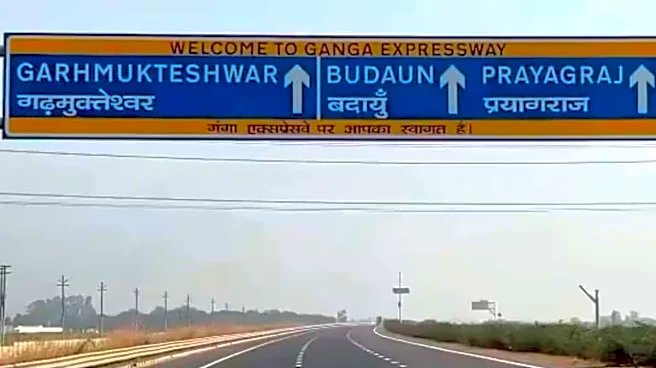
Delhi-NCR & UP Real Estate Market: The Ganga Expressway, which connects Meerut to Prayagraj, is set to be inaugurated by Prime Minister Narendra Modi today, April 29. It marks a major milestone for Uttar Pradesh’s infrastructure story and could significantly reshape the state’s real estate landscape over the coming years. More than just a road project, the expressway is expected to unlock fresh housing demand, boost industrial development, and create new investment corridors stretching from western Uttar Pradesh to the eastern part of the state.
The 594-km expressway connects Meerut to Prayagraj, improving access between Delhi-NCR and several districts of Uttar Pradesh, including Hapur, Bulandshahr, Amroha, Sambhal, Badaun and Prayagraj. Large-scale
transport projects typically trigger multi-sector development by reducing travel time, attracting industries, creating jobs, and increasing demand for residential as well as commercial real estate. Market experts believe the Ganga Expressway could have a similar impact across multiple emerging locations.
Ghaziabad emerges as a key beneficiary
Among all regions expected to benefit, Ghaziabad is being seen as one of the biggest gainers. Already a popular residential destination due to its proximity to Delhi, Ghaziabad now stands to strengthen its position further through improved connectivity to central and eastern Uttar Pradesh.
Areas such as Raj Nagar Extension, Indirapuram, Crossing Republik, and the NH-24 corridor have already witnessed strong housing demand in recent years. The new expressway is expected to further improve their appeal among homebuyers looking for better connectivity and relatively affordable homes compared with Delhi and Noida.
Varun Garg, director of Karyan Group, said, “In the journey of a developed Uttar Pradesh, Ghaziabad today is not only the gateway to Delhi-NCR, but through the Ganga Expressway, it is emerging as the main centre of the economic development of the entire state. The network of modern connectivity, such as Namo Bharat, metro, and expressways, has given strong support to Ghaziabad’s real estate, which the Ganga Expressway will now take to a new height.”
He added this corridor is creating investment opportunities by directly connecting areas like Raj Nagar Extension and NH-24 of Ghaziabad with Prayagraj and the markets of eastern Uttar Pradesh, which will change the entire landscape of this region in the next 5 to 10 years. “We do not see Ghaziabad only as a residential hub, but as a modern and accessible growth centre.”
Meerut set for next growth phase
As the starting point of the expressway, Meerut is also expected to witness a fresh round of development. The city has already gained from the Delhi-Meerut Expressway and the Namo Bharat regional rail corridor, both of which have sharply improved access to NCR.
Now, with the Ganga Expressway adding another major connectivity layer, new residential projects, gated communities, plotted developments, and townships could gather pace in areas such as Pratap Pur and Bijli Bamba. Property consultants believe Meerut may increasingly emerge as a large urban housing market similar to Ghaziabad in the medium term.
Hapur and Bulandshahr may gain from the logistics boom
Districts such as Hapur and Bulandshahr are likely to benefit from industrial and warehousing demand. These areas were earlier driven mainly by agriculture and smaller businesses, but improved road connectivity is making them attractive for logistics parks, warehouses, and transport-linked industries.
As industrial activity rises, land prices in strategic pockets may see appreciation, making these districts potential early-stage opportunities for long-term investors.
Budaun, Shahjahanpur and Hardoi enter development map
The expressway is also expected to improve prospects for districts that were earlier considered relatively underdeveloped from a real estate perspective. Budaun may witness rising demand for hotels, retail spaces, and commercial properties near interchanges. Shahjahanpur is being seen as a possible manufacturing destination, while Hardoi could attract warehousing and logistics investments.
These markets may suit investors with a longer investment horizon who are willing to wait for infrastructure-led value creation.
Unnao and Raebareli get fresh momentum
Unnao, strategically located between Lucknow and Kanpur, may see stronger demand for affordable housing, plotted developments, and township projects as connectivity improves. Meanwhile, Raebareli could benefit from rising demand for land linked to education, healthcare, and institutional development. Improved infrastructure often expands the economic footprint of such tier-2 and tier-3 cities.
Prayagraj could see tourism and housing boost
At the eastern end of the corridor, Prayagraj is expected to emerge as another major beneficiary. Already important as a religious and educational center, the city could gain further from easier road access, helping tourism, trade, and housing demand.
Areas such as Phaphamau and Soraon are witnessing growing investor interest, with demand expected for hotels, resorts, apartments, and mixed-use developments.
Industrial corridor to drive property demand
A major supporting factor for real estate is the proposed industrial ecosystem along the expressway. Around 6,500 acres have reportedly been identified for 12 industrial nodes. Such nodes can create employment opportunities and generate demand for homes, schools, hospitals, retail centres, and office spaces.
Historically, infrastructure-backed industrial growth has been one of the strongest triggers for sustained property demand.
Faster travel, wider economic impact
Built at an estimated cost of around Rs 47,000 crore, the six-lane expressway, expandable to eight lanes, is expected to significantly cut travel time between Meerut and Prayagraj from around 10-12 hours to nearly 6-7 hours.
The corridor links 12 districts and more than 500 villages, potentially narrowing the urban-rural divide and opening new markets for businesses and developers.
The Ganga Expressway is not merely connecting cities; it is creating a new economic spine for Uttar Pradesh. For the real estate sector, it offers opportunities across residential housing, warehousing, industrial parks, hospitality, and commercial development.









/images/ppid_a911dc6a-image-177771162387431759.webp)


/images/ppid_a911dc6a-image-177771106629999753.webp)