

/images/ppid_59c68470-image-179061508641963239.webp)
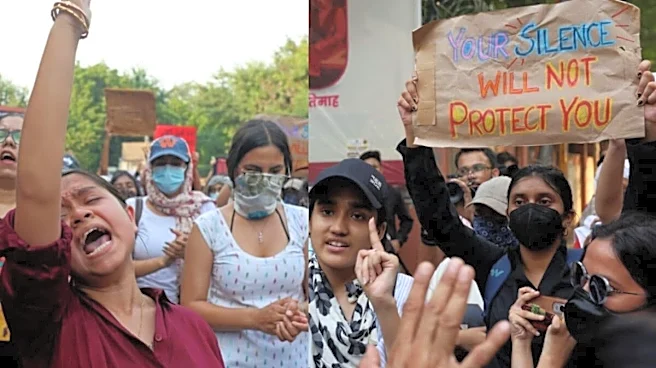
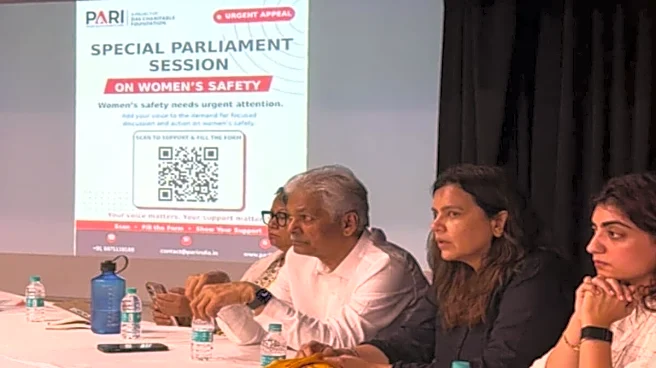
Following widespread student-led protests across Delhi against patriarchy and rising sexual violence, a direct-action initiative focused on women’s safety and policy reform convened on Thursday evening at the YMCA hostel. Organised by anti-rape activist Yogita Bhayana, founder of PARI (People Against Rape in India), and former IPS officer Yashovardhan Azad, the forum brought together women students from Delhi University and institutions across the capital.
Nearly 100 students collaborated with legal experts during the session to draft a formal resolution outlining three to five core policy and law-enforcement demands to strengthen safety laws. The signed petition will be submitted directly to the Prime Minister’s Office (PMO). Organisers announced
that if no concrete action is taken within 10 days, they will launch a nationwide protest at Jantar Mantar in New Delhi.
Demands for Parliamentary Action and Aggressive Policy Overhaul
Addressing the young college students, activist Yogita Bhayana emphasised the urgent need for structural legislative action rather than superficial dialogue. She stated that their immediate priority is convening a special two-day parliamentary session during Navratri, welcoming all political parties to join the discussion and transform it into a unified movement.
Bhayana noted that the goal is not to create drama or distraction, as these issues have been discussed for years without adequate resolution. She called for an approach that is stronger and more aggressive than Operation Sindoor, encouraging participating students to submit their responses so the initiative can serve as an effective bridge between citizens and the government.
Budgetary Audits, RTI Pressure, and Institutional Accountability
Former IPS officer Yashovardhan Azad urged the students to hold state governments accountable through active civic pressure. He called on students to file more Right to Information (RTI) applications against states that reduce their budgetary allocations for women’s safety, emphasising that women have every right to step into public spaces like Buddha Park or Lodhi Garden without fear.
Expressing deep concern over ongoing incidents against women originating from his home state of Bihar, Azad highlighted systemic budget failures across the country. He pointed out that while Rs 8,000 crore was announced under the Nirbhaya movement, only around Rs 6,000 crore was released, questioning where the remaining funds went and why states like Andhra Pradesh are cutting safety budgets. Asserting that true democracy cannot exist if women cannot move freely, Azad called for a 90-day audit of all women’s safety measures, proposing that Day 1 of the upcoming parliamentary session evaluate past steps and Day 2 establish concrete, reformative measures to deter repeat offenders.
Student Recommendations and Cultural Masculinity Initiatives
During the interactive session, female students put forward key recommendations focused on accountability, legal reform, and active protection. First, they demanded that media and official data place responsibility squarely on perpetrators by reporting men who commit rape rather than defining women by the violence inflicted upon them. Second, they called for a visible increase in female police officers deployed in public spaces to ensure safety while creating employment opportunities for women.
Third, students demanded updates to legal frameworks like the Bharatiya Nyaya Sanhita (BNS) to explicitly classify public flashing and masturbation—pervasive issues outside women’s colleges—as criminal sexual harassment. Finally, they insisted on the strict enforcement of existing safety infrastructure, including active police monitoring at metro stations to restrict unauthorised access to women-only coaches.
Complementing these policy demands, mental health professional Geet proposed addressing the underlying conditioning and belief systems around masculinity passed down through families and culture. She outlined a social media movement to make healthy masculinity visible and valued, proposing that women nominate men for “Healthy Masculinity” badges recognising consent, equality, empathy, emotional maturity, respect for autonomy, non-violence, challenging misogyny, active allyship, and creating women-positive online content. Geet highlighted that the initiative aims to re-educate men and build new models of masculinity rather than shame them.