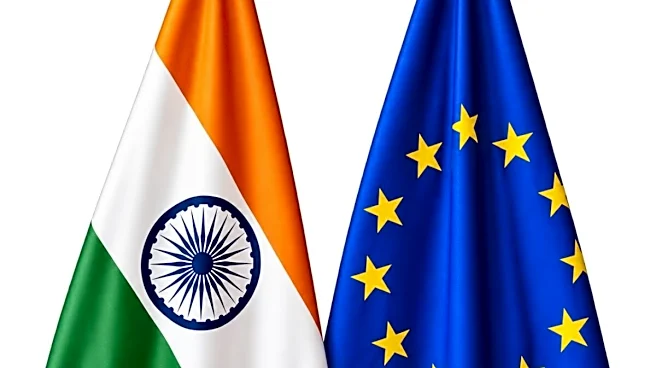




The European Commission has put forward proposals to the Council for the signature and conclusion of the Free Trade Agreement (FTA) between the European Union and India, seeking authorisation for its signing and conclusion.
If authorised by the Council, the agreement would become the largest trade agreement ever concluded by both the EU and India.
FTA To Improve Market Access, Reduce Tariffs
Once adopted and entered into force, the agreement is expected to improve market access, reduce tariffs, tackle unnecessary barriers to trade and provide predictable rules for trade and investment between the EU and India.
The EU and India already trade more than €180 billion worth of goods and services every year, supporting close to 800,000 EU jobs.
The agreement
will eliminate or reduce tariffs on 96% of EU goods exports to India. Overall, the tariff reductions are expected to save around €4 billion per year in duties on European products.
European Companies To Get Easier Access To Indian Market
The agreement will make it easier for European companies to access the Indian market and compete on a more level playing field.
It will also allow consumers to benefit from increased choices and more competitive prices.
Proposal Aims To Speed Up Implementation
The proposal put forward by the European Commission marks a key step towards enabling consumers and businesses to benefit from the agreement as soon as possible.
The move is in line with the fast-track procedure outlined earlier this year by Commissioner for Trade and Economic Security Maroš Šefčovič.
The procedure aims to speed up the implementation of FTAs, which the Commission said is crucial amid geopolitical uncertainty and growing pressure on the global trading system.
EU Seeks Council Approval For Signing
The EU-India FTA also reflects the European Union’s commitment to strengthening economic ties with key partners in the Indo-Pacific region.
With its proposals, the European Commission is seeking the Council’s approval to sign the agreements. The agreements will then require the European Parliament’s consent before their conclusion and entry into force.
The Indian authorities are simultaneously going through their own internal ratification procedures.