
/images/ppid_a911dc6a-image-177763913152169472.webp)
/images/ppid_a911dc6a-image-177763882709373424.webp)

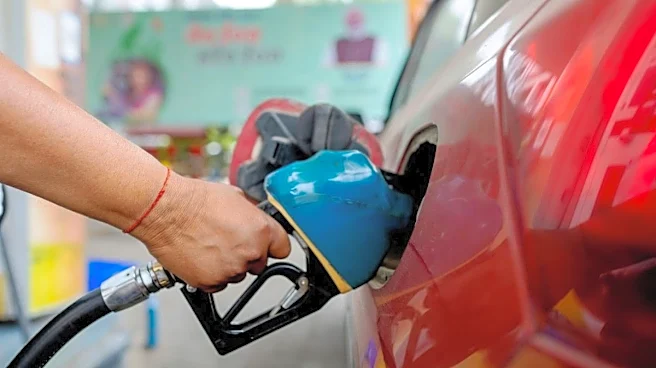
The Centre has issued a draft notification proposing amendments to the Central Motor Vehicles Rules, 1989, to include higher-ethanol-blended fuels within the regulatory framework formally.
The Ministry of Road Transport and Highways said the draft introduces provisions for E85 fuel—a blend of 85% ethanol with petrol—and E100, which would enable vehicles to run on nearly pure ethanol.
The move reflects India’s push to expand the use of alternative fuels and reduce dependence on imported petroleum.
Changes in Fuel Classification
As part of the proposed amendments, the government plans to update the technical terminology used in emission norms to reflect the growing adoption of ethanol and biofuel blends.
For hydrogen-powered vehicles, the terminology
will be revised from “Hydrogen+CN” to “Hydrogen+CNG.” For petrol vehicles, the fuel classification will change from [(E10)/(E)] to [(E10)/(E20)].
The draft also introduces specific references to higher ethanol blends such as E85 and E100 (100% ethanol). Similarly, biodiesel classifications will be updated from B10 to B100, indicating a shift towards higher blending levels.
The proposed rules have been opened for public comments, after which the government will take a final decision.
What Is E100 Fuel?
E100 refers to a high-ethanol fuel blend that is primarily or nearly pure ethanol, typically comprising 95% to 100% ethanol by volume. In India, the officially introduced “Ethanol 100” fuel by Indian Oil Corporation contains around 93–93.5% ethanol, with approximately 5% petrol and 1.5% co-solvent added for safety and engine compatibility.
Why India Is Pushing for 100% Ethanol Blending
The push for higher ethanol blending is closely linked to India’s energy security goals. According to Road Transport and Highways Minister Nitin Gadkari, moving towards 100% ethanol-blended fuel can significantly reduce dependence on fossil fuel imports.
India currently imports about 87% of its crude oil requirements, leading to an annual outflow of nearly Rs 22 lakh crore. Increasing ethanol usage could help lower this burden while insulating the economy from global supply disruptions—especially those highlighted by ongoing geopolitical tensions in West Asia.
India’s Current Status on Ethanol Blending
India has made significant progress in its biofuel programme in recent years. After achieving 20% ethanol blending (E20), rolled out nationwide on April 1, 2026, the focus is now shifting towards flex-fuel vehicles (FFVs) capable of running on E85 or E100.
The upcoming Corporate Average Fuel Efficiency (CAFE) III norms, effective April 1, 2027, are expected to support the adoption of electric and flex-fuel technologies. A draft notification for E85 fuel is also in advanced stages, indicating a policy push towards higher blending levels.
India had earlier introduced E100 fuel in 2024, with initial distribution rolled out across 183 retail outlets in states such as Maharashtra, Karnataka, Uttar Pradesh, Delhi, and Tamil Nadu.
Global Adoption of Ethanol Fuels
Globally, Brazil remains the only country using E100 fuel at scale for road transport. Some countries, such as Sweden, use E85 fuel, while most European nations continue to operate within lower blends like E5 to E10.
Impact on Manufacturers and Consumers
The transition to higher ethanol blends will require significant technological adaptation from automobile manufacturers. Engines will need to be designed or modified to handle higher ethanol concentrations, which are more corrosive than conventional petrol.
This presents an initial challenge for manufacturers, but over time, the shift could benefit consumers through improved engine performance, higher efficiency, and lower fuel costs due to domestic production.
Ethanol Blending Allowed in Aviation Fuel
Earlier this month, the Centre also permitted blending of ethanol and other synthetic hydrocarbons in aviation turbine fuel (ATF), though no mandatory targets have been set.
The move follows amendments to the Aviation Turbine Fuel (Regulation of Marketing) Order, 2001, under the Essential Commodities Act, 1955, expanding the definition of ATF to include such blends.
The policy aims to reduce emissions and dependence on imported crude oil, with the Ministry of Petroleum and Natural Gas aligning regulatory provisions through a gazette notification.





/images/ppid_a911dc6a-image-177763956586893112.webp)

/images/ppid_a911dc6a-image-177763963921935226.webp)
/images/ppid_a911dc6a-image-177763953516015498.webp)