
/images/ppid_59c68470-image-176994502354269672.webp)
/images/ppid_a911dc6a-image-176994483076242116.webp)
/images/ppid_a911dc6a-image-176994487119336478.webp)
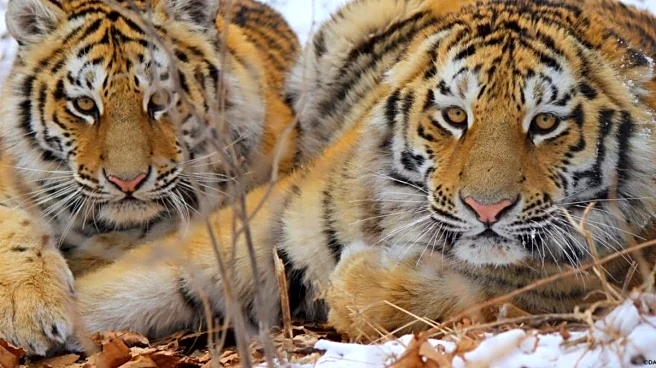
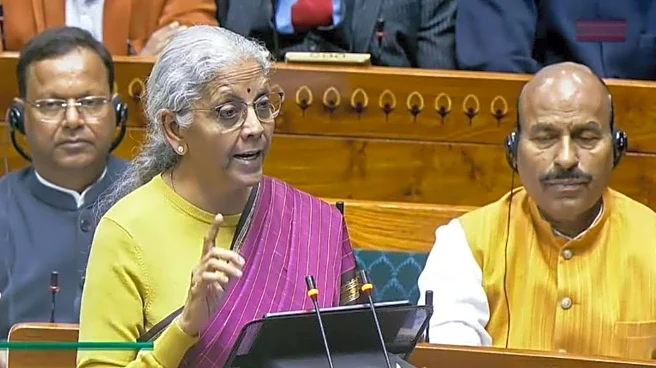
India is set to host the world’s first Global Big Cat Summit this year, a move Finance Minister Nirmala Sitharaman framed as a major milestone in the country’s expanding role in global wildlife conservation.
Presenting the Union Budget 2026 in Parliament, she said the meeting will bring together heads of government and ministers from 95 range countries to deliberate on shared strategies for protecting the planet’s most threatened big cat species. The announcement also marks the first major international gathering under the International Big Cat Alliance, established in 2024.
What Is The International Big Cat Alliance?
The International Big Cat Alliance was formally established in March 2024 by the Indian government through the National Tiger Conservation
Authority under the Ministry of Environment, Forest and Climate Change. The alliance’s mandate is expansive: it covers seven species — tiger, lion, leopard, snow leopard, cheetah, jaguar and puma.
India is home to five of these big cats, barring the jaguar and puma.
The Union government has allocated Rs 150 crore for the initiative for 2023–24 to 2027–28, signalling long-term institutional backing. Its design reflects India’s belief that conservation success requires cross-border cooperation, sustained funding and the sharing of scientific tools for tracking, habitat restoration and anti-poaching interventions.
As of December 2025, 37 countries formally consented to be members of IBCA, among which 17 countries have joined IBCA by signing the Framework agreement, and three countries have opted for observer status.
What Is The Global Big Cat Summit Expected To Discuss?
The summit is expected to assemble political leaders, environment ministers, wildlife scientists and civil society groups from across 95 range nations. These are countries that naturally host one or more of the seven big cat species covered under the alliance. The list spans continents and includes nations such as Canada, China, Brazil, Iran, Russia and the United States.
Discussions are expected to centre on coordinated action for protecting the seven species under the International Big Cat Alliance. A key part of the agenda is aligning countries on shared conservation goals. These include strengthening cross-border cooperation, improving scientific understanding of threats, and helping range nations upgrade their own conservation capacity through training, technology and field expertise.
Another focus is expected to be global outreach, ensuring that the importance of big cat protection is communicated widely and that public engagement remains strong.
The alliance also aims to build a financial support system by encouraging countries and conservation bodies to pool resources and work with international institutions. Its creation reflects a broader realisation that individual efforts cannot counter habitat loss, poaching networks or climate pressures on their own.
By bringing governments, researchers and conservation partners onto a single platform, the IBCA seeks to build a unified global response — one that treats big cat conservation as part of a shared ecological responsibility.
Why Is India Taking The Lead?
India’s leadership in hosting the summit and piloting the alliance is rooted in its own conservation trajectory. Prime Minister Narendra Modi announced the alliance in 2023 during the 50-year commemoration of Project Tiger.
That moment underscored how India reversed one of the 20th century’s biggest wildlife declines: from an estimated 40,000 tigers at Independence, numbers collapsed to about 1,800 by 1970 due to hunting and poaching. Today, India hosts more than 3,600 tigers, roughly 70 per cent of the world’s wild population.
Alongside tigers, India also protects leopards and snow leopards, and has reintroduced the cheetah after decades of absence. These experiences have given it a substantial base of practical knowledge on habitat restoration, community engagement and population monitoring that other countries can draw on.
Why Do Big Cats Need A Global Alliance?
The alliance argues that conserving big cats is inseparable from maintaining ecological health. As apex predators, these species regulate prey populations and shape the balance of forests, grasslands and mountain ecosystems. Protecting them also helps safeguard carbon-rich landscapes, reduce disaster vulnerability and strengthen biodiversity, benefits that resonate well beyond wildlife circles.
For range countries confronting climate-linked habitat stress, human–wildlife conflict or transboundary poaching networks, a shared platform allows policy coordination and scientific exchange that individual nations cannot build alone.
What Does Hosting The Summit Mean For India?
By convening the first Global Big Cat Summit, India is positioning itself as a hub for international cooperation on wildlife conservation and environmental diplomacy. The summit gives India an opportunity to shape the global conservation agenda, anchor cross-country collaborations and reinforce the message that protecting biodiversity can complement broader climate and development goals.
The summit marks a critical moment in India’s attempt to translate its ecological achievements into global leadership.
/images/ppid_a911dc6a-image-176994652799396215.webp)









/images/ppid_a911dc6a-image-176994543616533491.webp)