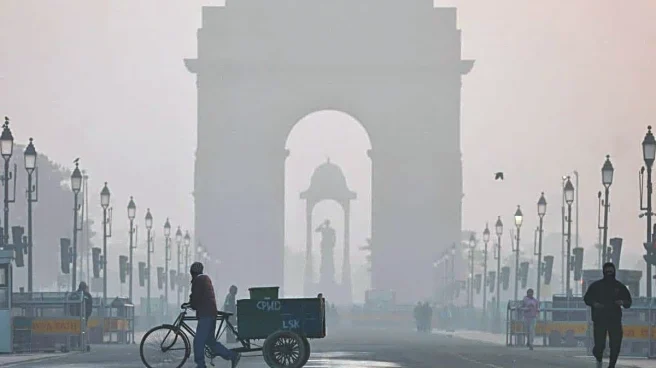



The Commission for Air Quality Management (CAQM) on Friday re-enforced GRAP-III (Graded Response Action Plan) measures across Delhi-NCR, citing forecasts that air quality could slip into the ‘severe’ category in the coming days.
Delhi-NCR has been battling persistently high pollution levels for months. In December, authorities implemented all GRAP-III measures after the Air Quality Index (AQI) touched the severe range. Unfavourable meteorological conditions, including low wind speed and a stable atmosphere, led to poor dispersion of pollutants, further degrading air quality across the region.
Although CAQM had lifted GRAP-III restrictions on January 2 following a marked improvement in air quality, the curbs have now been reimposed as pollution
levels began rising again, officials said.
What GRAP-III Restrictions Include
Under Stage-III measures, non-essential construction and demolition activities have been banned. This includes earthwork, piling, open trenching, welding, painting, plastering, tile and flooring work, and operations at ready-mix concrete (RMC) plants. Transportation of construction materials such as cement, sand and fly ash on unpaved roads has also been prohibited.
Polluting units, including stone crushers, brick kilns, mining operations, and industries using unapproved fuel,s have been ordered to shut down.
Vehicular Curbs and Exemptions
Vehicle restrictions under GRAP-III include a ban on BS-III petrol and BS-IV diesel four-wheelers, non-essential diesel-powered medium goods vehicles, and inter-state diesel buses that do not meet CNG, electric or BS-VI norms.
At the same time, exemptions have been granted for essential services. Infrastructure and public utility projects related to the metro, railways, airports, highways, defence, healthcare, and sanitation will continue under strict dust control and waste management norms. Vehicles used by persons with disabilities are exempted, public transport use has been encouraged, and schools may operate in hybrid or online mode up to Class 5.
CAQM said it will continue to closely monitor air quality and take further action if conditions deteriorate further.





/images/ppid_a911dc6a-image-177106302538573741.webp)