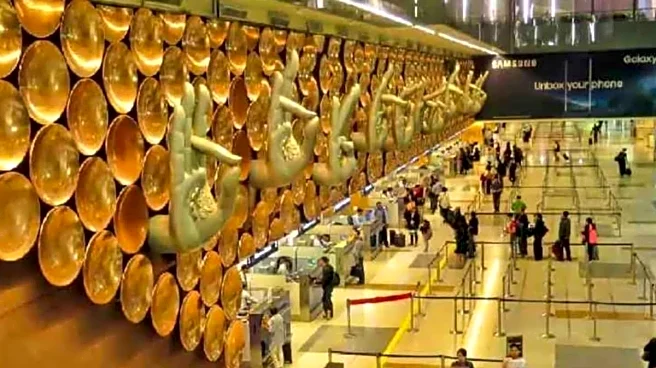

Passengers flying through Delhi and Mumbai airports may soon face a steep increase in user charges after the Telecom Disputes Settlement and Appellate Tribunal (TDSAT) revised the formula for calculating
tariffs. The new formula could push user development fees (UDF) up by as much as 22 times, making air travel significantly costlier.
The dispute dates back to the five-year tariff period between FY09 and FY14, during which the Delhi and Mumbai airports accumulated unpaid tariffs amounting to over ₹50,000 crore. The TDSAT order has opened the door for recovery of this amount from passengers through higher fees.
Airlines Challenge the Move in Supreme Court
The Airports Economic Regulatory Authority (AERA), several domestic carriers, and foreign airlines including Lufthansa, Air France, and Gulf Air have challenged the order in the Supreme Court. The case will be heard on Wednesday by Justices Aravind Kumar and Nilay Vipinchandra Anjaria.
If implemented, the revised tariff could increase UDF at Delhi airport from the current ₹261–₹129 to as high as ₹1,261–₹129 for domestic passengers, and from ₹656 to ₹6,356 for international travellers. At Mumbai airport, fees could rise to ₹3,856 for international passengers and ₹175 for domestic flyers.
Why the Fee Spike?
At the centre of the dispute is the Hypothetical Regulatory Asset Base (HRAB) a notional valuation system used by AERA. Airport operators earlier argued that non-aeronautical assets (such as retail spaces) must be included in the valuation, a point contested by regulators and upheld or reversed at various stages:
-
2006: Delhi & Mumbai airports handed to private operators
-
2009: AERA formed
-
2012: Dispute begins over whether non-aeronautical assets should be included
-
2018: Supreme Court upholds AERA’s method
-
2022: SC sends case back to TDSAT
-
2023: TDSAT reverses earlier stance, directing inclusion of non-aero assets
Possible Impact on Passengers
Industry experts warn that the implementation of the TDSAT order will make flight tickets more expensive and may slow passenger growth at India’s busiest airports.
Airlines argue the ruling is “anti-consumer” and places an undue burden on travellers. A final decision will hinge on the Supreme Court hearing scheduled for Wednesday.