
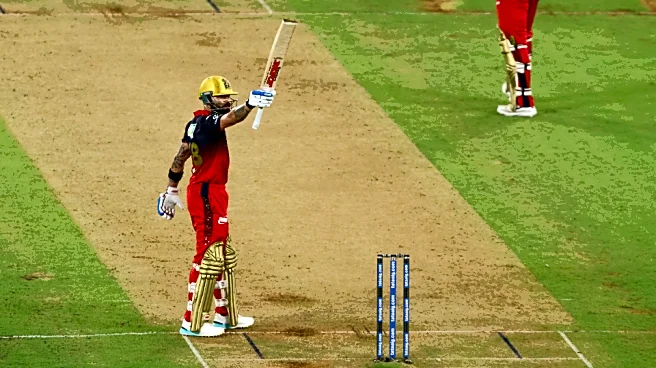
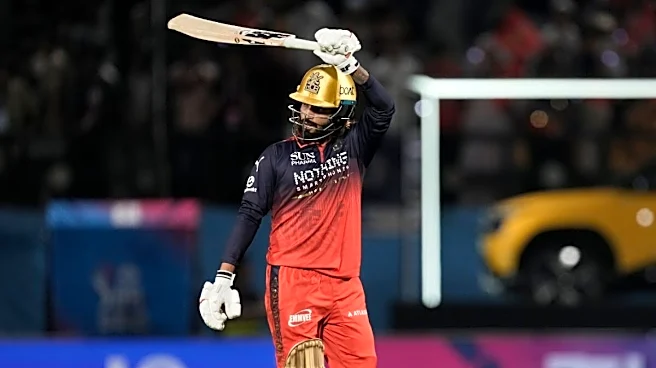
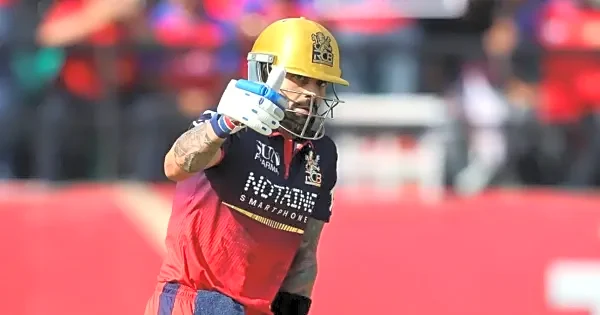
Whenever Virat Kohli was spotted with Anushka Sharma at a Test match in which India didn’t perform well, the internet, looking for someone to hold responsible, found its answer in the actress sitting in the stands. She had done nothing. She would continue to do nothing wrong. But the memes had already begun.
For years, whenever Virat had a rough patch—a duck, a dropped catch from a teammate, or a bad DRS call—Anushka Sharma trended on Twitter. Not Virat. Anushka. As if her presence in the players’ box had somehow reached through the television screen and guided the ball past the bat. The cruelty was baroque in its logic. The internet had decided: she was bad luck, a distraction, an actress who had no business being in love with a cricketer.
They
blamed her for every boundary he missed and gave him credit for every century he scored. That’s not how cricket works. That’s not how love works either.
The couple married in December 2017 in a quiet ceremony in Tuscany—no press, no fanfare, just close family and the Italian hills as witness. India found out via Instagram. Virat posted the photograph himself, with a caption so simple it silenced even the trolls for a day. When he posted a century celebration photo the following month with a heart emoji dedicated to her, the story started rewriting itself.
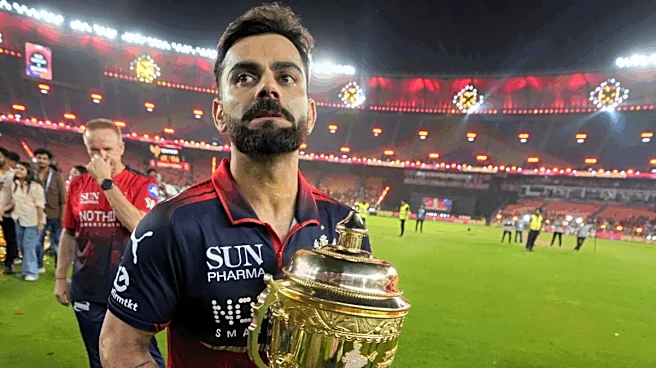
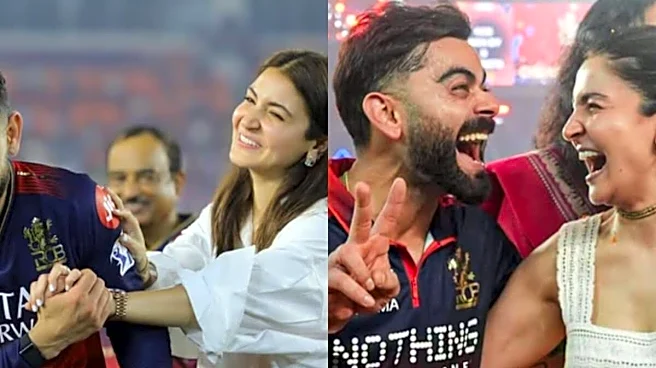
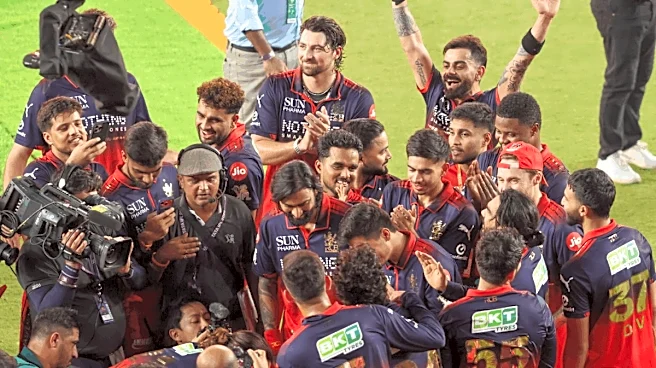
IPL 2025 and 2026 produced something the internet loves almost as much as a Kohli six: Anushka Sharma in the Royal Challengers Bengaluru box, completely losing her mind with joy. The clips are everywhere. Her jumping out of her seat when Virat hits a boundary. Her face going from clasped-hands-tense to open-mouthed-screaming in under a second. Her mouthing something to him when he walks off.
Anushka Sharma is our lucky charm 🤍#AnushkaSharma #Iplfinal pic.twitter.com/dp71CU4328
— ???????????????? ¹⁸ ♕ (@KINGOFCRICKEET) May 31, 2026
Cricket has always been a sport that runs on superstition—lucky underwear, specific warm-up rituals, batsmen who won’t change their stance if they’re on 49. But the cruelest part is what Anushka endured before she received this adulation. She was expected to absorb years of online harassment, vile comment sections, memes that followed her across every professional milestone, and then, when the tide turned, to simply accept the glory with the same grace. No apology was extended. No reckoning was had. The accounts that built followings mocking her pivoted seamlessly to building followings celebrating her, and nobody thought that warranted any acknowledgement whatsoever.
She has, to her considerable credit, never asked for one. Not publicly. She has moved with a dignity that the discourse around her has consistently failed to match.
What the lucky charm narrative also does (and this is worth sitting with) is keep her firmly in the support role. The scapegoat framing said: she holds him back. The lucky charm framing says: she lifts him up. Both framings centre Virat. Both reduce Anushka to her function relative to his performance. The woman has an filmography, a production company, a public life of enormous scale entirely her own, and the conversation, even now, is about what she does to his batting average. But she is beyond either narrative.
The real story of Anushka and Virat was never about cricket at all. It was about a woman who stayed, quietly and publicly, through the worst of what the internet could throw at her—and a man who made it clear, over and over, that she was the one he celebrated with first. India took a while. But it got there. And now, every time the camera finds her in those stands—face lit up, on her feet, completely undone by love and cricket and the boy she married in Tuscany—it feels like an apology India is still working to make.
/images/ppid_a911dc6a-image-178025408182920753.webp)


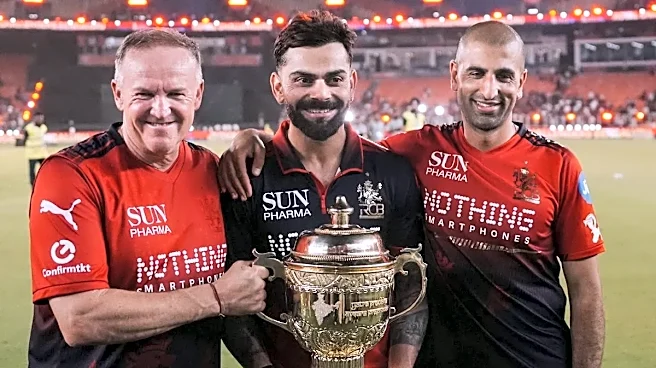


/images/ppid_a911dc6a-image-178027854955676238.webp)