
/images/ppid_59c68470-image-178850258419182607.webp)
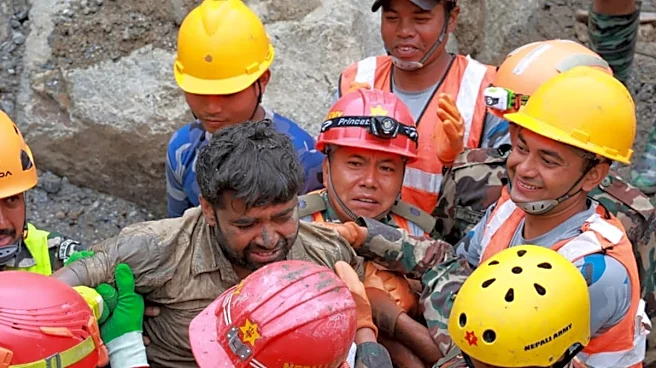
Nine days after being trapped inside a hydropower tunnel in Nepal which was struck by devastating floods, worker Sanjay Sah emerged alive on Friday, offering rescuers renewed hope to save more lives.
Sah, a mechanical foreman from Saptari, was inside the control room of the Trishuli 3A hydropower project when the flash flood and debris hit the area on August 26. He said his first instinct was to help his colleagues get out rather than save himself.
“I was working in the control room. My responsibility was to save everyone’s life,” Sah told a medical team from the Nepali Army after being brought out, The Kathmandu Post reported.
‘I Told Everyone To Run’
Sah said he urged those around him to flee, but the time spent helping others eventually left him unable to escape himself.
“I told everyone to run. In doing that, my time was lost. In the end, I could not get out,” he said.
With no way out, Sah spent the following days inside the tunnel waiting for rescuers. He said he kept reciting a mantra during his ordeal, The Kathmandu Post reported.
‘Three Or Four People Can Still Be Alive In Tunnel’
Sah also gave rescuers an indication that other workers could potentially still be inside the tunnel. He said he had been able to communicate with three or four people nearby, either through conversation or by making noises.
“There were only three or four people with whom we were able to communicate, nearby, by talking or making noises,” he said, according to The Kathmandu Post.
Also Read: Two People Rescued From Trishuli Tunnel 9 Days After Nepal Floods, More Voices Heard From Inside
But he warned that the number of people trapped could be higher, particularly in deeper sections of the tunnel and around the powerhouse.
“There could be. Not everyone may have been able to escape. The tunnel is very long,” he said, adding that the powerful floodwaters may have swept some workers further inside.
Second Worker Also Rescued
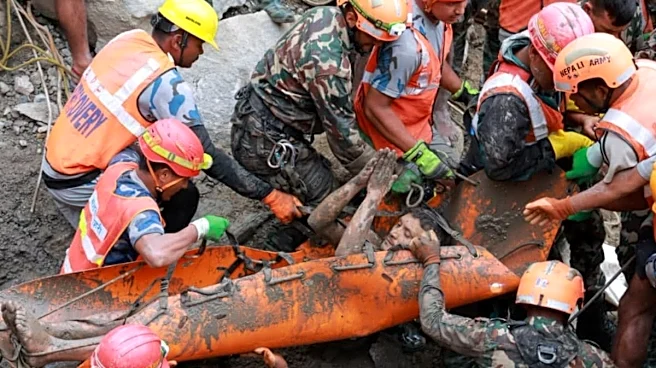
Sah was one of two hydropower workers pulled alive from the tunnel on Friday, giving rescuers a major breakthrough after days of increasingly difficult searches.
The second survivor was identified as Kabir Maharjan, 45, a mechanical supervisor from Kathmandu.
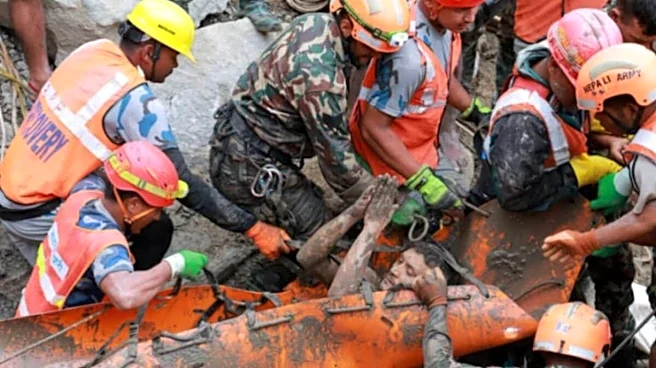
Maharjan was found covered in mud and was carried out on a stretcher. He was later airlifted to hospital and placed in intensive care, while Sah was reported to be in stable condition.
Maharjan’s brother, Amir, said his family had been overwhelmed by the news.
“I have been hearing from the news that my brother has been found. The entire family is very happy,” Amir said.
An aide to Nepal’s energy minister said Maharjan was unable to move his hands and legs, while Sah’s injuries were not considered critical.
‘As Long As There Is Breath, There Is Hope’
The rescue sparked celebrations among teams who had spent days battling huge quantities of compacted mud and debris inside the tunnel.
“As long as there is breath, there is hope!” Energy Minister Biraj Bhakta Shrestha said in a statement.
“Rescue operations are continuing in all the affected tunnels. Let everyone’s efforts and prayers continue. We have not lost hope,” he said.
Also Read: The Danger Beneath The Surface: Why Nepal’s Deadly Floods Were So Hard To Predict
The breakthrough came after rescuers had reportedly cleared around 50 to 60 metres of debris blocking the Trishuli 3A tunnel. Earlier on Friday, Australian rescue expert Arnold Dix said teams believed they had heard a faint response from inside.
“They believe they received a faint response from inside saying, ‘hunchha’, yes or OK,” Dix told AFP.
He said rescuers had called into the tunnel: “Don’t worry, we are rescuing you.”
Less than an hour later, the two men were brought out alive.
Rescue Efforts Continue
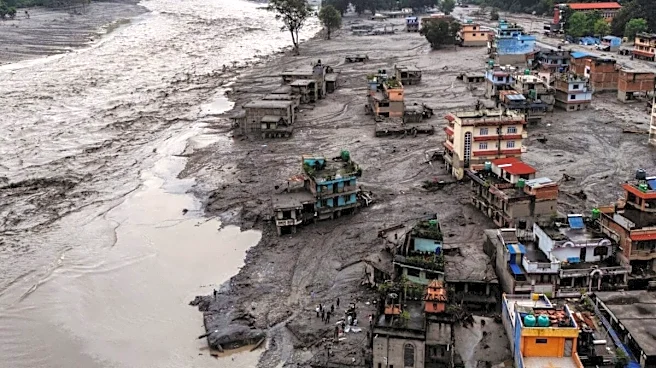
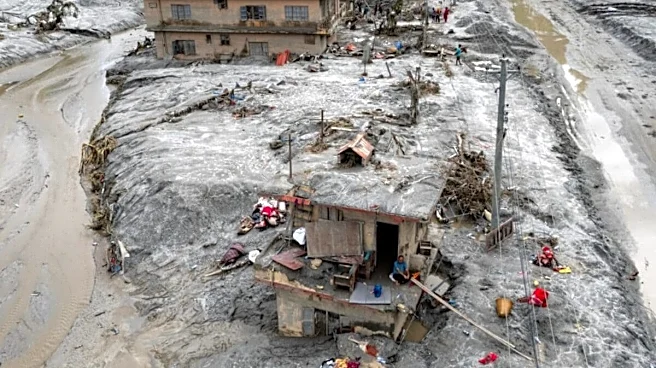
The two workers had been among hundreds feared missing after a massive glacial and rock collapse near the China-Nepal border triggered torrents of mud and debris through the Trishuli valley on August 26.
At least 12 hydropower projects were damaged or destroyed, while search teams have continued operations at Trishuli 3A and several other sites. Rescuers from Nepal, along with experts from India, China and South Korea, have been involved in the search.
The scale of the disaster has severely complicated rescue and relief operations, with roads, bridges, settlements and hydropower infrastructure swept away.
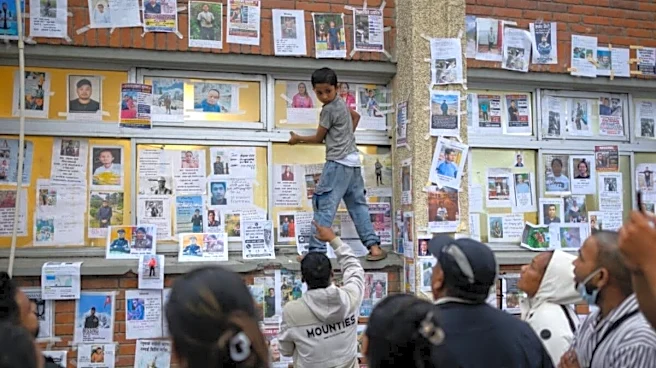
Nepal’s disaster authorities have reported 1,259 bodies recovered and 5,083 people missing. In neighbouring China, 21 deaths and 541 missing people have been reported, taking the combined toll to 1,280 dead and 5,624 missing.
With inputs from AFP


/images/ppid_59c68470-image-178845010575726563.webp)

/images/ppid_59c68470-image-178850502904780599.webp)
/images/ppid_59c68470-image-178850009900790369.webp)
/images/ppid_59c68470-image-178851009015588508.webp)