
/images/ppid_59c68470-image-177518752494525237.webp)
/images/ppid_a911dc6a-image-177513963602059817.webp)
Recent US intelligence reports indicate Iran is unlikely to reopen the Strait of Hormuz in the near future, as Tehran’s control over the crucial maritime corridor represents its most significant leverage against Washington, according to sources familiar with the matter cited by Reuters.
The assessments suggest Iran may continue restricting movement through the waterway to keep global energy prices elevated, increasing pressure on US President Donald Trump to seek an off-ramp from the nearly five-week-long war, which has remained unpopular among American voters.
LIVE Updates On The US-Iran War
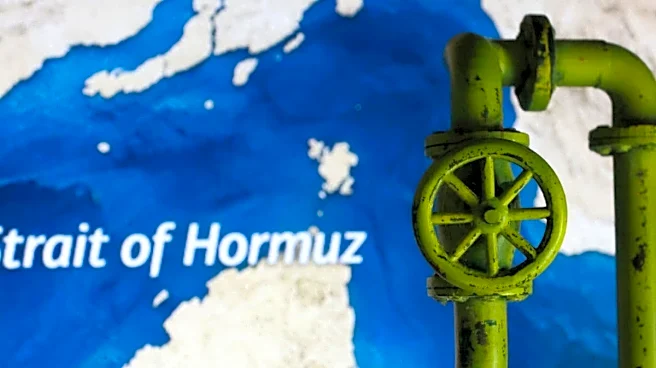
The Strait of Hormuz carries roughly one-fifth of global oil trade, making any disruption to maritime traffic a significant risk to international energy markets
and global economic stability.
TRUMP SIGNALS CONFIDENCE ON REOPENING KEY WATERWAY
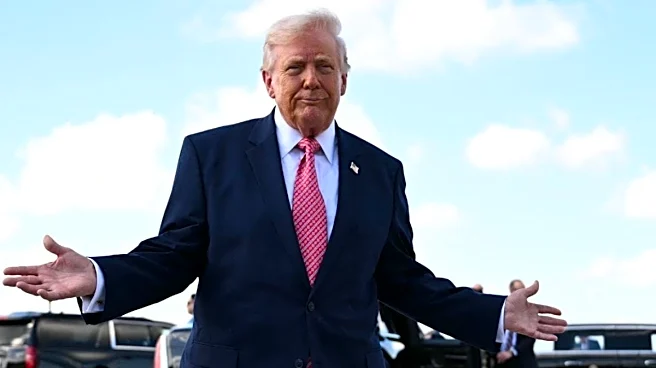
President Trump has publicly downplayed the challenges involved in restoring traffic through the strait.
In a post on his Truth Social platform, he wrote, “With a little more time, we can easily OPEN THE HORMUZ STRAIT, TAKE THE OIL, & MAKE A FORTUNE,” according to Reuters.
However, analysts have long warned that any military attempt to reopen the strait could prove costly and risk drawing the United States into a prolonged conflict.
Ali Vaez, director of the Iran Project at the International Crisis Group, told Reuters that Iran’s ability to influence global energy markets through its control of the strait may represent a powerful strategic advantage.
“In the attempt to try to prevent Iran from developing a weapon of mass destruction, the US handed Iran a weapon of mass disruption,” Vaez said, adding that Tehran understands its capacity to influence energy markets is “much more potent than even a nuclear weapon.”
While Trump has at times insisted that reopening the strait is essential to any ceasefire arrangement, he has also suggested that Gulf nations and NATO allies should take a leading role in restoring maritime security, Reuters reported, citing a White House official.
The official said Trump is confident the strait will reopen soon, but noted that other countries dependent on Gulf oil have a greater stake in ensuring shipping routes remain open.
IRAN ACCUSED OF DISRUPTING SHIPPING THROUGH MULTIPLE TACTICS
According to Reuters, Iran’s Islamic Revolutionary Guard Corps (IRGC) has employed various methods to make commercial transit through the strait too risky or uninsurable since February 28, when Trump and Israeli Prime Minister Benjamin Netanyahu launched military operations against Iran.
The reported tactics include attacks on civilian vessels, the deployment of naval mines, and demands for passage fees.
These actions have effectively restricted maritime movement through the narrow waterway, contributing to multi-year highs in oil prices and fuel shortages in countries dependent on Gulf energy supplies.
Higher energy prices could also drive inflation in the United States, posing a political challenge for Trump as his Republican Party prepares for mid-term congressional elections in November, Reuters reported.
Sources familiar with the intelligence assessments said Iran is unlikely to relinquish its leverage soon, given the strategic and economic advantages derived from its influence over shipping traffic.
Former CIA Director Bill Burns said in a Foreign Affairs magazine podcast that Iran is likely to maintain its ability to regulate maritime traffic in order to secure long-term deterrence and financial benefits during post-war recovery.
GEOGRAPHY OF STRAIT COMPLICATES MILITARY OPTIONS
Experts cited by Reuters say any military operation to reopen the waterway would carry significant risks due to the geography of the strait, which separates Iran and Oman.
At its narrowest point, the waterway is about 21 miles (33 km) wide, but shipping lanes in each direction are only about 2 miles (3 km) wide, making vessels vulnerable to attacks from drones or missiles.
Even if US forces were to secure coastal areas, analysts say Iran could continue to disrupt traffic using weapons launched from inland positions.
Vaez noted that minimal force could be enough to deter commercial shipping, saying “all it takes to disrupt traffic and deter vessels from passing through is one or two drones.”
Experts also suggest Iran may seek to retain regulatory control over the strait in order to generate revenue through passage fees as part of reconstruction efforts after the conflict.
TRUMP SETS 48-HOUR DEADLINE, WARNS OF ESCALATION
Before this, Trump issued a renewed ultimatum to Iran, saying the country had 48 hours to agree to terms related to reopening the Strait of Hormuz or face severe consequences.
Trump had earlier threatened on March 21 to “obliterate” Iran’s power plants, beginning with the country’s largest facility, if Tehran did not fully reopen the strait within 48 hours.
He later said “very good and productive conversations” were underway with Iranian authorities and postponed the potential strikes by five days, before extending the deadline again to expire at 8.00 pm Monday (0000 GMT Tuesday).
Experts have warned that attacks targeting civilian energy infrastructure could constitute a war crime, according to AFP.
NEGOTIATIONS FACE COMPLEX STRATEGIC BALANCE
Analysts say Iran’s demonstrated ability to disrupt global oil flows has strengthened its negotiating position, complicating efforts to reach a ceasefire agreement.
Burns noted that Tehran is likely to use its leverage over the strait to secure long-term deterrence guarantees as well as material benefits in any agreement with the United States.
“That sets up a really difficult negotiation right now,” Burns said, as quoted by Reuters.
ALSO READ | Strait Of Hormuz Traffic Hits Highest Level Since War Began Amid Tight Iranian Control
/images/ppid_59c68470-image-177528512455812045.webp)



/images/ppid_59c68470-image-177522502915644752.webp)

/images/ppid_a911dc6a-image-177512922689236957.webp)


/images/ppid_59c68470-image-177515260770899803.webp)