

What is the story about?
Mercedes-Benz
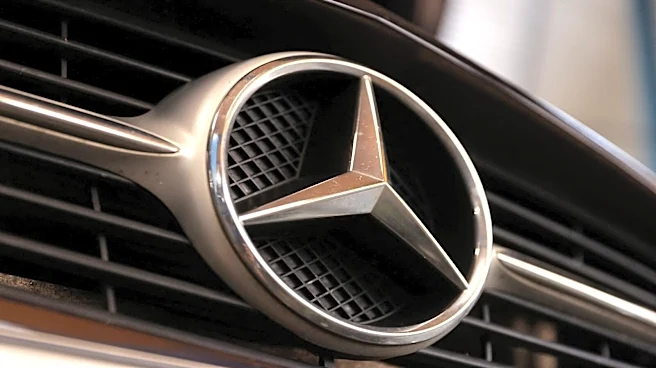
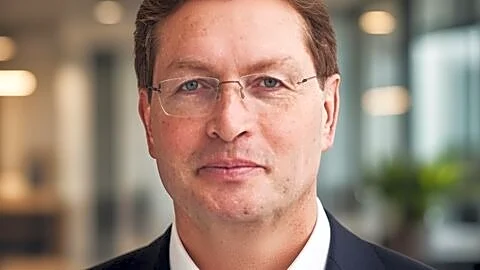
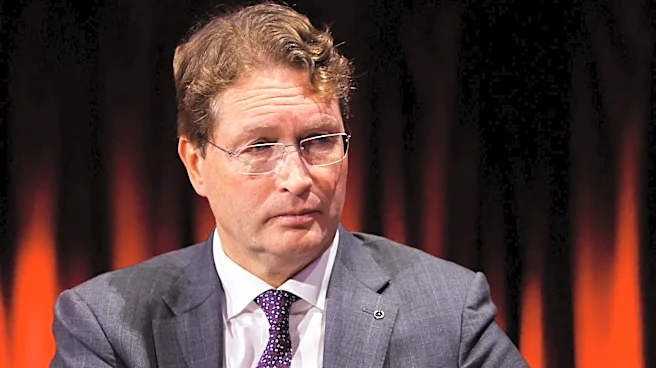
is increasingly looking at India as a strategic technology and innovation hub for its global operations, with the country's role extending beyond manufacturing and sales, Ola Källenius, Chairman of the Board of Management at Mercedes-Benz, has said.
In an exclusive interview with CNBC-TV18, Källenius said the company's research and development centre in Bengaluru is now fully integrated into its global engineering network, with Indian teams sharing responsibilities across mechanical engineering, electrical engineering, powertrain development and artificial intelligence (AI).
He said Mercedes-Benz is also looking to deepen its engagement with Indian technology partners and startups, particularly in emerging areas such as quantum computing and physical AI. Technologies developed in India can be tested locally and subsequently deployed across the company's global operations, he added.
Källenius said the company's approach to India goes beyond serving domestic demand, with the local technology ecosystem and supplier base increasingly contributing to its global ambitions.
However, Mercedes-Benz's current manufacturing plans remain focused on producing vehicles for the Indian market at its Pune facility. The company intends to expand production in line with domestic demand.
In the interview, Källenius also discussed India's evolving role in Mercedes-Benz's global strategy, the growing importance of its Bengaluru R&D operations, technology partnerships and the future of manufacturing in India.
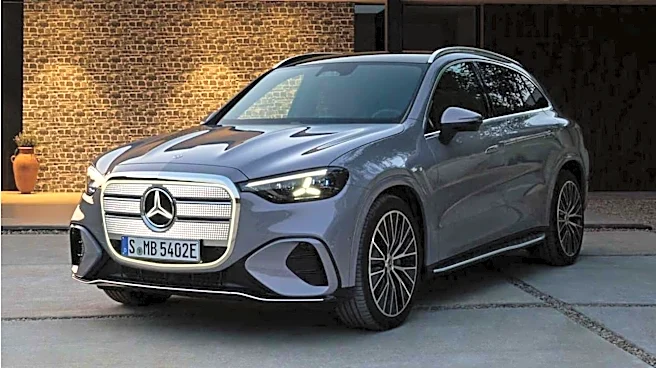
[faq type="interview" title="This is the excerpt of the interview."][ques][/ques][ans][/ans][/faq][faq type="interview"][ques]Let's double down on your conviction in India. While it's been a challenging global environment for Mercedes-Benz, in India, you've delivered your best quarterly performance in your history here. So, let's talk a little about the outlook for India and what this means in terms of capital allocation and your new model offensive, if I can call it that.[/ques][ans]Indeed, selling more than 5,400 vehicles in Q3 and making it the best quarter ever in the history of Mercedes-Benz in India makes us optimistic about the future. So, I think this is going to be a record year, and there is no doubt that India has more potential for us. We're in the middle of the biggest product launch offensive in the history of the company, and this year alone, we will launch 12 new models in the Indian market. I will travel to Pune, where we will have the market premiere of the new all-electric GLC. The pre-orders have been fantastic, so there is a lot of momentum for Mercedes-Benz in India, and we're looking to build on that.[/ans][/faq][faq type="interview"][ques]What does that mean in terms of capital allocation, Ola? Over ₹3,000 crore has been invested by Mercedes-Benz in India in setting up your manufacturing facility here, and so on and so forth. But given the prioritisation of India for your future growth strategy, what can we now expect in terms of capital allocation?[/ques][ans]We have a 360-degree strategy for India. It's much more than the market. Of course, we want to develop our position in the market, and we will invest in more models at our production facility in Pune. So, in terms of capital allocation, money is going in there. But I cannot underline enough how important the research and development operation here in Bengaluru is for our global R&D network. For many years now, this has been a hub for innovation for Mercedes-Benz, and India is present in every single Mercedes-Benz car around the world. So, this team here has global responsibility for many components and systems. And even with what happened over the weekend, with Kimi Antonelli becoming the youngest Formula One world champion in the history of the sport, India is also a Formula One world champion because this team here supports our Formula One team in Brackley and Brixworth in the UK to create Kimi's car. Yet another element of our 360-degree approach is working more and more with Indian tech partners and the supply base. So, it's not just India for India; it's India for the world, as far as Mercedes-Benz is concerned.[/ans][/faq][faq type="interview"][ques]Congratulations on Kimi's podium finish. Of course, he's created a record as the youngest champion at 20, and that's a big boost for Mercedes-Benz as well. It's nice to know that there is an India connection to Kimi's victory. But let's double down on that 360-degree strategy that you spoke about for India specifically, Ola. You talked about India for the world, but from a manufacturing perspective, what can we truly expect, given the slowdown that we are now seeing for Mercedes-Benz in China and the prohibitive cost of manufacturing in Europe? Can the centre of gravity truly shift to India over the next five to 10 years from a manufacturing point of view?[/ques][ans]In terms of our vehicle assembly, our current plans are for India for India, but we have gone beyond that with our supply base and tech partners. So, I think the Mercedes-Benz strategy in India will contribute to the world. It will start there, with the supply base and tech partners. We will try to grow our production footprint here in line with the market. I see more growth potential over a five-to-10-year perspective. We will act in accordance with market demand, and we have that flexibility. So, I feel very comfortable with that. On the R&D side, India is now fully integrated into our R&D network, and the team is now like a full team member. It's no longer a case of us starting here, giving the team some tasks, having them solve those tasks and then passing the ball back to our R&D facilities at headquarters in Germany. Now, it's more like they're passing the ball back and forth all the time. In R&D, we cover everything: mechanical engineering, electrical engineering, powertrain engineering and, of course, AI. The AI talent we have here at MBRDI is amazing, and we can find fantastic people in this ecosystem, which is India's startup capital. This will propel our AI efforts even further and make Mercedes-Benz even more attractive to customers around the world.[/ans][/faq][faq type="interview"][ques]What is the plan now in terms of further strengthening capabilities at the tech R&D centre in Bengaluru? You've got a significant workforce there, with 10,000 people and counting. What can we now expect in terms of adding people? You talked about AI. What can we truly expect as far as AI and Mercedes-Benz, and specifically manufacturing, are concerned? What are the benefits that are already starting to accrue from the use of AI?[/ques][ans]I had a chance earlier today to look at some use cases that our engineering team has been working on here in India. These are not just things that we have been doing in-house but also involve working with some very exciting startups. We looked at one company in the quantum computing space in India. Mercedes-Benz is also at the forefront of quantum computing. We looked at physical AI, with robots taking over tasks in assembly, and different types of robots that are emerging. What I see now is that the AI revolution, which is happening in every industry and in our lives, is hitting the auto industry in full force. We will take advantage of the talent that we already have. I'm sure we will recruit more talent in the AI space, but we will equally leverage tech partnerships and the startup scene here in Bengaluru and across the country to move faster. We can test things here and apply some of those technologies to our operations in India, but we can also very quickly proliferate that technology across the world. This is where the strength of the Mercedes-Benz R&D network comes into play. Yes, our founding fathers invented the automobile 140 years ago, and we started our engineering and R&D base in Germany. But now we have our biggest R&D centre outside Germany here in India. We're also in the United States, China, Israel and different places around the world, where we can access talent pools and tech ecosystems. So, it now really works like a network, and MBRDI plays a crucial role in that network.[/ans][/faq]