/images/ppid_59c68470-image-177972505853892038.webp)


/images/ppid_a911dc6a-image-177968707439881308.webp)

What is the story about?
Union Coal and Mines Minister G Kishan Reddy has directed government mining and exploration agencies to fast-track pending projects in mission mode to strengthen India’s mineral security and reduce dependence on imports of critical minerals used in clean energy technologies.
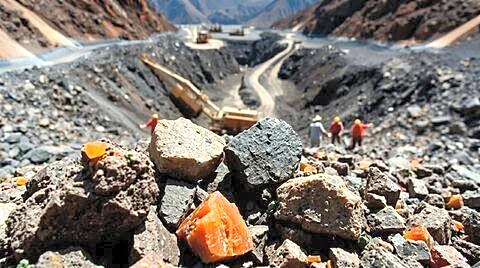
During a series of high-level review meetings in Bengaluru, the minister assessed exploration activities related to critical and strategic minerals such as rare earth elements (REE), lithium, nickel, cobalt, tungsten, vanadium and platinum group elements (PGE).
These minerals are widely used in electric vehicles, batteries, solar panels and other clean energy technologies that are key to reducing reliance on imported fossil fuels.
Reddy also reviewed the progress of the Geological Survey of India (GSI), Indian Bureau of Mines (IBM), National Institute of Rock Mechanics (NIRM) and the Remote Sensing & Aerial Survey (RSAS) division, urging agencies to strengthen scientific and technological capabilities while ensuring sustainable mining practices.
Separately, Mines Secretary V L Kantha Rao chaired the ninth monthly review meeting with senior ministry officials and mineral-bearing states to assess the progress of mineral block auctions and operationalisation across the country.
The meeting focused on speeding up reforms in the mining sector, increasing domestic mineral production and ensuring faster operationalisation of auctioned mineral blocks.
Officials said the pace of mineral block auctions has accelerated significantly in recent years. While 108 mineral blocks were auctioned between FY16 and FY21, another 364 blocks were auctioned between FY22 and FY25, averaging around 90 auctions annually.
In FY26 alone, a record 212 mineral blocks were auctioned — the highest in a single year since the auction regime began in 2015. This included 22 critical and strategic mineral blocks.
The ministry also reviewed the operational status of auctioned mines. During FY26, 36 mineral blocks became operational, including 28 greenfield and eight brownfield projects. By comparison, 58 blocks had been operationalised during the entire FY16-FY25 period.
The Geological Survey of India highlighted key exploration findings in Karnataka and Goa, including identification of zones rich in gold, copper, nickel, cobalt and platinum group elements.
GSI also outlined a five-year roadmap involving large-scale mapping, artificial intelligence and machine learning-based mineral targeting, and advanced exploration projects covering nearly 48,000 sq km.
Meanwhile, the RSAS division said over 6.5 lakh sq km has already been covered under the National Aerogeophysical Mapping Programme, helping generate more than 200 exploration projects using airborne geophysical data.
During a series of high-level review meetings in Bengaluru, the minister assessed exploration activities related to critical and strategic minerals such as rare earth elements (REE), lithium, nickel, cobalt, tungsten, vanadium and platinum group elements (PGE).
These minerals are widely used in electric vehicles, batteries, solar panels and other clean energy technologies that are key to reducing reliance on imported fossil fuels.
Reddy also reviewed the progress of the Geological Survey of India (GSI), Indian Bureau of Mines (IBM), National Institute of Rock Mechanics (NIRM) and the Remote Sensing & Aerial Survey (RSAS) division, urging agencies to strengthen scientific and technological capabilities while ensuring sustainable mining practices.
Separately, Mines Secretary V L Kantha Rao chaired the ninth monthly review meeting with senior ministry officials and mineral-bearing states to assess the progress of mineral block auctions and operationalisation across the country.
The meeting focused on speeding up reforms in the mining sector, increasing domestic mineral production and ensuring faster operationalisation of auctioned mineral blocks.
Officials said the pace of mineral block auctions has accelerated significantly in recent years. While 108 mineral blocks were auctioned between FY16 and FY21, another 364 blocks were auctioned between FY22 and FY25, averaging around 90 auctions annually.
In FY26 alone, a record 212 mineral blocks were auctioned — the highest in a single year since the auction regime began in 2015. This included 22 critical and strategic mineral blocks.
The ministry also reviewed the operational status of auctioned mines. During FY26, 36 mineral blocks became operational, including 28 greenfield and eight brownfield projects. By comparison, 58 blocks had been operationalised during the entire FY16-FY25 period.
The Geological Survey of India highlighted key exploration findings in Karnataka and Goa, including identification of zones rich in gold, copper, nickel, cobalt and platinum group elements.
GSI also outlined a five-year roadmap involving large-scale mapping, artificial intelligence and machine learning-based mineral targeting, and advanced exploration projects covering nearly 48,000 sq km.
Meanwhile, the RSAS division said over 6.5 lakh sq km has already been covered under the National Aerogeophysical Mapping Programme, helping generate more than 200 exploration projects using airborne geophysical data.



/images/ppid_a911dc6a-image-177972089923961959.webp)