/images/ppid_59c68470-image-177796569338560501.webp)



What is the story about?
Oil prices held the bulk of a sharp rise post fighting flared in West Asia, with Iran and the US exchanging fire, fresh attacks on energy infrastructure and vessels near the key Strait of Hormuz.
Brent was trading near $114 a barrel after rising almost 6% on Monday. Meanwhile, the West Texas Intermediate was lower than $105 a barrel.
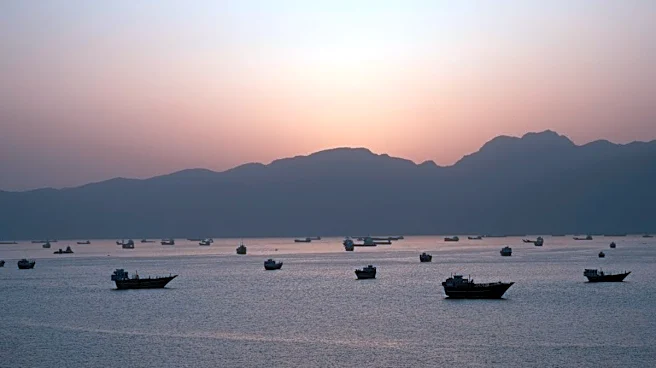
The US military fought off Iranian attacks as it guided two US-flagged vessels through the waterway, according to US Central Command. In the United Arab Emirates, an oil terminal in Fujairah was hit.
The hostilities came as the US sought to clear a path through Hormuz for stranded vessels, casting doubt on the four-week ceasefire between Washington and Tehran. President Donald Trump said the war may last another two to three weeks, according to an interview with Salem News Channel
Brent crude has rallied by almost 90% this year as the conflict deprived the market of millions of barrels of oil, with the strait still all-but-impassable and wells shut-in around the region. The waterway has been subject to a double blockade, with Tehran seeking to prevent ships from transiting, while Washington stops boats sailing to or from the Islamic Republic.
Iranian Foreign Minister Abbas Araghchi said talks with Washington were “making progress” but the US and the UAE “should be wary of being dragged back into quagmire,” according to a post on X. Events in Hormuz made clear “there’s no military solution to a political crisis,” he added.
Spiking energy costs have fanned concerns the conflict will stoke inflation while hurting growth. In the US Treasury market, 30-year yields climbed to the highest since July, topping 5%, as traders boosted wagers the Federal Reserve will have to reserve course and raise rates to curb price gains.
With inputs from Bloomberg
Brent was trading near $114 a barrel after rising almost 6% on Monday. Meanwhile, the West Texas Intermediate was lower than $105 a barrel.
The US military fought off Iranian attacks as it guided two US-flagged vessels through the waterway, according to US Central Command. In the United Arab Emirates, an oil terminal in Fujairah was hit.
The hostilities came as the US sought to clear a path through Hormuz for stranded vessels, casting doubt on the four-week ceasefire between Washington and Tehran. President Donald Trump said the war may last another two to three weeks, according to an interview with Salem News Channel
Brent crude has rallied by almost 90% this year as the conflict deprived the market of millions of barrels of oil, with the strait still all-but-impassable and wells shut-in around the region. The waterway has been subject to a double blockade, with Tehran seeking to prevent ships from transiting, while Washington stops boats sailing to or from the Islamic Republic.
Iranian Foreign Minister Abbas Araghchi said talks with Washington were “making progress” but the US and the UAE “should be wary of being dragged back into quagmire,” according to a post on X. Events in Hormuz made clear “there’s no military solution to a political crisis,” he added.
Spiking energy costs have fanned concerns the conflict will stoke inflation while hurting growth. In the US Treasury market, 30-year yields climbed to the highest since July, topping 5%, as traders boosted wagers the Federal Reserve will have to reserve course and raise rates to curb price gains.
With inputs from Bloomberg




/images/ppid_59c68470-image-177796525506499010.webp)
/images/ppid_a911dc6a-image-177796582739565432.webp)

/images/ppid_59c68470-image-177796553170681347.webp)