/images/ppid_59c68470-image-179076252280490701.webp)

/images/ppid_59c68470-image-179070511924923696.webp)


What is the story about?
The Federation of All India Vyapar Mandal (FAIVM) has said it will not participate in the “No UPI Day” proposed for October 2, 2026, even as mobile phone retailers across India are expected to stop accepting UPI payments as part of a protest against the proposed Merchant Discount Rate (MDR) on certain UPI transactions.
FAIVM said it is not part of any traders’ agitation proposed for October 2 and will instead continue engaging with the government through discussions, persuasion and logical presentation.
The organisation said it is working with the Ministry of Finance on UPI-MDR and the fees or charges required to support a self-sustaining payment infrastructure without affecting the business of small traders.
FAIVM Treasurer Rajeshwar Painyuli said the organisation would continue its dialogue with the government in a constructive manner and work towards greater participation of the trading community in the digital economy.
The clarification comes as the All India Mobile Retailers Association (AIMRA) has called for October 2 to be observed as “No UPI Day” over concerns around the proposed 0.4% MDR on eligible merchant UPI transactions.
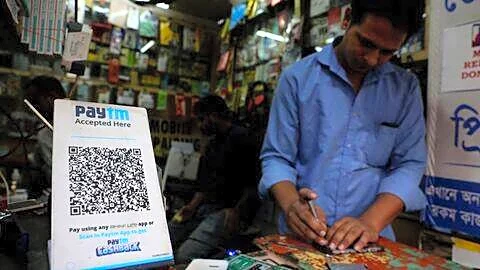
Retailers participating in AIMRA’s campaign are expected to stop accepting UPI payments for the day and cover their UPI QR codes with black cloth.
AIMRA has said the campaign is intended to highlight the financial implications of MDR for merchants rather than oppose UPI or digital payments.
AIMRA Vice President and Delhi NCR President Tarvinder Singh said the association’s concern was the additional financial burden that the proposed MDR could place on mobile retailers, many of whom operate on thin margins.
According to a representation submitted by AIMRA to Finance Minister Nirmala Sitharaman, a small retailer processing ₹5 lakh to ₹30 lakh a month through UPI could face an additional monthly cost of ₹2,000 to ₹12,000.
The association estimates that the proposed 0.4% MDR could create a burden of around ₹40 crore a month, or nearly ₹500 crore annually, for small mobile retailers across India. AIMRA has demanded that merchant UPI payments continue under a zero-MDR structure.
FAIVM has appealed to trader associations to support UPI as an affordable, accessible and sustainable digital payment system.
The organisation said UPI is not merely a payment mechanism but an important component of India’s digital economic infrastructure. It also stressed the need to protect traders, ensure customers continue to have convenient payment options and maintain the sustainability of the UPI ecosystem over the long term.
FAIVM National General Secretary R.K. Gaur said the organisation’s approach was in line with its objective of working towards the betterment of small and medium traders through engagement with the government.
The revised MDR framework is scheduled to come into effect from October 15.
Under the framework, a 0.4% MDR will apply to specified person-to-merchant (P2M) UPI transactions above ₹2,000, with the charge capped at ₹300 per transaction.
Person-to-person (P2P) UPI transfers will not be covered by the new MDR. P2M transactions of up to ₹2,000 will also remain outside the framework.
A flat ₹5 charge will apply to transactions above ₹2,000 in select sectors, including railways, telecommunications, insurance and fuel. Transactions involving mutual funds, securities, stockbrokers and dealers will attract an MDR of 0.02%, capped at ₹300.
Small merchants receiving up to ₹1 lakh a month through UPI QR payments under the P2PM category will continue to pay zero MDR.
The government has said the revised framework will affect around 4% of merchant transactions, leaving approximately 96% of P2M transactions unaffected.
Also read: Mobile retailers to observe ‘No UPI Day’ on October 2 over MDR charges
FAIVM said it is not part of any traders’ agitation proposed for October 2 and will instead continue engaging with the government through discussions, persuasion and logical presentation.
The organisation said it is working with the Ministry of Finance on UPI-MDR and the fees or charges required to support a self-sustaining payment infrastructure without affecting the business of small traders.
FAIVM Treasurer Rajeshwar Painyuli said the organisation would continue its dialogue with the government in a constructive manner and work towards greater participation of the trading community in the digital economy.
The clarification comes as the All India Mobile Retailers Association (AIMRA) has called for October 2 to be observed as “No UPI Day” over concerns around the proposed 0.4% MDR on eligible merchant UPI transactions.
What is expected on October 2?
Retailers participating in AIMRA’s campaign are expected to stop accepting UPI payments for the day and cover their UPI QR codes with black cloth.
AIMRA has said the campaign is intended to highlight the financial implications of MDR for merchants rather than oppose UPI or digital payments.
AIMRA Vice President and Delhi NCR President Tarvinder Singh said the association’s concern was the additional financial burden that the proposed MDR could place on mobile retailers, many of whom operate on thin margins.
According to a representation submitted by AIMRA to Finance Minister Nirmala Sitharaman, a small retailer processing ₹5 lakh to ₹30 lakh a month through UPI could face an additional monthly cost of ₹2,000 to ₹12,000.
The association estimates that the proposed 0.4% MDR could create a burden of around ₹40 crore a month, or nearly ₹500 crore annually, for small mobile retailers across India. AIMRA has demanded that merchant UPI payments continue under a zero-MDR structure.
What has FAIVM said?
FAIVM has appealed to trader associations to support UPI as an affordable, accessible and sustainable digital payment system.
The organisation said UPI is not merely a payment mechanism but an important component of India’s digital economic infrastructure. It also stressed the need to protect traders, ensure customers continue to have convenient payment options and maintain the sustainability of the UPI ecosystem over the long term.
FAIVM National General Secretary R.K. Gaur said the organisation’s approach was in line with its objective of working towards the betterment of small and medium traders through engagement with the government.
What changes under the new UPI framework?
The revised MDR framework is scheduled to come into effect from October 15.
Under the framework, a 0.4% MDR will apply to specified person-to-merchant (P2M) UPI transactions above ₹2,000, with the charge capped at ₹300 per transaction.
Person-to-person (P2P) UPI transfers will not be covered by the new MDR. P2M transactions of up to ₹2,000 will also remain outside the framework.
A flat ₹5 charge will apply to transactions above ₹2,000 in select sectors, including railways, telecommunications, insurance and fuel. Transactions involving mutual funds, securities, stockbrokers and dealers will attract an MDR of 0.02%, capped at ₹300.
Small merchants receiving up to ₹1 lakh a month through UPI QR payments under the P2PM category will continue to pay zero MDR.
The government has said the revised framework will affect around 4% of merchant transactions, leaving approximately 96% of P2M transactions unaffected.
Also read: Mobile retailers to observe ‘No UPI Day’ on October 2 over MDR charges
/images/ppid_59c68470-image-179083509581959774.webp)
/images/ppid_59c68470-image-179083255489699233.webp)


/images/ppid_59c68470-image-179069502477739025.webp)
/images/ppid_59c68470-image-179076502705266774.webp)
/images/ppid_59c68470-image-179075755015693577.webp)