/images/ppid_59c68470-image-177806760848426497.webp)

/images/ppid_a911dc6a-image-177779714727023444.webp)


What is the story about?
The sugar industry is seeking a transparent pricing mechanism linking sugarcane prices with sugar minimum support prices (MSP) and ethanol rates as rising input costs continue to pressure company margins, according to Kapil Nema, Deputy Executive Director, Sugar & Ethanol Business at Dalmia Bharat Sugar & Industries.
Speaking about the government’s latest Fair and Remunerative Price (FRP) increase for sugarcane, Nema described the hike as moderate and said it reflected the stress already present in the industry.
“A modest increase directly tells you also that the government is also reading that the industry is already in stress,” he said.
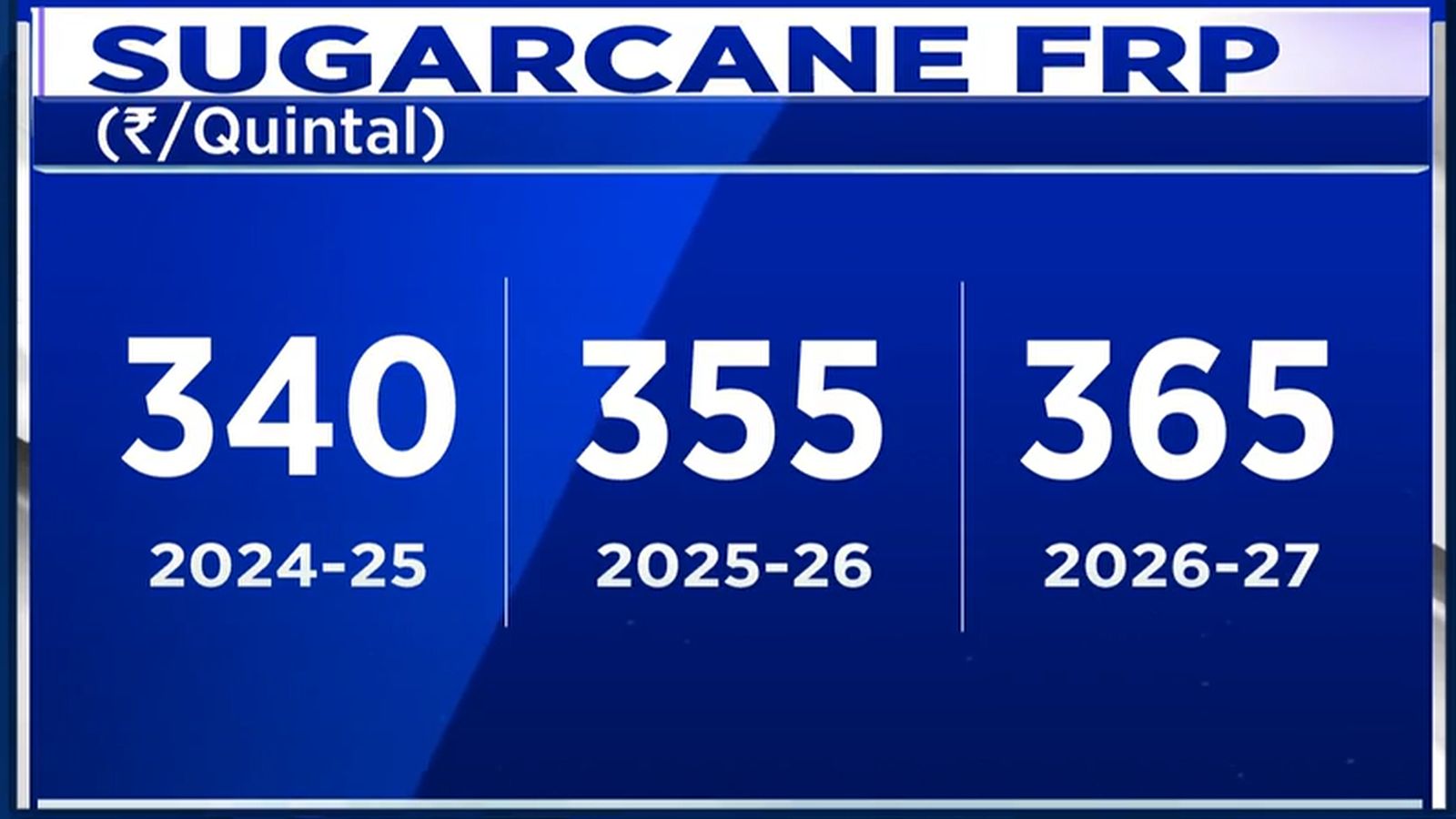
The Centre recently raised the FRP for sugarcane by ₹10 per quintal compared with last year. According to Nema, the increase translates into roughly ₹100 to ₹110 per tonne for sugar mills in key producing states such as Maharashtra and Karnataka.
While welcoming the decision, he said the industry needs a more balanced pricing structure because sugar and ethanol prices have not risen in line with cane costs.
“There has to be an equivalent and a transparent formula, which should link the sugarcane price to the MSP and the ethanol prices,” Nema said.
He added that such a mechanism would help companies plan investments and expansion with better visibility on margins and cash flows.
For the full interview, watch the accompanying video
Nema also highlighted weather risks linked to the developing El Niño conditions, saying rainfall during June and July will remain critical for the upcoming sugarcane crop.
“Rain is the primary and the most important thing for the sugarcane crop,” he said, noting that most sugarcane-growing regions in India depend heavily on rainfall.
Also Read | High oil prices may tighten global sugar supply: Triveni Engineering MD
On ethanol blending, Nema said the industry is awaiting clarity on the government’s long-term roadmap beyond the current 20% blending target. He said discussions around E22, E25 or E27 blending targets would require a clear policy framework to support investment planning.
Regarding exports, Nema said India is likely to export around 7.5 lakh to 8 lakh tonne of sugar this season, as global competition from Brazil and Pakistan increases.
He said domestic sugar prices are gradually strengthening during the off-season, which could keep export competitiveness under pressure in the coming months.
Catch all the latest updates from the stock market here
Speaking about the government’s latest Fair and Remunerative Price (FRP) increase for sugarcane, Nema described the hike as moderate and said it reflected the stress already present in the industry.
“A modest increase directly tells you also that the government is also reading that the industry is already in stress,” he said.
The Centre recently raised the FRP for sugarcane by ₹10 per quintal compared with last year. According to Nema, the increase translates into roughly ₹100 to ₹110 per tonne for sugar mills in key producing states such as Maharashtra and Karnataka.
While welcoming the decision, he said the industry needs a more balanced pricing structure because sugar and ethanol prices have not risen in line with cane costs.
“There has to be an equivalent and a transparent formula, which should link the sugarcane price to the MSP and the ethanol prices,” Nema said.
He added that such a mechanism would help companies plan investments and expansion with better visibility on margins and cash flows.
For the full interview, watch the accompanying video
Nema also highlighted weather risks linked to the developing El Niño conditions, saying rainfall during June and July will remain critical for the upcoming sugarcane crop.
“Rain is the primary and the most important thing for the sugarcane crop,” he said, noting that most sugarcane-growing regions in India depend heavily on rainfall.
Also Read | High oil prices may tighten global sugar supply: Triveni Engineering MD
On ethanol blending, Nema said the industry is awaiting clarity on the government’s long-term roadmap beyond the current 20% blending target. He said discussions around E22, E25 or E27 blending targets would require a clear policy framework to support investment planning.
Regarding exports, Nema said India is likely to export around 7.5 lakh to 8 lakh tonne of sugar this season, as global competition from Brazil and Pakistan increases.
He said domestic sugar prices are gradually strengthening during the off-season, which could keep export competitiveness under pressure in the coming months.
Catch all the latest updates from the stock market here










/images/ppid_59c68470-image-177804505728053869.webp)