/images/ppid_59c68470-image-178282762278469288.webp)




What is the story about?
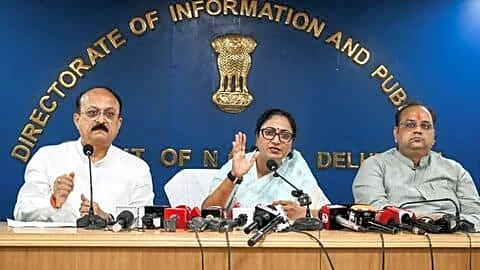
Delhi's new electric vehicle (EV) policy is among the most ambitious clean mobility roadmaps announced by any Indian state or Union Territory. Backed by a planned investment of ₹15,000 crore, it aims to accelerate EV adoption through purchase incentives, charging infrastructure, tax concessions and a phased transition away from fossil fuel-powered vehicles.
The targets are significant. From January 1, 2027, only electric three-wheelers will be eligible for new registrations in Delhi, while new petrol and CNG two-wheelers will no longer be registered from April 1, 2028. The government also wants 30% of the capital's vehicle fleet to be electric by March 2030.
That raises a key question: Is Delhi's EV ecosystem ready for such a rapid transition?
Industry experts who spoke to CNBC-TV18 believe the answer is broadly yes—but only if vehicle production, charging infrastructure, financing and consumer confidence keep pace with the government's ambitious timelines.
Dealers are ready—but they cannot drive the transition alone
Vehicle dealers will be on the front line of Delhi's EV transition. They will need to invest in charging facilities, train technicians, educate customers and provide after-sales support for a growing electric vehicle market.
According to Saharsh Damani, CEO of the Federation of Automobile Dealers Associations (FADA), dealers are prepared to take on that responsibility.
"Dealers are ready for the transition, and more importantly, they are willing to lead it."
However, dealer readiness alone will not determine whether the policy succeeds.
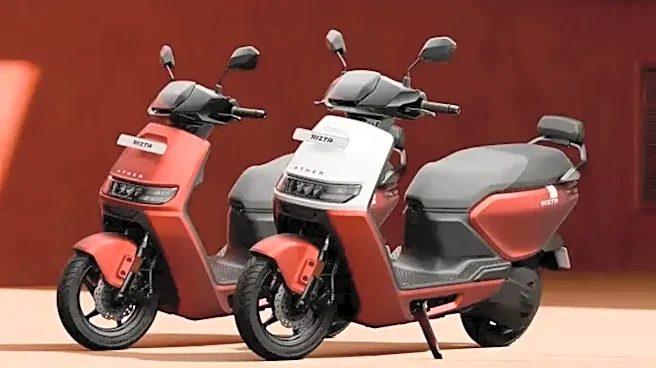
Delhi currently sells around 50,000 two-wheelers and nearly 5,000 three-wheelers every month. As EV-only registration deadlines begin to take effect, much of that demand will shift towards electric models.
That means manufacturers will have to significantly ramp up production and ensure Delhi receives adequate allocations of electric vehicles. Without sufficient supply, even a well-prepared dealer network may struggle to meet consumer demand.
Damani says dealers are already investing in EV infrastructure and technician training. FADA has also offered to facilitate around 150 EV charging stations through its dealer network. But he argues that manufacturing capacity, financing and charging infrastructure must expand alongside vehicle sales for the transition to remain smooth.
Charging infrastructure may not be the biggest hurdle
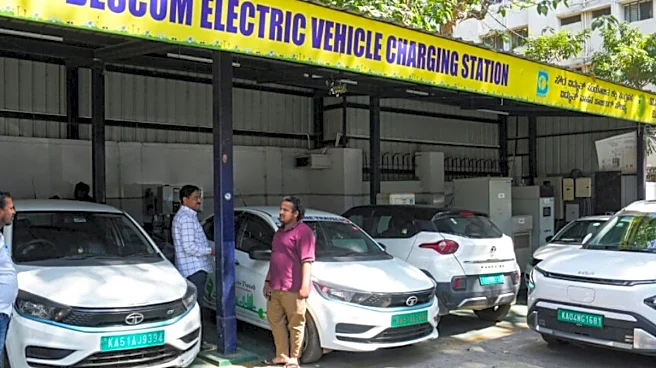
One of the biggest questions surrounding Delhi's EV policy is whether the city has enough charging stations to support a rapidly growing electric vehicle fleet.
Industry experts argue that this concern often overlooks how EVs are actually charged.
According to Amit Bhatt, Managing Director (India) at the International Council on Clean Transportation (ICCT), public charging represents only a small part of the overall charging ecosystem.
"Almost 85% to 90% of charging happens at home."
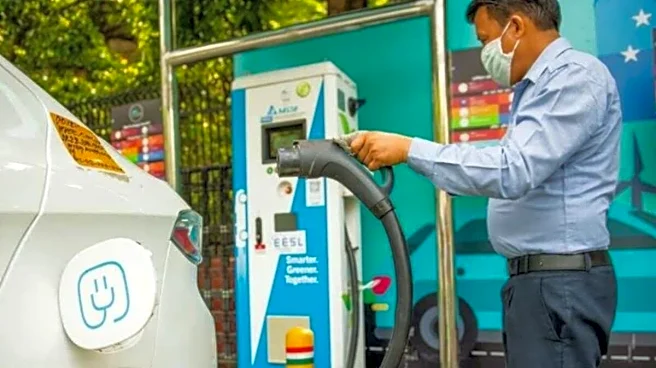
Unlike petrol or diesel vehicles, electric two-wheelers and three-wheelers can often be charged using a standard 16-ampere electrical connection at home.
The bigger challenge, Bhatt says, is enabling residents of apartment complexes and group housing societies to install private charging points. Many resident welfare associations continue to restrict charger installations, creating practical barriers for EV owners despite growing vehicle availability.
That is why experts believe Delhi's charging ecosystem must evolve beyond simply adding more public charging stations.
Private charging can serve homeowners with dedicated parking, community charging can support apartment residents and neighbourhoods without reserved spaces, while fast public chargers will remain essential for commercial fleets and inter-city travel.
The government's plan to install more than 30,000 charging points across Delhi is therefore only one part of a much broader charging ecosystem.
Can India's battery ecosystem keep pace?
Another important question is whether India's battery ecosystem can support rising EV demand if Delhi's policy succeeds.
Nitin Gupta, CEO and Co-Founder of battery recycling company Attero, believes the industry is capable of scaling rapidly.
"If the charging infrastructure or battery manufacturing needs to ramp up, it will ramp up."
He argues that policies such as Delhi's provide demand certainty, encouraging companies to invest in battery manufacturing, recycling and critical mineral recovery.
As EV adoption rises, India will require significantly larger quantities of materials such as lithium carbonate, much of which is currently imported. Recycling allows valuable battery materials to be recovered domestically, reducing dependence on imports while strengthening the country's battery supply chain.
Gupta says companies involved in battery recycling are already preparing to support similar EV transitions across other Indian cities as adoption gathers pace.
Affordability could determine how quickly consumers switch
Infrastructure alone will not determine whether Delhi's EV ambitions succeed. Consumer economics will remain equally important.
Although electric two-wheelers continue to cost more upfront than comparable petrol models in many cases, the gap has been narrowing due to localisation, improvements in battery technology and larger production volumes.
Delhi's policy seeks to accelerate adoption through purchase incentives of up to ₹30,000 for electric two-wheelers and ₹50,000 for electric three-wheelers during the first year. Buyers will also benefit from exemptions on road tax and registration charges, while scrappage incentives further reduce ownership costs.
Damani argues that affordability should be viewed beyond the purchase price.
Lower running costs, reduced maintenance expenses, easier financing, dependable charging infrastructure and wider product availability all influence the total cost of ownership, which increasingly favours electric vehicles over their lifetime.
Success depends on the entire ecosystem moving together
A common thread runs through the experts' assessment: government policy alone cannot deliver Delhi's EV transition.
Dealers need adequate vehicle supplies. Manufacturers require confidence that demand will continue to grow. Charging infrastructure must expand alongside vehicle sales. Battery manufacturing and recycling need continued investment. Consumers, meanwhile, need confidence that electric vehicles will remain affordable, practical and convenient to own.
Delhi's new policy attempts to address several of these challenges simultaneously through financial incentives, infrastructure spending and phased registration deadlines. Whether those measures prove sufficient will become clearer as the first milestone approaches in January 2027, when only electric three-wheelers will be eligible for new registrations.
So, is Delhi ready?
The experts' answer is a qualified yes. Dealers, battery manufacturers and recyclers say the ecosystem is prepared for the next phase of EV adoption. But the policy's long-term success will ultimately depend on whether every part of the value chain—from manufacturing and charging infrastructure to financing and consumer adoption—can keep pace with the government's ambitious roadmap.
The targets are significant. From January 1, 2027, only electric three-wheelers will be eligible for new registrations in Delhi, while new petrol and CNG two-wheelers will no longer be registered from April 1, 2028. The government also wants 30% of the capital's vehicle fleet to be electric by March 2030.
That raises a key question: Is Delhi's EV ecosystem ready for such a rapid transition?
Industry experts who spoke to CNBC-TV18 believe the answer is broadly yes—but only if vehicle production, charging infrastructure, financing and consumer confidence keep pace with the government's ambitious timelines.
Dealers are ready—but they cannot drive the transition alone
Vehicle dealers will be on the front line of Delhi's EV transition. They will need to invest in charging facilities, train technicians, educate customers and provide after-sales support for a growing electric vehicle market.
According to Saharsh Damani, CEO of the Federation of Automobile Dealers Associations (FADA), dealers are prepared to take on that responsibility.
"Dealers are ready for the transition, and more importantly, they are willing to lead it."
However, dealer readiness alone will not determine whether the policy succeeds.
Delhi currently sells around 50,000 two-wheelers and nearly 5,000 three-wheelers every month. As EV-only registration deadlines begin to take effect, much of that demand will shift towards electric models.
That means manufacturers will have to significantly ramp up production and ensure Delhi receives adequate allocations of electric vehicles. Without sufficient supply, even a well-prepared dealer network may struggle to meet consumer demand.
Damani says dealers are already investing in EV infrastructure and technician training. FADA has also offered to facilitate around 150 EV charging stations through its dealer network. But he argues that manufacturing capacity, financing and charging infrastructure must expand alongside vehicle sales for the transition to remain smooth.
Charging infrastructure may not be the biggest hurdle
One of the biggest questions surrounding Delhi's EV policy is whether the city has enough charging stations to support a rapidly growing electric vehicle fleet.
Industry experts argue that this concern often overlooks how EVs are actually charged.
According to Amit Bhatt, Managing Director (India) at the International Council on Clean Transportation (ICCT), public charging represents only a small part of the overall charging ecosystem.
"Almost 85% to 90% of charging happens at home."
Unlike petrol or diesel vehicles, electric two-wheelers and three-wheelers can often be charged using a standard 16-ampere electrical connection at home.
The bigger challenge, Bhatt says, is enabling residents of apartment complexes and group housing societies to install private charging points. Many resident welfare associations continue to restrict charger installations, creating practical barriers for EV owners despite growing vehicle availability.
That is why experts believe Delhi's charging ecosystem must evolve beyond simply adding more public charging stations.
Private charging can serve homeowners with dedicated parking, community charging can support apartment residents and neighbourhoods without reserved spaces, while fast public chargers will remain essential for commercial fleets and inter-city travel.
The government's plan to install more than 30,000 charging points across Delhi is therefore only one part of a much broader charging ecosystem.
Can India's battery ecosystem keep pace?
Another important question is whether India's battery ecosystem can support rising EV demand if Delhi's policy succeeds.
Nitin Gupta, CEO and Co-Founder of battery recycling company Attero, believes the industry is capable of scaling rapidly.
"If the charging infrastructure or battery manufacturing needs to ramp up, it will ramp up."
He argues that policies such as Delhi's provide demand certainty, encouraging companies to invest in battery manufacturing, recycling and critical mineral recovery.
As EV adoption rises, India will require significantly larger quantities of materials such as lithium carbonate, much of which is currently imported. Recycling allows valuable battery materials to be recovered domestically, reducing dependence on imports while strengthening the country's battery supply chain.
Gupta says companies involved in battery recycling are already preparing to support similar EV transitions across other Indian cities as adoption gathers pace.
Affordability could determine how quickly consumers switch
Infrastructure alone will not determine whether Delhi's EV ambitions succeed. Consumer economics will remain equally important.
Although electric two-wheelers continue to cost more upfront than comparable petrol models in many cases, the gap has been narrowing due to localisation, improvements in battery technology and larger production volumes.
Delhi's policy seeks to accelerate adoption through purchase incentives of up to ₹30,000 for electric two-wheelers and ₹50,000 for electric three-wheelers during the first year. Buyers will also benefit from exemptions on road tax and registration charges, while scrappage incentives further reduce ownership costs.
Damani argues that affordability should be viewed beyond the purchase price.
Lower running costs, reduced maintenance expenses, easier financing, dependable charging infrastructure and wider product availability all influence the total cost of ownership, which increasingly favours electric vehicles over their lifetime.
Success depends on the entire ecosystem moving together
A common thread runs through the experts' assessment: government policy alone cannot deliver Delhi's EV transition.
Dealers need adequate vehicle supplies. Manufacturers require confidence that demand will continue to grow. Charging infrastructure must expand alongside vehicle sales. Battery manufacturing and recycling need continued investment. Consumers, meanwhile, need confidence that electric vehicles will remain affordable, practical and convenient to own.
Delhi's new policy attempts to address several of these challenges simultaneously through financial incentives, infrastructure spending and phased registration deadlines. Whether those measures prove sufficient will become clearer as the first milestone approaches in January 2027, when only electric three-wheelers will be eligible for new registrations.
So, is Delhi ready?
The experts' answer is a qualified yes. Dealers, battery manufacturers and recyclers say the ecosystem is prepared for the next phase of EV adoption. But the policy's long-term success will ultimately depend on whether every part of the value chain—from manufacturing and charging infrastructure to financing and consumer adoption—can keep pace with the government's ambitious roadmap.

/images/ppid_59c68470-image-178282756186327988.webp)
/images/ppid_59c68470-image-178279752644721677.webp)

/images/ppid_59c68470-image-178280752814838227.webp)