/images/ppid_59c68470-image-178288759539862867.webp)

/images/ppid_a911dc6a-image-178309827347021548.webp)




What is the story about?
An extended summer heat wave and a delayed monsoon have driven strong demand for air conditioners and air coolers this year, even as retailers across other categories grapple with slowing sales growth and rising costs.
Nilesh Gupta, Director at electronics retail chain Vijay Sales, said sales of air conditioners and air coolers grew around 20% by volume and 30% by value this summer. He attributed the jump partly to a weak comparison: last year's summer was disrupted by intermittent rainfall, while this year's heat persisted longer across most of the country.
Broader retail growth cools
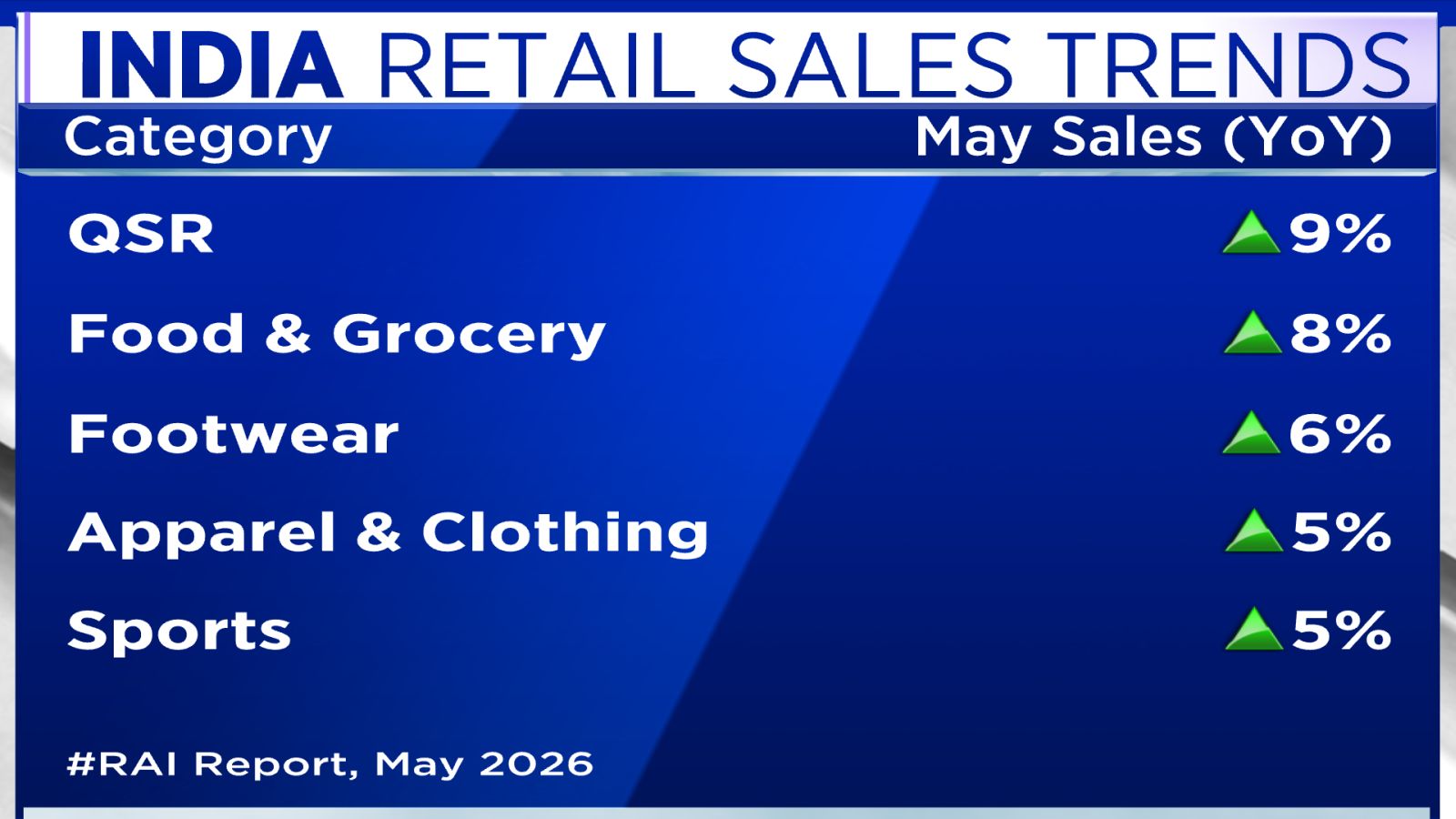
The picture looks different away from cooling appliances. Kumar Rajagopalan, Chief Executive of the Retailers Association of India (RAI), said overall retail sales growth slowed to about 5% in May, down from 9-10% in earlier months.
He pointed to a mix of factors: rising input prices, including for fertiliser, the effects of ongoing geopolitical tensions, and a calendar quirk in which June had one fewer weekend than the same month last year.
Rajagopalan added that some festivals fell in May rather than June this year, pulling forward sales that would normally have landed in the following month. Retailers have also started end-of-season sales earlier, from around June 20, in an attempt to recover volume.
"There is still consumption, there's still growth, customers are coming into the store. The real pressure is on margins," Rajagopalan said, citing higher input costs for cotton, synthetics, packaging and carry bags. He said it remains too early to gauge the full impact of the delayed monsoon, with more clarity expected by the end of July.
Chip shortage pushes up device prices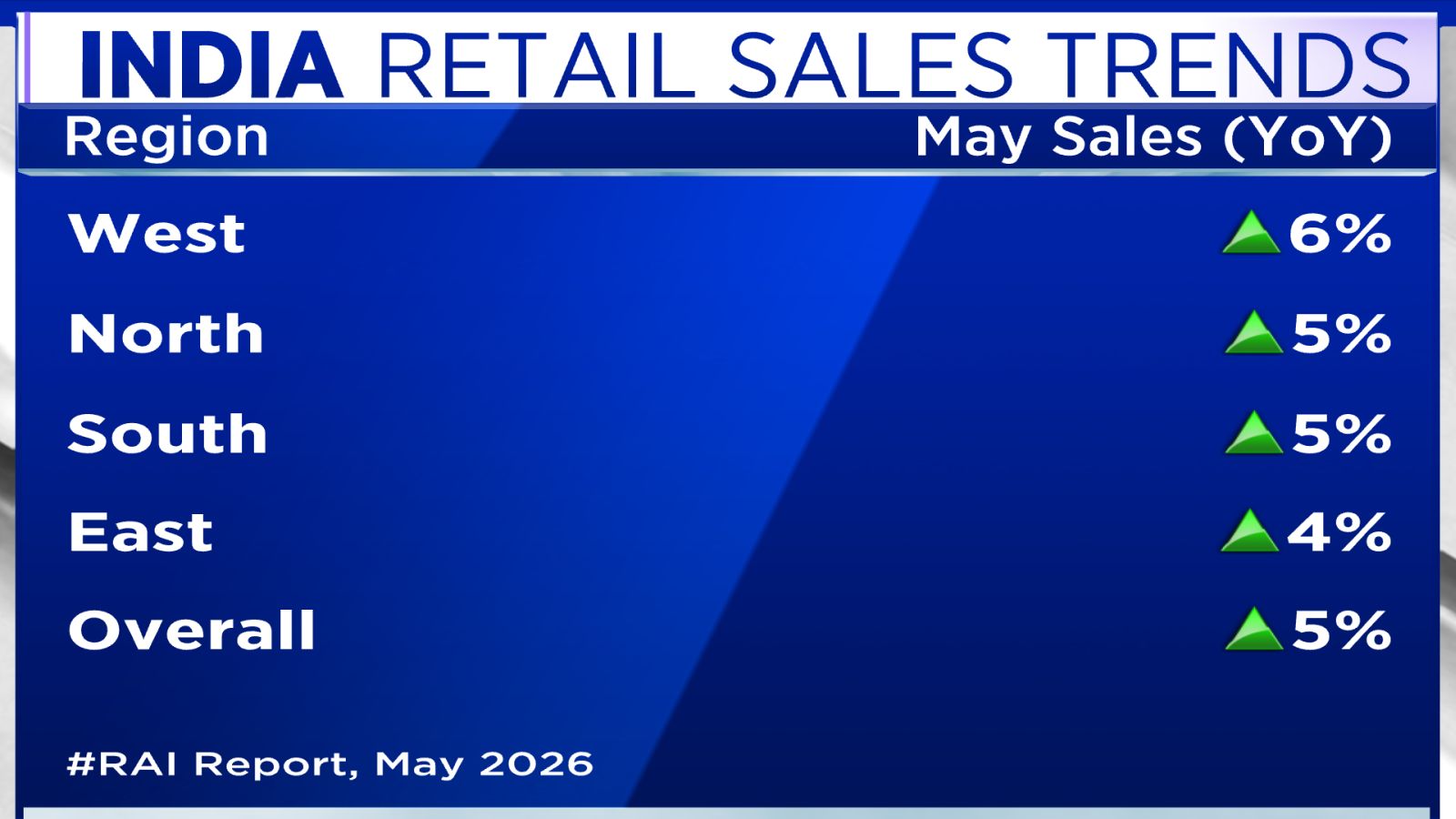
Gupta said air conditioners and coolers were this year's strongest-growing category, followed by mobile phones and laptops — though for a different reason. A global chip shortage has pushed laptop prices up by 30-35% over the past three months, largely at the entry and mid-tier levels; premium and super-premium models were mostly spared.
Television prices rose a more modest 7-10% for the same reason, again concentrated in smaller, cheaper screen sizes.
Categories such as refrigerators, washing machines and televisions saw only muted, single-digit volume growth, Gupta said. But value growth held up across the board as consumers continued to trade up to higher-end models.
"The best part is the consumers are still walking in, there is no negative impact of the geopolitical situation that we have to stop buying. They are still buying, the growth has got a little muted," Gupta said.
A short-lived rush for induction cooktops
Demand for induction cooktops spiked sharply during a recent period of geopolitical uncertainty, Gupta said, with the category selling roughly a year and a half's worth of typical volume in just 40-45 days. That surge has since faded and demand has returned to normal levels.
Quick commerce here to stay, RAI says
Rajagopalan said quick commerce — rapid delivery platforms — now accounts for about 13% of India's e-commerce sales and 6-7% of total FMCG sales, and is increasingly viewed by brands as a channel they cannot afford to ignore.
He said convenience, rather than price, is typically the main draw for customers who use quick commerce, and that most retailers are working to place their products across both online and offline channels.
For the entire discussion, watch the accompanying video
Follow our live blog for more stock market updates
Nilesh Gupta, Director at electronics retail chain Vijay Sales, said sales of air conditioners and air coolers grew around 20% by volume and 30% by value this summer. He attributed the jump partly to a weak comparison: last year's summer was disrupted by intermittent rainfall, while this year's heat persisted longer across most of the country.
Broader retail growth cools
The picture looks different away from cooling appliances. Kumar Rajagopalan, Chief Executive of the Retailers Association of India (RAI), said overall retail sales growth slowed to about 5% in May, down from 9-10% in earlier months.
He pointed to a mix of factors: rising input prices, including for fertiliser, the effects of ongoing geopolitical tensions, and a calendar quirk in which June had one fewer weekend than the same month last year.
Rajagopalan added that some festivals fell in May rather than June this year, pulling forward sales that would normally have landed in the following month. Retailers have also started end-of-season sales earlier, from around June 20, in an attempt to recover volume.
"There is still consumption, there's still growth, customers are coming into the store. The real pressure is on margins," Rajagopalan said, citing higher input costs for cotton, synthetics, packaging and carry bags. He said it remains too early to gauge the full impact of the delayed monsoon, with more clarity expected by the end of July.
Chip shortage pushes up device prices
Gupta said air conditioners and coolers were this year's strongest-growing category, followed by mobile phones and laptops — though for a different reason. A global chip shortage has pushed laptop prices up by 30-35% over the past three months, largely at the entry and mid-tier levels; premium and super-premium models were mostly spared.
Television prices rose a more modest 7-10% for the same reason, again concentrated in smaller, cheaper screen sizes.
Categories such as refrigerators, washing machines and televisions saw only muted, single-digit volume growth, Gupta said. But value growth held up across the board as consumers continued to trade up to higher-end models.
"The best part is the consumers are still walking in, there is no negative impact of the geopolitical situation that we have to stop buying. They are still buying, the growth has got a little muted," Gupta said.
A short-lived rush for induction cooktops
Demand for induction cooktops spiked sharply during a recent period of geopolitical uncertainty, Gupta said, with the category selling roughly a year and a half's worth of typical volume in just 40-45 days. That surge has since faded and demand has returned to normal levels.
Quick commerce here to stay, RAI says
Rajagopalan said quick commerce — rapid delivery platforms — now accounts for about 13% of India's e-commerce sales and 6-7% of total FMCG sales, and is increasingly viewed by brands as a channel they cannot afford to ignore.
He said convenience, rather than price, is typically the main draw for customers who use quick commerce, and that most retailers are working to place their products across both online and offline channels.
For the entire discussion, watch the accompanying video
Follow our live blog for more stock market updates





/images/ppid_a911dc6a-image-17831008285061933.webp)

/images/ppid_59c68470-image-178310003384557921.webp)
/images/ppid_59c68470-image-17831000298711417.webp)