/images/ppid_59c68470-image-177797002462748864.webp)

/images/ppid_59c68470-image-177798253276968475.webp)

What is the story about?
With electoral uncertainties now behind key states, there is an opportunity for governments to accelerate industrial policy clarity and revive stalled projects, which could unlock fresh investments and job creation, says Rajiv Memani, President of the Confederation of Indian Industry (CII).
Memani pointed out that India entered the recent global and domestic challenges from a position of strength, backed by robust GDP growth, controlled fiscal deficit, and improving private sector capex.
Despite the ongoing energy-related disruptions, the government has remained actively engaged with industry, taking short-term measures to ease supply-side constraints and maintain economic momentum.
He also pointed to concerns around the rupee and current account deficit, while stressing that long-term investors remain relatively steady.
According to him, boosting domestic manufacturing, attracting global value chains, and accelerating FDI inflows will be critical to sustaining India’s growth trajectory.
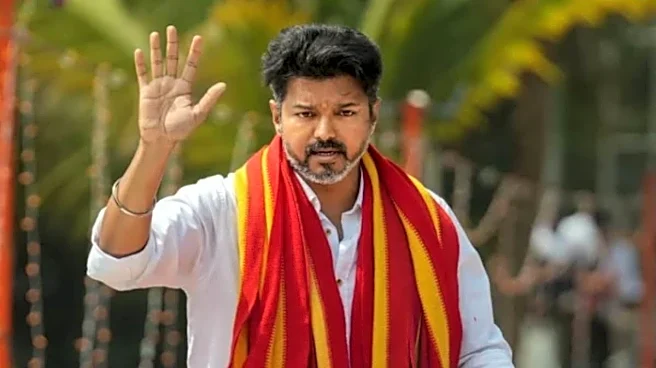
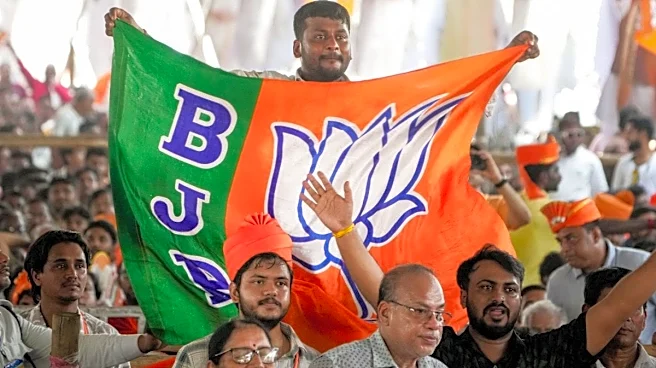
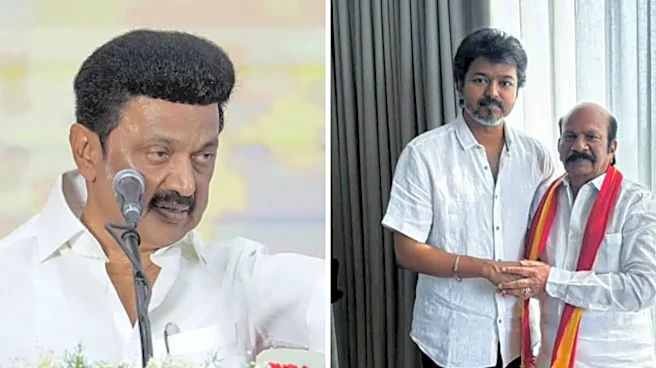
These are edited excerpts from the interview.Q: Let me start by talking to you about the big event that is now out of the way, and that is the elections. We have got the results in West Bengal change with the BJP coming in, and, of course, the big surprise in Tamil Nadu, with Vijay emerging as the king. Now, what it does eventually, as far as these individual states are concerned, is a different matter. But what does all of this mean, if anything, at a national level?
A: First thing at a national level is, these state elections are now out of the way. So, in each of these states, there will be a clear vision, what will be the industrial policy, some of the projects that were stalled, how can some of those projects be developed?
And hopefully that all these things, generally, whenever you have a new government trying to address some of these issues, there is greater impetus on investments. There is more positive energy, greater job growth that happens. I am positive. These are positive changes, and hopefully it will catalyse more investments, more development in some of these states.
Q: One of the other issues that industry bodies like CII have been asking for is a sense of urgency to move on pending reforms, to push ahead on crucial decisions. We saw some decisions being taken. For instance, the Press Note 3 (PN3) revision which, by the way, isn't fully in execution at this point in time, even 50 days after the cabinet clearance. Given the fact that the elections are now out of the way, what would you like the government to focus on with a sense of urgency?
A: The government has been focused on lot of these things. Obviously, they are right now grappling with an energy crisis, and that's also taking some bandwidth and time away. As we step back, before this crisis happened, we just had the GST reforms, private sector capex investment was moving very well. GDP growth numbers were strong, much stronger than what people anticipated. Fiscal deficit was under control. Sectors like automobile and others were doing very well.
We entered this crisis through a lot of strength, and we had strong tail winds. But to the credit of the government, the moment this came at least in CII, we experienced very active engagement with our various constituents and the government. The government was acting almost on a daily basis to try and address issues, particularly around availability of feedstock or gas of other energy related products, and also trying to see, how do we navigate the logistics and others, trying to address some of the issues that industry was facing.
It also took some measures like extending remission of duties and taxes on exported products (RoDTEP), the duty structures on fuel and others. So, we saw a lot of action which was more short term. There is no doubt India is the fastest growing economy, and will continue to do be that for a period of time.
But there are three components that come out very clearly. One is, what's your resilience, growth and macroeconomic stability and all on that India did very well. The other two areas were one to do with, how are we doing on our overall autonomy, whether it's energy, whether it is on the overall dependence on global world. As you become larger as an economy, from a $4 trillion economy to $10 trillion economy over the next five to seven years, some of these things we have to be very mindful and very cautious about. The reforms that the government now we are seeing engage with are trying to address some of these issues.
Our over dependence on some geographies, our over dependence on some routes - the energy output not keeping pace with the energy consumption and how can we alter? How can we look at nuclear? How can we look at coal to gas? How can ensure that solar becomes - we have had fantastic growth in solar in other renewable pieces. But how do we ensure that issues around transmission, grid balancing, availability of land, supply chain in some of these products are dependent.
A lot of conversations, policy notes that are being introduced around this. These are large projects, they have fiscal implications. There are new policies that are required for that. The government has been working through this. I am hopeful that we will see a lot of speed in some of these things, because they are strategically very important for India.
The second piece is around the issue that has come out through this, we have seen the dollar-rupee, and the current account deficit and in that whilst the energy piece has still not played out, but that's not fully in our control. It's not a short-term measure. But if I look at the non-oil trade merchandise deficit, that number has grown by more than 30% last year. And whilst the part of it is also because of the growth in some exports, particularly in electronics and others, but that's another number to watch.
So how do we look at our import basket of manufactured products? What are those which can be done in India? What are the PLI schemes, intense incentive schemes, technology transfers and other incentives or protection that needs to be given to industry to ensure that we reduce that amount. Because one is it leads to weakening of the rupee, but also from a strategic dependent standpoint.
If you are looking at Aatmanirbhar Bharat, it's very important that we look at manufacturing of these items, which are maybe our top 50, top 100 import items, and there is a small basket of products there. And also looking at our future demand that's going to come, whether it's going to come because of the investments that are going to happen in data centres, whether that's going to come because of the investment that will happen in the entire energy cycle, and whether our manufacturing is really equipped for that, and how do we prepare that?
I am seeing a lot of policy work that is happening in these two areas, and I am hopeful that the changes, whether it's the India Semiconductor Mission 2.0 (ISM 2.0) that's coming out, whether it's the coal policy, coal to gas policy that's coming out, whether it's Shanti Bill that's getting implemented, whether it's what we do on the on the value chains, on solar and the PLI schemes that we are looking at, on the electronics manufacturing, how do we look at the component side?
So there's a lot of activity, some of these things have been cleared. I do hope that they have sufficient allocations for this. And then we move with speed. Look at the right companies to select in that so that we move with speed, and these companies are able to implement some of these projects on the ground.
Q: I want to talk about the rupee, because you brought that up, as well as the impact as far as the current account deficit is concerned. But when you talk to foreign investors, when you talk to your global peers, as part of the EY network, when you talk to your foreign clients, what are they telling you about the rupee? How uncomfortable is the rupees depreciation making them feel about wanting to invest in India at this point in time, especially FIIs, and that has been the big worry. That has been the big challenge. In fact, the Chief Economic Adviser saying that he believes that this is on account of the global allocation moving more towards AI, and when that starts to rebalance, the rupee should rebalance as well. But the rupee, how much of a concern is that today?
A: I would say for more longer-term investors, they look at what's happened in the last five years, 10 years. If I look at the last five years, last 10 years, I haven't done that exercise in the last two weeks, but the average depreciation would have been between 2 to 3%.
Q: In the last two years, it's been 13%
A: I am looking at last five years, 10 years, I agree. That's why I am saying that this has been much sharper. But if I look at the last five year last 10-year average, that's what is it is coming. The longer-term investors are worried, but I won't say they are too concerned about it.
But as a country, as an economy, we need to try and see how we address that. I agree that there is a disproportionate allocation that has happened in some sectors in some geographies, but not all currencies in the world have got impacted as much rupee has, particularly because of our vulnerability on energy and also because of our rising imports, non-oil merchandise imports.
What we need to do, I personally feel, is to have much greater focus on manufacturing, on ensuring that we are implementing the Aatmanirbhar Bharat policy. We need to ensure that we get some of the large global value chain players. The example that we saw in electronics manufacturing on mobile phones. We need to get on an urgent basis, engage with the top 30, top 40, top 50 people, global value chain players. There are some very large players. We need to find a way that they set up in India, and whatever enablement that they require to be setting up in India it is very critical, because, some of those structural flaws we need to address.
The third is, we have to be much more proactive, deliberate in attracting FDI in India. Our FDI numbers have been increasing by 10 to 15% but they are still 2% of GDP. We have to move it up to 3 to 4% of GDP to ensure and a lot of that hopefully comes into for manufacturing, for building out some of the areas which are strategically important for India. Being more proactive, ensuring that we are getting all the clearances, having an empowered group that can help in getting all the clearances, land approvals, environmental approvals, much more at a much more rapid pace and much more transparently, openly, I mean some of the examples, best examples that we see in other parts of the world, we need to implement.
Some of the states have done a remarkable job in attracting FDI in those states. we need to see how we can implement that at the central level. We need to address these three things at a very rapid pace to ensure that at least some of those things will happen. Now some correction will happen as oil prices stabilise, as the war stabilises, as the AI investments stabilise. But those are things that are honestly not fully in our control. We also need to address things that are in our control and how do we look at that? The government is focused on that. My only request would be that if we can execute with greater speed that will be helpful in addressing some of those issues.
Watch accompanying video for more
Get live stock market updates on our blog
Memani pointed out that India entered the recent global and domestic challenges from a position of strength, backed by robust GDP growth, controlled fiscal deficit, and improving private sector capex.
Despite the ongoing energy-related disruptions, the government has remained actively engaged with industry, taking short-term measures to ease supply-side constraints and maintain economic momentum.
He also pointed to concerns around the rupee and current account deficit, while stressing that long-term investors remain relatively steady.
According to him, boosting domestic manufacturing, attracting global value chains, and accelerating FDI inflows will be critical to sustaining India’s growth trajectory.
These are edited excerpts from the interview.Q: Let me start by talking to you about the big event that is now out of the way, and that is the elections. We have got the results in West Bengal change with the BJP coming in, and, of course, the big surprise in Tamil Nadu, with Vijay emerging as the king. Now, what it does eventually, as far as these individual states are concerned, is a different matter. But what does all of this mean, if anything, at a national level?
A: First thing at a national level is, these state elections are now out of the way. So, in each of these states, there will be a clear vision, what will be the industrial policy, some of the projects that were stalled, how can some of those projects be developed?
And hopefully that all these things, generally, whenever you have a new government trying to address some of these issues, there is greater impetus on investments. There is more positive energy, greater job growth that happens. I am positive. These are positive changes, and hopefully it will catalyse more investments, more development in some of these states.
Q: One of the other issues that industry bodies like CII have been asking for is a sense of urgency to move on pending reforms, to push ahead on crucial decisions. We saw some decisions being taken. For instance, the Press Note 3 (PN3) revision which, by the way, isn't fully in execution at this point in time, even 50 days after the cabinet clearance. Given the fact that the elections are now out of the way, what would you like the government to focus on with a sense of urgency?
A: The government has been focused on lot of these things. Obviously, they are right now grappling with an energy crisis, and that's also taking some bandwidth and time away. As we step back, before this crisis happened, we just had the GST reforms, private sector capex investment was moving very well. GDP growth numbers were strong, much stronger than what people anticipated. Fiscal deficit was under control. Sectors like automobile and others were doing very well.
We entered this crisis through a lot of strength, and we had strong tail winds. But to the credit of the government, the moment this came at least in CII, we experienced very active engagement with our various constituents and the government. The government was acting almost on a daily basis to try and address issues, particularly around availability of feedstock or gas of other energy related products, and also trying to see, how do we navigate the logistics and others, trying to address some of the issues that industry was facing.
It also took some measures like extending remission of duties and taxes on exported products (RoDTEP), the duty structures on fuel and others. So, we saw a lot of action which was more short term. There is no doubt India is the fastest growing economy, and will continue to do be that for a period of time.
But there are three components that come out very clearly. One is, what's your resilience, growth and macroeconomic stability and all on that India did very well. The other two areas were one to do with, how are we doing on our overall autonomy, whether it's energy, whether it is on the overall dependence on global world. As you become larger as an economy, from a $4 trillion economy to $10 trillion economy over the next five to seven years, some of these things we have to be very mindful and very cautious about. The reforms that the government now we are seeing engage with are trying to address some of these issues.
Our over dependence on some geographies, our over dependence on some routes - the energy output not keeping pace with the energy consumption and how can we alter? How can we look at nuclear? How can we look at coal to gas? How can ensure that solar becomes - we have had fantastic growth in solar in other renewable pieces. But how do we ensure that issues around transmission, grid balancing, availability of land, supply chain in some of these products are dependent.
A lot of conversations, policy notes that are being introduced around this. These are large projects, they have fiscal implications. There are new policies that are required for that. The government has been working through this. I am hopeful that we will see a lot of speed in some of these things, because they are strategically very important for India.
The second piece is around the issue that has come out through this, we have seen the dollar-rupee, and the current account deficit and in that whilst the energy piece has still not played out, but that's not fully in our control. It's not a short-term measure. But if I look at the non-oil trade merchandise deficit, that number has grown by more than 30% last year. And whilst the part of it is also because of the growth in some exports, particularly in electronics and others, but that's another number to watch.
So how do we look at our import basket of manufactured products? What are those which can be done in India? What are the PLI schemes, intense incentive schemes, technology transfers and other incentives or protection that needs to be given to industry to ensure that we reduce that amount. Because one is it leads to weakening of the rupee, but also from a strategic dependent standpoint.
If you are looking at Aatmanirbhar Bharat, it's very important that we look at manufacturing of these items, which are maybe our top 50, top 100 import items, and there is a small basket of products there. And also looking at our future demand that's going to come, whether it's going to come because of the investments that are going to happen in data centres, whether that's going to come because of the investment that will happen in the entire energy cycle, and whether our manufacturing is really equipped for that, and how do we prepare that?
I am seeing a lot of policy work that is happening in these two areas, and I am hopeful that the changes, whether it's the India Semiconductor Mission 2.0 (ISM 2.0) that's coming out, whether it's the coal policy, coal to gas policy that's coming out, whether it's Shanti Bill that's getting implemented, whether it's what we do on the on the value chains, on solar and the PLI schemes that we are looking at, on the electronics manufacturing, how do we look at the component side?
So there's a lot of activity, some of these things have been cleared. I do hope that they have sufficient allocations for this. And then we move with speed. Look at the right companies to select in that so that we move with speed, and these companies are able to implement some of these projects on the ground.
Q: I want to talk about the rupee, because you brought that up, as well as the impact as far as the current account deficit is concerned. But when you talk to foreign investors, when you talk to your global peers, as part of the EY network, when you talk to your foreign clients, what are they telling you about the rupee? How uncomfortable is the rupees depreciation making them feel about wanting to invest in India at this point in time, especially FIIs, and that has been the big worry. That has been the big challenge. In fact, the Chief Economic Adviser saying that he believes that this is on account of the global allocation moving more towards AI, and when that starts to rebalance, the rupee should rebalance as well. But the rupee, how much of a concern is that today?
A: I would say for more longer-term investors, they look at what's happened in the last five years, 10 years. If I look at the last five years, last 10 years, I haven't done that exercise in the last two weeks, but the average depreciation would have been between 2 to 3%.
Q: In the last two years, it's been 13%
A: I am looking at last five years, 10 years, I agree. That's why I am saying that this has been much sharper. But if I look at the last five year last 10-year average, that's what is it is coming. The longer-term investors are worried, but I won't say they are too concerned about it.
But as a country, as an economy, we need to try and see how we address that. I agree that there is a disproportionate allocation that has happened in some sectors in some geographies, but not all currencies in the world have got impacted as much rupee has, particularly because of our vulnerability on energy and also because of our rising imports, non-oil merchandise imports.
What we need to do, I personally feel, is to have much greater focus on manufacturing, on ensuring that we are implementing the Aatmanirbhar Bharat policy. We need to ensure that we get some of the large global value chain players. The example that we saw in electronics manufacturing on mobile phones. We need to get on an urgent basis, engage with the top 30, top 40, top 50 people, global value chain players. There are some very large players. We need to find a way that they set up in India, and whatever enablement that they require to be setting up in India it is very critical, because, some of those structural flaws we need to address.
The third is, we have to be much more proactive, deliberate in attracting FDI in India. Our FDI numbers have been increasing by 10 to 15% but they are still 2% of GDP. We have to move it up to 3 to 4% of GDP to ensure and a lot of that hopefully comes into for manufacturing, for building out some of the areas which are strategically important for India. Being more proactive, ensuring that we are getting all the clearances, having an empowered group that can help in getting all the clearances, land approvals, environmental approvals, much more at a much more rapid pace and much more transparently, openly, I mean some of the examples, best examples that we see in other parts of the world, we need to implement.
Some of the states have done a remarkable job in attracting FDI in those states. we need to see how we can implement that at the central level. We need to address these three things at a very rapid pace to ensure that at least some of those things will happen. Now some correction will happen as oil prices stabilise, as the war stabilises, as the AI investments stabilise. But those are things that are honestly not fully in our control. We also need to address things that are in our control and how do we look at that? The government is focused on that. My only request would be that if we can execute with greater speed that will be helpful in addressing some of those issues.
Watch accompanying video for more
Get live stock market updates on our blog



/images/ppid_59c68470-image-17780875743396793.webp)


/images/ppid_59c68470-image-17780000316803521.webp)

/images/ppid_a911dc6a-image-177805163266784922.webp)

/images/ppid_a911dc6a-image-177797102769042715.webp)