/images/ppid_59c68470-image-178428505789338849.webp)





What is the story about?
Newgen Software - a global provider of digital transformation and intelligent automation platforms - expects to return to its traditional high-teen revenue growth this financial year 2026-27 (FY27) as delayed projects resume and demand for its artificial intelligence (AI)-enabled products and subscription offerings gathers pace, Tarun Nandwani, CEO of the digital transformation and intelligent automation platform provider, said.
Speaking after the company's April-June 2026 quarter results, Nandwani said Newgen remains confident of delivering double-digit growth, with execution expected to improve over the next few quarters as projects in EMEA move forward. He also expects subscription-led growth and AI adoption to support revenue momentum.
The company said demand remains healthy across its enterprise content management, records management and communication management platforms, where AI capabilities have been added. It is also seeing a strong pipeline for lending, onboarding and trade finance solutions across the Americas, Europe, Australia and APAC.
Nandwani said subscription revenue should continue to expand as the company wins more SaaS contracts. "We are expecting more subscription deals and annuity revenue in coming quarters," he said, adding that SaaS revenue growth is expected to remain in the 30-40% range.
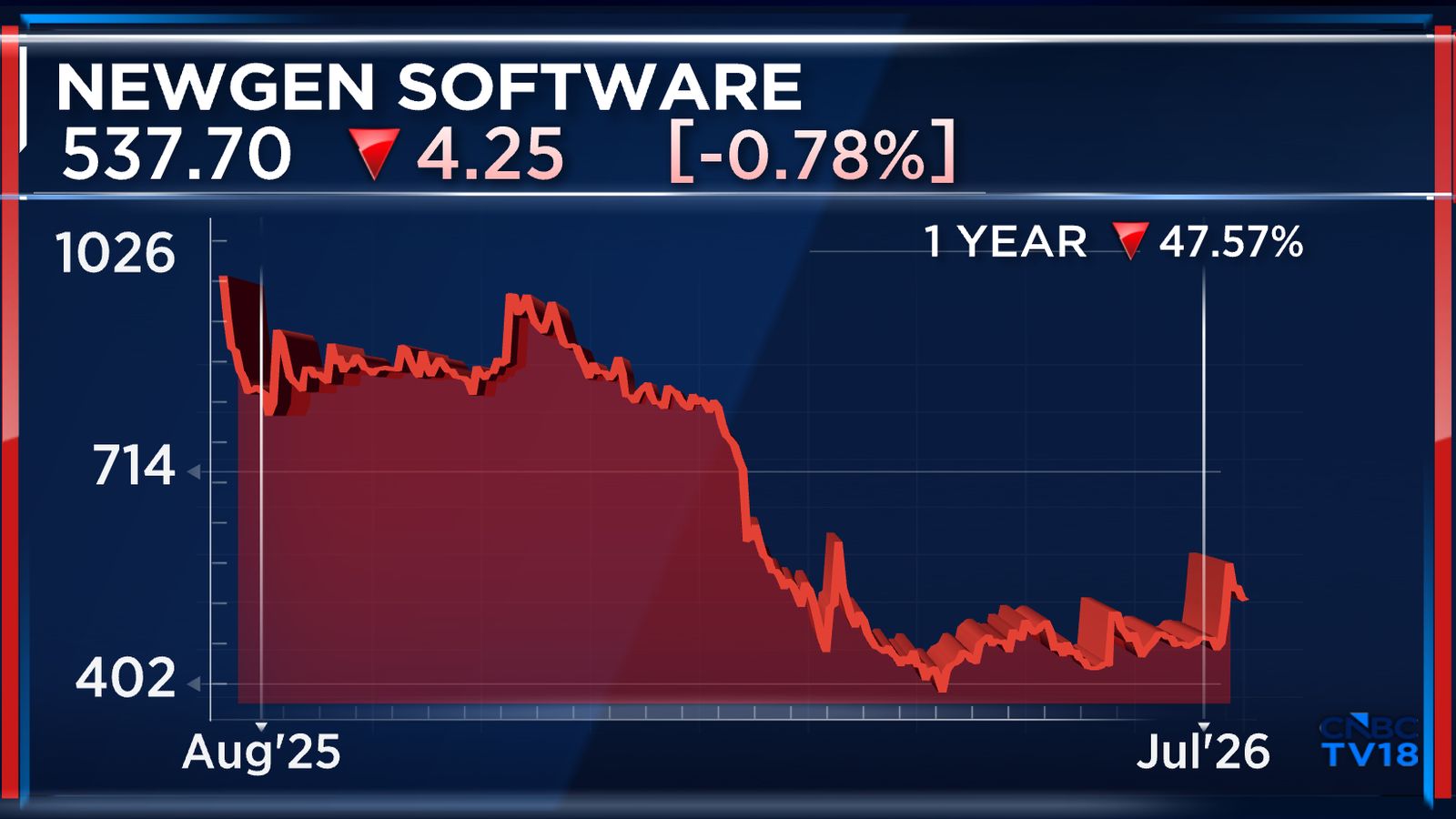
Newgen Software, which has a market capitalisation of ₹7,666.33 crore, has seen its shares decline more than 47% over the past year.
This is an edited transcript of the interview.Q: In the conference call, you did mention that you are maintaining double-digit revenue growth for this year, and that first-quarter execution had slowed down because some of the EMEA projects were delayed and are likely to pick up in the second and third quarters. So that brings me to the obvious question. When you say double-digit revenue growth for the full year, what are you targeting? The first quarter was about 11% year-on-year, which is slower. With the expected pickup, could we see mid-teen growth, or would it be low teens? A: Newgen, as you said, is a seasonal business, but our strategy is focused on ensuring customer success and investing in innovation. Across our horizontal product lines, we have released products for ECM, which is our Enterprise Content Management, Records Management, and Communication Management products with AI features. These have seen a strong deal pipeline and demand traction in mature markets such as the Americas, Europe, Australia, and APAC. This has given us good confidence for the coming quarters.
With these product lines and the orchestration product, our solution lines, which include onboarding, lending, and trade finance, have seen good traction with the AI modules released last financial year, and we are seeing a strong deal pipeline for these products. As I said during the investor call, we remain positive about achieving double-digit revenue growth. We are off to a good start, and the deal pipeline in India is also strengthening.
Q: We just wanted some more clarity on what double-digit would mean for you. Would it be 11-12%, or would it be mid-to-high teens?A: As a matter of policy, I cannot provide specific guidance. But traditionally, we have been growing in the high teens, and we expect to achieve similar growth.
Q: Let's focus a little bit on margins. There has been some improvement. You're gradually moving higher from the low teens towards the upper teens. But I think in the past you've guided for margins of around 23%. Could you tell us what margin level you're looking at? That's point number one. And your days sales outstanding (DSO) days have also improved a little bit. In the past, I think you've said that they could come down to 120 days. Could you update us on both margins and DSO days?A: On margins, the costs are largely static, and therefore the quarter-one margins are around 15%. But they will gradually improve, and we hope to close the financial year with margins above 20%, which is our usual full-year level. On the DSO side, there have been some delays in EMEA collections, which have resulted in an increase in DSO. But gradually, we have put the controls in place. We have a strong collection team, and we are reworking our contracts. We are hoping to bring DSO down to 125-135 days, which is our target range.
Q: So, margins will gradually improve towards 20%, and DSO days will come down to around 125-135 days. What about annuity revenues? How do you see them moving as a percentage of the mix? In the first quarter, they were around ₹250 crore out of your total revenue of around ₹400 crore.A: Annuity revenues remain around 70%, and as we grow in mature markets, our subscription revenues grow, leading to higher growth in annuity revenues year on year and quarter on quarter. The deal pipeline in the mature geographies is strong, so we are expecting more subscription deals and higher annuity revenue in the coming quarters.
Q: And at what rate is SaaS likely to grow? In the first quarter, it grew at about 40%.A: SaaS revenue varies from quarter to quarter because of revenue recognition. As more subscription deals come in, it is expected to grow at a healthy rate.
Q: How would you define healthy?A: Healthy means the company is targeting high-teen growth rates, and last year's deal closures are also contributing to subscription growth. Considering the impact of both last year's and this year's deals, we expect SaaS growth to remain around 30-40% in the coming quarters as well.
Q: Now that you've given us some clarity on what we are expecting in terms of revenue growth, annuity, and SaaS, let's split that by geography. The Americas - your most important market - growing strongly, while in the first quarter we saw muted performance from India and some of the other geographies as well. Could you give us a geographical growth breakup for this year?A: The Americas operate on a subscription model. Europe and EMEA also follow a subscription model. Africa and the Middle East region are licence-driven markets, and we are seeing a healthy deal pipeline there. Our products such as Policy Administration Systems (PAS), Loan Origination Systems(LOS), Loan Management Systems (LMS), and digitisation and modernisation solutions are seeing healthy deal pipeline growth.
In the coming quarters, we expect licence revenue from India and the Middle East to start growing because of this healthy pipeline. APAC and Australia have a mix of licence and subscription revenue. Overall, we expect subscription revenue to grow 30-40%, while licence deals from India will support overall revenue growth.
Q: Give us some more details. You had mentioned a couple of months ago that AI components were present in 30% of use cases. What is that number today?A: The AI use cases have expanded significantly. We have released AI products for banking, including trade finance modules, bank guarantees, and import letters of credit (LCs). In lending, we have commercial loans, MSME loans, and retail lending products.
On the insurance side, we have underwriting solutions. Across all our verticals, we have released AI offerings, supported by the AI capabilities of our ECM, CCM, and RMS products, which are generating strong deal momentum. Overall, AI implementation across these vertical products is expected to drive meaningful AI-led revenue.
Q: Just a final question before we let you go. You will continue as CEO from August 1, and you have a Chief Growth Officer, Pramod Kumar. How should this leadership change impact growth for the company going forward? If you have a Chief Growth Officer specifically putting their weight behind this, should we expect higher growth from here?A: Pramod Kumar, I, and the leadership team are ready for the next phase of growth. Pramod's core focus going forward will be new product lines, increasing deal size, and deal momentum. There is a specific task cut out for us to increase deal sizes for Newgen and look for new product lines and innovation and new markets.
For the full interview, watch the accompanying videoCatch all the latest updates from the stock market here
Speaking after the company's April-June 2026 quarter results, Nandwani said Newgen remains confident of delivering double-digit growth, with execution expected to improve over the next few quarters as projects in EMEA move forward. He also expects subscription-led growth and AI adoption to support revenue momentum.
The company said demand remains healthy across its enterprise content management, records management and communication management platforms, where AI capabilities have been added. It is also seeing a strong pipeline for lending, onboarding and trade finance solutions across the Americas, Europe, Australia and APAC.
Nandwani said subscription revenue should continue to expand as the company wins more SaaS contracts. "We are expecting more subscription deals and annuity revenue in coming quarters," he said, adding that SaaS revenue growth is expected to remain in the 30-40% range.
Newgen Software, which has a market capitalisation of ₹7,666.33 crore, has seen its shares decline more than 47% over the past year.
This is an edited transcript of the interview.Q: In the conference call, you did mention that you are maintaining double-digit revenue growth for this year, and that first-quarter execution had slowed down because some of the EMEA projects were delayed and are likely to pick up in the second and third quarters. So that brings me to the obvious question. When you say double-digit revenue growth for the full year, what are you targeting? The first quarter was about 11% year-on-year, which is slower. With the expected pickup, could we see mid-teen growth, or would it be low teens? A: Newgen, as you said, is a seasonal business, but our strategy is focused on ensuring customer success and investing in innovation. Across our horizontal product lines, we have released products for ECM, which is our Enterprise Content Management, Records Management, and Communication Management products with AI features. These have seen a strong deal pipeline and demand traction in mature markets such as the Americas, Europe, Australia, and APAC. This has given us good confidence for the coming quarters.
With these product lines and the orchestration product, our solution lines, which include onboarding, lending, and trade finance, have seen good traction with the AI modules released last financial year, and we are seeing a strong deal pipeline for these products. As I said during the investor call, we remain positive about achieving double-digit revenue growth. We are off to a good start, and the deal pipeline in India is also strengthening.
Q: We just wanted some more clarity on what double-digit would mean for you. Would it be 11-12%, or would it be mid-to-high teens?A: As a matter of policy, I cannot provide specific guidance. But traditionally, we have been growing in the high teens, and we expect to achieve similar growth.
Q: Let's focus a little bit on margins. There has been some improvement. You're gradually moving higher from the low teens towards the upper teens. But I think in the past you've guided for margins of around 23%. Could you tell us what margin level you're looking at? That's point number one. And your days sales outstanding (DSO) days have also improved a little bit. In the past, I think you've said that they could come down to 120 days. Could you update us on both margins and DSO days?A: On margins, the costs are largely static, and therefore the quarter-one margins are around 15%. But they will gradually improve, and we hope to close the financial year with margins above 20%, which is our usual full-year level. On the DSO side, there have been some delays in EMEA collections, which have resulted in an increase in DSO. But gradually, we have put the controls in place. We have a strong collection team, and we are reworking our contracts. We are hoping to bring DSO down to 125-135 days, which is our target range.
Q: So, margins will gradually improve towards 20%, and DSO days will come down to around 125-135 days. What about annuity revenues? How do you see them moving as a percentage of the mix? In the first quarter, they were around ₹250 crore out of your total revenue of around ₹400 crore.A: Annuity revenues remain around 70%, and as we grow in mature markets, our subscription revenues grow, leading to higher growth in annuity revenues year on year and quarter on quarter. The deal pipeline in the mature geographies is strong, so we are expecting more subscription deals and higher annuity revenue in the coming quarters.
Q: And at what rate is SaaS likely to grow? In the first quarter, it grew at about 40%.A: SaaS revenue varies from quarter to quarter because of revenue recognition. As more subscription deals come in, it is expected to grow at a healthy rate.
Q: How would you define healthy?A: Healthy means the company is targeting high-teen growth rates, and last year's deal closures are also contributing to subscription growth. Considering the impact of both last year's and this year's deals, we expect SaaS growth to remain around 30-40% in the coming quarters as well.
Q: Now that you've given us some clarity on what we are expecting in terms of revenue growth, annuity, and SaaS, let's split that by geography. The Americas - your most important market - growing strongly, while in the first quarter we saw muted performance from India and some of the other geographies as well. Could you give us a geographical growth breakup for this year?A: The Americas operate on a subscription model. Europe and EMEA also follow a subscription model. Africa and the Middle East region are licence-driven markets, and we are seeing a healthy deal pipeline there. Our products such as Policy Administration Systems (PAS), Loan Origination Systems(LOS), Loan Management Systems (LMS), and digitisation and modernisation solutions are seeing healthy deal pipeline growth.
In the coming quarters, we expect licence revenue from India and the Middle East to start growing because of this healthy pipeline. APAC and Australia have a mix of licence and subscription revenue. Overall, we expect subscription revenue to grow 30-40%, while licence deals from India will support overall revenue growth.
Q: Give us some more details. You had mentioned a couple of months ago that AI components were present in 30% of use cases. What is that number today?A: The AI use cases have expanded significantly. We have released AI products for banking, including trade finance modules, bank guarantees, and import letters of credit (LCs). In lending, we have commercial loans, MSME loans, and retail lending products.
On the insurance side, we have underwriting solutions. Across all our verticals, we have released AI offerings, supported by the AI capabilities of our ECM, CCM, and RMS products, which are generating strong deal momentum. Overall, AI implementation across these vertical products is expected to drive meaningful AI-led revenue.
Q: Just a final question before we let you go. You will continue as CEO from August 1, and you have a Chief Growth Officer, Pramod Kumar. How should this leadership change impact growth for the company going forward? If you have a Chief Growth Officer specifically putting their weight behind this, should we expect higher growth from here?A: Pramod Kumar, I, and the leadership team are ready for the next phase of growth. Pramod's core focus going forward will be new product lines, increasing deal size, and deal momentum. There is a specific task cut out for us to increase deal sizes for Newgen and look for new product lines and innovation and new markets.
For the full interview, watch the accompanying videoCatch all the latest updates from the stock market here
/images/ppid_59c68470-image-178457502969353847.webp)
/images/ppid_59c68470-image-178456002811618190.webp)
/images/ppid_59c68470-image-178454755954034822.webp)


/images/ppid_59c68470-image-178463256388727487.webp)

/images/ppid_59c68470-image-178456752913962662.webp)
/images/ppid_59c68470-image-178454759217812627.webp)