/images/ppid_59c68470-image-178055502981624619.webp)




What is the story about?
Happiest Minds Technologies expects to exceed its financial year 2026-27 (FY27) revenue growth plan if artificial intelligence (AI) projects move from pilot stages to larger deployments and some large deals in its pipeline materialise, according to Co-chairman and CEO Joseph Anantharaju
The Bengaluru-based AI-first digital engineering and IT services company has guided for 12.5% revenue growth in 2026-27 after reporting 9.2% growth in the previous fiscal year. However, Anantharaju said Happiest Minds has identified multiple factors that could help it reach its aspiration of 15% growth.
A higher growth rate will depend on increased conversion of GenAI proof-of-concepts into larger engagements, stronger contributions from proprietary products and solutions, closure of large deals currently in the pipeline, and additional business generated through strategic partners, he said.
Also Read | Happiest Minds open to revenue-sharing, outcome-based deals as AI changes IT pricing models
The company is also looking to expand revenue from products such as Artha, Insurance in a Box and Adobe, which Anantharaju said can contribute meaningfully to topline growth when deal timing aligns.
Beyond revenue growth, Happiest Minds is accelerating its shift away from traditional time-and-material contracts toward outcome-based engagements. Currently, around 25% of the company's revenue comes from non-time-and-material contracts, and management expects that share to increase significantly over the next few years.
"My expectation is that we will move this to 30 or 35% at the least, if not 40% in the next two to three years," Anantharaju said.
The company is already deploying outcome-based models across customer engagements, including platform modernisation projects, AI-driven software development lifecycle optimisation, healthcare imaging solutions and education technology offerings. These contracts are structured around measurable business outcomes rather than billing based on employee hours.
Anantharaju said the transition could improve profitability over time. "Our expectation is that we should be able to get an uplift of 2-3% on our margins," he said.
However, he cautioned that the economics of AI adoption remain uncertain as enterprises and service providers continue to evaluate token consumption costs and pricing models associated with AI tools.
Also Watch | Happiest Minds says $1 billion revenue goal could be delayed
The CEO noted that discussions around AI spending have become more prominent in recent months, with Happiest Minds working with customers to optimise token usage and establish measurement frameworks for AI consumption.
He added that companies adopting AI agents and automation tools must carefully assess the total cost of ownership compared with traditional workforce-led models, particularly as dependence on AI systems increases over time.
For the full interview, watch the accompanying video
Happiest Minds believes AI-driven transformation projects, product-led revenue streams and outcome-based engagements will play a larger role in its growth strategy over the next several years as enterprise customers expand their adoption of artificial intelligence technologies.
Catch all the latest updates from the stock market here
The Bengaluru-based AI-first digital engineering and IT services company has guided for 12.5% revenue growth in 2026-27 after reporting 9.2% growth in the previous fiscal year. However, Anantharaju said Happiest Minds has identified multiple factors that could help it reach its aspiration of 15% growth.
A higher growth rate will depend on increased conversion of GenAI proof-of-concepts into larger engagements, stronger contributions from proprietary products and solutions, closure of large deals currently in the pipeline, and additional business generated through strategic partners, he said.
Also Read | Happiest Minds open to revenue-sharing, outcome-based deals as AI changes IT pricing models
The company is also looking to expand revenue from products such as Artha, Insurance in a Box and Adobe, which Anantharaju said can contribute meaningfully to topline growth when deal timing aligns.
Beyond revenue growth, Happiest Minds is accelerating its shift away from traditional time-and-material contracts toward outcome-based engagements. Currently, around 25% of the company's revenue comes from non-time-and-material contracts, and management expects that share to increase significantly over the next few years.
"My expectation is that we will move this to 30 or 35% at the least, if not 40% in the next two to three years," Anantharaju said.
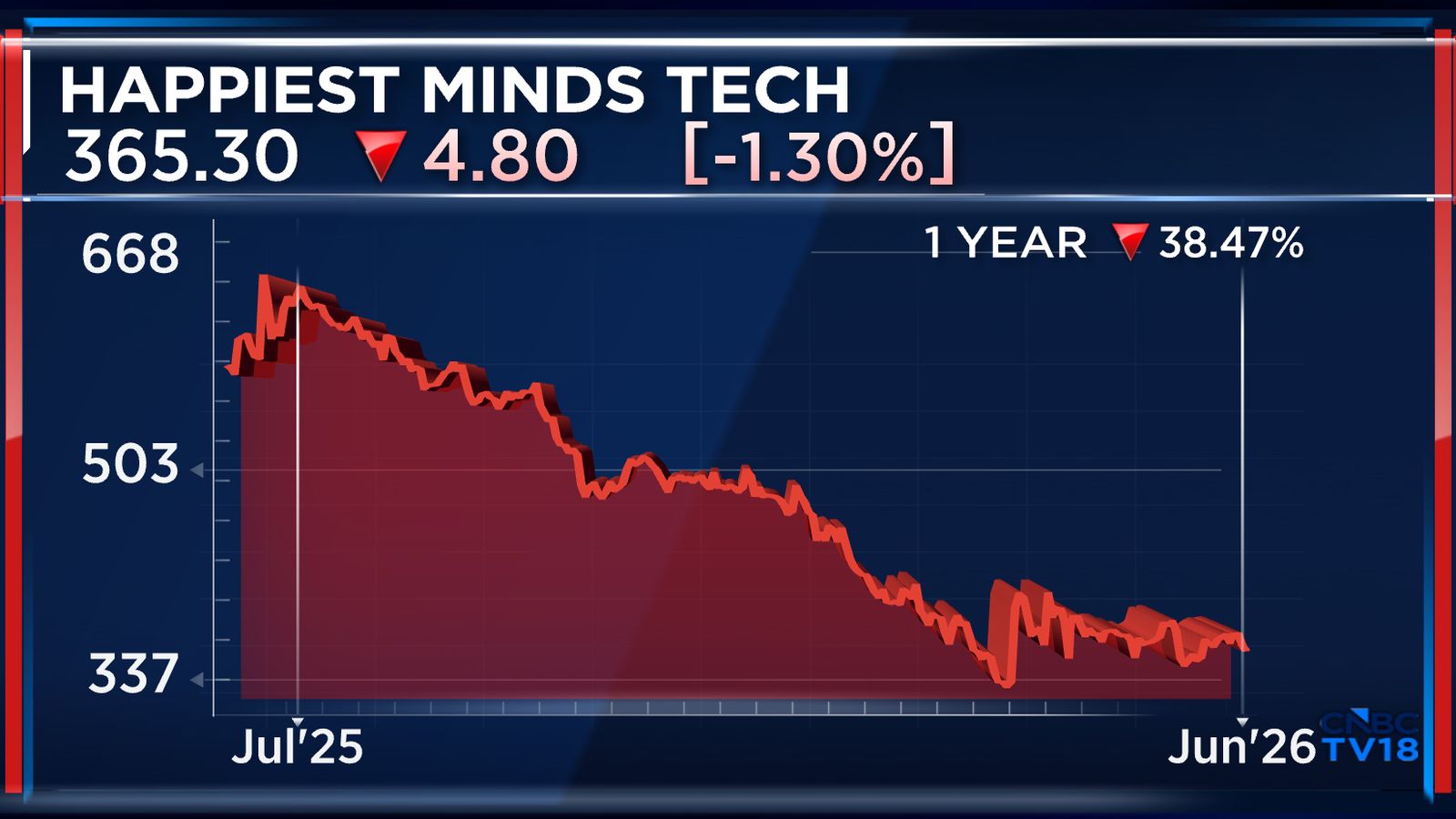
The company, which has a current market capitalisation of ₹5,562.60 crore, has seen its shares lose more than 38% over the last year.
The company is already deploying outcome-based models across customer engagements, including platform modernisation projects, AI-driven software development lifecycle optimisation, healthcare imaging solutions and education technology offerings. These contracts are structured around measurable business outcomes rather than billing based on employee hours.
Anantharaju said the transition could improve profitability over time. "Our expectation is that we should be able to get an uplift of 2-3% on our margins," he said.
However, he cautioned that the economics of AI adoption remain uncertain as enterprises and service providers continue to evaluate token consumption costs and pricing models associated with AI tools.
Also Watch | Happiest Minds says $1 billion revenue goal could be delayed
The CEO noted that discussions around AI spending have become more prominent in recent months, with Happiest Minds working with customers to optimise token usage and establish measurement frameworks for AI consumption.
He added that companies adopting AI agents and automation tools must carefully assess the total cost of ownership compared with traditional workforce-led models, particularly as dependence on AI systems increases over time.
For the full interview, watch the accompanying video
Happiest Minds believes AI-driven transformation projects, product-led revenue streams and outcome-based engagements will play a larger role in its growth strategy over the next several years as enterprise customers expand their adoption of artificial intelligence technologies.
Catch all the latest updates from the stock market here
/images/ppid_a911dc6a-image-178050865185055552.webp)



/images/ppid_59c68470-image-178050266252837930.webp)




/images/ppid_a911dc6a-image-178048528621446202.webp)

/images/ppid_59c68470-image-178030755573288265.webp)