/images/ppid_59c68470-image-176968270118370248.webp)

/images/ppid_59c68470-image-177070253751678670.webp)
/images/ppid_59c68470-image-177065507049415544.webp)
What is the story about?
The Indian rupee's recent spiral, not surprisingly, finds a significant mention in the latest Economic Survey tabled in India's Parliament today (Jan 29).
"The rupee’s valuation does not accurately reflect India’s stellar economic fundamentals," Chief Economic Advisor V Anantha Nageswaran said in the report released ahead of the annual budget to be presented by the Finance Minister, Nirmala Sitharaman, on February 1.
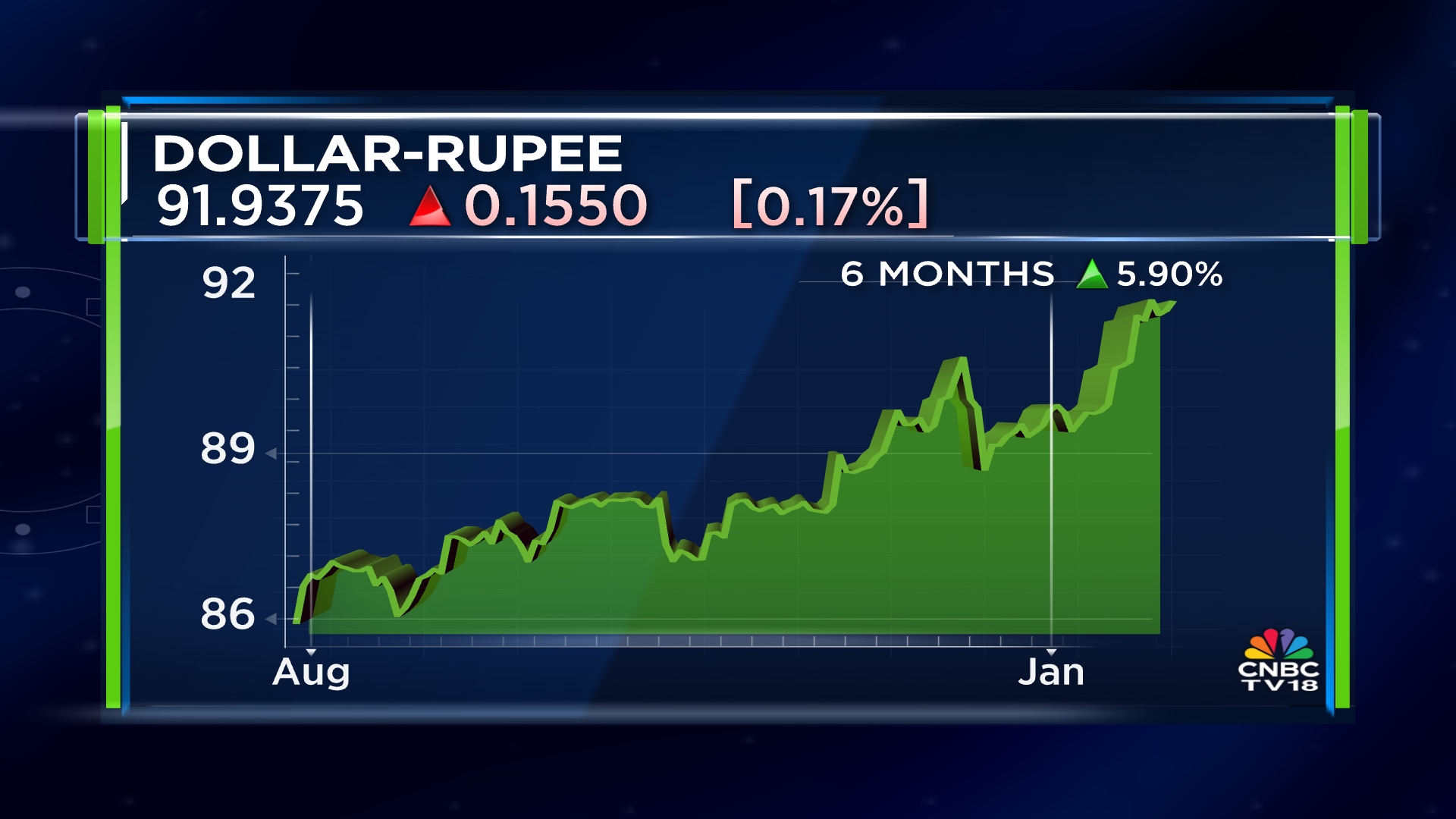
At a time when the US dollar has declined against many other currencies, the Indian rupee has lost more than 6% of its value against the American greenback in the last one year, primarily driven by the exodus of foreign portfolio investments.
At first, foreign investors withdrew due to valuation concerns, and then due to the straining of relationship with the US under President Donald Trump.
Experts question the premise that the Economic Survey presents; that the rupee as a victim of geopolitics and global power gap . "Is it only because of the geopolitics? Is it because of the global changes to the world order, or is it something deeper in terms of our taxation, ease of doing business, and basic competitiveness and productivity of the Indian economy,” asks Sachchidanand Shukla, Group Chief Economist at
Larsen and Toubro (L&T).
What's the way out of the rupee spiral?
Domestic factors such as reasonable growth, low inflation, ballooning forex reserves, strong corporate balance sheets, and a series of policy reforms have not stopped the rupee's downhill ride.
"The policy pursued by the Reserve Bank of India (RBI) to reduce the dollar reserves and to buy more of gold to convert that - is putting a very large pressure on the dollar assets of India, and the dollar demand is not declining whereas the supply is getting constrained more and more," explained former Finance Secretary Subhash Garg.
Forex reserves cover over 11 months of imports as of 16 January 2026 and approximately 94% of the external debt outstanding as of the end of September 2025, offering a comfortable liquidity cushion, according to the Economic Survey.
"India needs to generate sufficient investor interest and export earnings in foreign currency to cover its rising import bill, as, regardless of the success of indigenisation efforts, rising imports will invariably accompany rising incomes," recommends Nageswaran.
The CEA lauded the strategic diversification of export destinations, away from the US, via new trade agreements with the UK, European Union, New Zealand, and Oman. However, he warned that recent curbs on Indian immigrants may affect remittances back to India.
Catch the latest updates from the Economic Survey 2026 in the live-blog.
"The rupee’s valuation does not accurately reflect India’s stellar economic fundamentals," Chief Economic Advisor V Anantha Nageswaran said in the report released ahead of the annual budget to be presented by the Finance Minister, Nirmala Sitharaman, on February 1.
At a time when the US dollar has declined against many other currencies, the Indian rupee has lost more than 6% of its value against the American greenback in the last one year, primarily driven by the exodus of foreign portfolio investments.
At first, foreign investors withdrew due to valuation concerns, and then due to the straining of relationship with the US under President Donald Trump.
Experts question the premise that the Economic Survey presents; that the rupee as a victim of geopolitics and global power gap . "Is it only because of the geopolitics? Is it because of the global changes to the world order, or is it something deeper in terms of our taxation, ease of doing business, and basic competitiveness and productivity of the Indian economy,” asks Sachchidanand Shukla, Group Chief Economist at
What's the way out of the rupee spiral?
Domestic factors such as reasonable growth, low inflation, ballooning forex reserves, strong corporate balance sheets, and a series of policy reforms have not stopped the rupee's downhill ride.
"The policy pursued by the Reserve Bank of India (RBI) to reduce the dollar reserves and to buy more of gold to convert that - is putting a very large pressure on the dollar assets of India, and the dollar demand is not declining whereas the supply is getting constrained more and more," explained former Finance Secretary Subhash Garg.
Forex reserves cover over 11 months of imports as of 16 January 2026 and approximately 94% of the external debt outstanding as of the end of September 2025, offering a comfortable liquidity cushion, according to the Economic Survey.
"India needs to generate sufficient investor interest and export earnings in foreign currency to cover its rising import bill, as, regardless of the success of indigenisation efforts, rising imports will invariably accompany rising incomes," recommends Nageswaran.
The CEA lauded the strategic diversification of export destinations, away from the US, via new trade agreements with the UK, European Union, New Zealand, and Oman. However, he warned that recent curbs on Indian immigrants may affect remittances back to India.
Catch the latest updates from the Economic Survey 2026 in the live-blog.
/images/ppid_59c68470-image-177087259429213293.webp)
/images/ppid_59c68470-image-177087756975063071.webp)




/images/ppid_59c68470-image-177071003473193707.webp)