/images/ppid_59c68470-image-178065506490220803.webp)


/images/ppid_59c68470-image-178046007184166996.webp)
What is the story about?
The rupee recorded its strongest single-day rise in more than two months on Friday (June 5), supported by the Reserve Bank of India’s policy decision and fresh measures aimed at boosting foreign capital inflows.
The rupee rose 84 paise, or 0.9%, against the US dollar and closed below the 95-per-dollar mark. It also ended at its highest closing level in a month, reversing recent pressure from sustained foreign outflows and higher crude oil prices.
The rally came after the Reserve Bank of India announced a set of measures to attract foreign inflows and support currency stability amid global uncertainty driven by geopolitical tensions and elevated energy prices.
As part of the package, the RBI removed certain tax-related frictions for eligible foreign investors in government securities, expanded access to sovereign bonds under its foreign investment route, and introduced concessional arrangements for foreign currency borrowings. It also proposed measures to ease hedging costs for select offshore borrowing programmes.
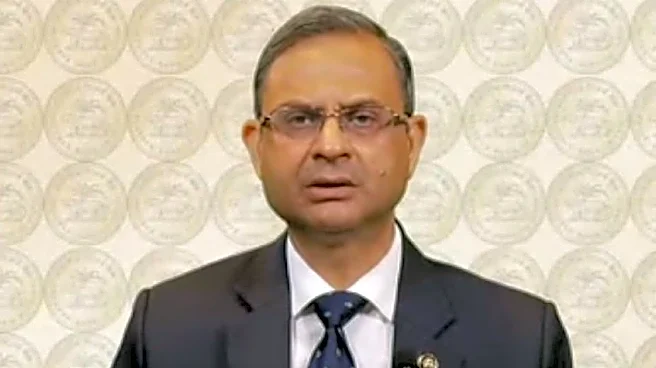
RBI Governor Sanjay Malhotra said global conditions have deteriorated, but noted that India’s macroeconomic fundamentals remain stronger than in earlier periods of stress. He said the central bank will continue to remain data-dependent and intervene only to prevent excessive volatility in the foreign exchange market.
The central bank highlighted risks from elevated commodity prices, supply-chain disruptions, and uncertainty around monsoon rainfall, which could influence inflation trends in the coming months. While underlying inflation pressures remain contained, it warned of possible spillovers from higher energy costs and wage adjustments.
The RBI also revised its macro outlook, lowering its real GDP growth projection for 2026–27 to 6.6 per cent from 6.9 per cent earlier. It raised its inflation forecast to 5.1 per cent, citing expectations of higher price pressures in the second half of the year.
India’s foreign exchange reserves stood at $682.3 billion as of May 29, providing an import cover of about 11 months, the central bank said.
Market participants said the policy stance and liquidity-supportive measures helped improve sentiment for the rupee.
“The RBI signalled a hawkish pause while actively working to support capital inflows,” said Kotak Mahindra Bank economist Upasna Bhardwaj, adding that currency pressures may ease if inflows strengthen in coming months.
A DBS Bank economist said the measures indicated coordinated steps to stabilise the currency while keeping inflation risks under watch.
-With agencies inputs
The rupee rose 84 paise, or 0.9%, against the US dollar and closed below the 95-per-dollar mark. It also ended at its highest closing level in a month, reversing recent pressure from sustained foreign outflows and higher crude oil prices.
The rally came after the Reserve Bank of India announced a set of measures to attract foreign inflows and support currency stability amid global uncertainty driven by geopolitical tensions and elevated energy prices.
As part of the package, the RBI removed certain tax-related frictions for eligible foreign investors in government securities, expanded access to sovereign bonds under its foreign investment route, and introduced concessional arrangements for foreign currency borrowings. It also proposed measures to ease hedging costs for select offshore borrowing programmes.
RBI Governor Sanjay Malhotra said global conditions have deteriorated, but noted that India’s macroeconomic fundamentals remain stronger than in earlier periods of stress. He said the central bank will continue to remain data-dependent and intervene only to prevent excessive volatility in the foreign exchange market.
The central bank highlighted risks from elevated commodity prices, supply-chain disruptions, and uncertainty around monsoon rainfall, which could influence inflation trends in the coming months. While underlying inflation pressures remain contained, it warned of possible spillovers from higher energy costs and wage adjustments.
The RBI also revised its macro outlook, lowering its real GDP growth projection for 2026–27 to 6.6 per cent from 6.9 per cent earlier. It raised its inflation forecast to 5.1 per cent, citing expectations of higher price pressures in the second half of the year.
India’s foreign exchange reserves stood at $682.3 billion as of May 29, providing an import cover of about 11 months, the central bank said.
Market participants said the policy stance and liquidity-supportive measures helped improve sentiment for the rupee.
“The RBI signalled a hawkish pause while actively working to support capital inflows,” said Kotak Mahindra Bank economist Upasna Bhardwaj, adding that currency pressures may ease if inflows strengthen in coming months.
A DBS Bank economist said the measures indicated coordinated steps to stabilise the currency while keeping inflation risks under watch.
-With agencies inputs
/images/ppid_59c68470-image-178063252763190854.webp)



/images/ppid_59c68470-image-178064009666127621.webp)
/images/ppid_59c68470-image-178054504188669293.webp)
/images/ppid_59c68470-image-178063752938310013.webp)
/images/ppid_59c68470-image-178050254455536915.webp)
/images/ppid_59c68470-image-178064757154419091.webp)
/images/ppid_59c68470-image-178058753215112585.webp)