/images/ppid_59c68470-image-176594503305683277.webp)




What is the story about?
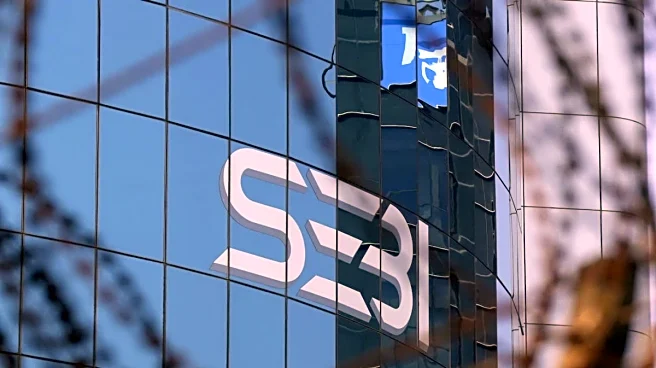
The Securities and Exchange Board of India (SEBI) board will meet on Wednesday (December 17) to consider a set of regulatory reforms spanning mutual funds, stock brokers and internal governance, according to PTI.
One of the key proposals before the board relates to changes in how mutual fund expenses are charged.
SEBI is considering excluding statutory levies such as securities transaction tax (STT), commodity transaction tax (CTT), stamp duty and Goods and Services Tax (GST) from the total expense ratio (TER) charged to investors. These levies would be passed on separately, instead of being included within the TER cap.
At present, only GST on management fees is charged over and above the TER, while other statutory charges are absorbed within it.
The proposal stems from a consultation paper issued on October 28, in which SEBI said excluding statutory levies would improve transparency and ensure that any future changes in government taxes are reflected clearly, PTI reported.
The board will also take up a report by a high-level panel on conflict of interest, which has recommended public disclosure of assets by senior SEBI officials and a stricter ethics framework.
The panel has suggested measures such as a secure whistleblower mechanism, a ban on expensive gifts, a two-year cooling-off period for post-retirement assignments, and the creation of a Chief Ethics and Compliance Officer role.
This will be the fourth board meeting chaired by Sebi Chairperson Tuhin Kanta Pandey, who assumed office on March 1.
The panel submitted its report to him on November 10.
On mutual fund regulations more broadly, the board is expected to discuss proposals to clarify the definition of TER, revise brokerage-related provisions and remove the additional 5 basis points that asset management companies were earlier allowed to charge across schemes.
SEBI has said this additional expense was transitory in nature and was introduced to offset the impact of crediting exit loads back to schemes.
In addition, the board will consider proposals to review the Stock Broker Regulations, 1992. As part of the revamp, Sebi has suggested introducing a formal definition of algorithmic trading to address gaps in the existing regulatory framework, PTI said.
Other items on the agenda include relaxed know-your-customer (KYC) norms for non-resident Indians and the possible introduction of a closing auction session in the markets.
One of the key proposals before the board relates to changes in how mutual fund expenses are charged.
SEBI is considering excluding statutory levies such as securities transaction tax (STT), commodity transaction tax (CTT), stamp duty and Goods and Services Tax (GST) from the total expense ratio (TER) charged to investors. These levies would be passed on separately, instead of being included within the TER cap.
At present, only GST on management fees is charged over and above the TER, while other statutory charges are absorbed within it.
The proposal stems from a consultation paper issued on October 28, in which SEBI said excluding statutory levies would improve transparency and ensure that any future changes in government taxes are reflected clearly, PTI reported.
The board will also take up a report by a high-level panel on conflict of interest, which has recommended public disclosure of assets by senior SEBI officials and a stricter ethics framework.
The panel has suggested measures such as a secure whistleblower mechanism, a ban on expensive gifts, a two-year cooling-off period for post-retirement assignments, and the creation of a Chief Ethics and Compliance Officer role.
This will be the fourth board meeting chaired by Sebi Chairperson Tuhin Kanta Pandey, who assumed office on March 1.
The panel submitted its report to him on November 10.
On mutual fund regulations more broadly, the board is expected to discuss proposals to clarify the definition of TER, revise brokerage-related provisions and remove the additional 5 basis points that asset management companies were earlier allowed to charge across schemes.
SEBI has said this additional expense was transitory in nature and was introduced to offset the impact of crediting exit loads back to schemes.
In addition, the board will consider proposals to review the Stock Broker Regulations, 1992. As part of the revamp, Sebi has suggested introducing a formal definition of algorithmic trading to address gaps in the existing regulatory framework, PTI said.
Other items on the agenda include relaxed know-your-customer (KYC) norms for non-resident Indians and the possible introduction of a closing auction session in the markets.


/images/ppid_59c68470-image-177063009461980470.webp)
/images/ppid_59c68470-image-177062010686465812.webp)
/images/ppid_59c68470-image-177070505765120255.webp)
/images/ppid_59c68470-image-17706525374275258.webp)

/images/ppid_59c68470-image-177065002910375399.webp)