/images/ppid_59c68470-image-178844002471242650.webp)

/images/ppid_59c68470-image-178836502762734194.webp)
What is the story about?
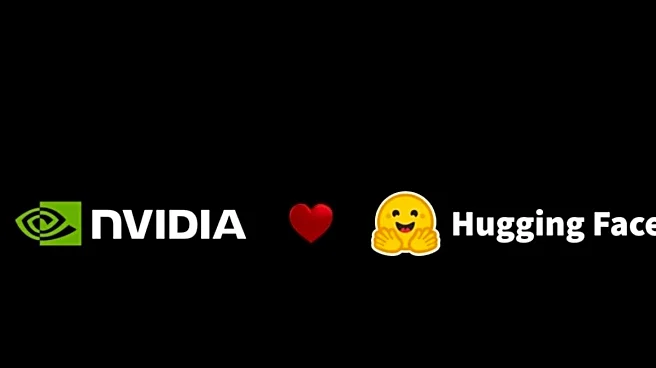
Nvidia has agreed to acquire AI developer platform Hugging Face for $12.93 billion, in a deal that gives the world's dominant AI chipmaker control of one of the most important hubs for open AI models.
Nvidia founder and CEO Jensen Huang announced the deal on Thursday, September 3, saying the companies would work together to expand Hugging Face's platform, strengthen its infrastructure and broaden access to AI.
Hugging Face has become something like a GitHub for artificial intelligence: a place where developers and researchers can find, share, test and customise AI models and datasets.
More than 18 million developers, researchers and creators use the platform, which hosts over 3 million models, 500,000 datasets and 1 million applications. More than 200,000 companies use Hugging Face to discover, evaluate, customise and deploy AI.
Hugging Face will remain open
A key question following the acquisition is whether owning Hugging Face will allow Nvidia to steer developers towards its own chips and software.
Nvidia says it won't.
Hugging Face will continue to operate as an open platform, allowing developers to choose their models, AI frameworks, cloud providers, inference services and computing platforms. Nvidia's computing technology won't be required to build or deploy models through Hugging Face.
The platform will also continue to support open-source and open-weight models and deployment across different clouds and AI accelerators.
Nvidia plans to use its engineering and infrastructure resources to strengthen Hugging Face in areas including reliability, safety, model evaluation, inference and deployment.
Nvidia is already a major contributor to the platform, with more than 500 models and 250 open datasets hosted on Hugging Face, according to the announcement.
Why does Nvidia want Hugging Face?
The deal takes Nvidia another step beyond selling the chips that power AI and deeper into the software and developer ecosystem built around them.
Hugging Face gives Nvidia direct access to a platform used by millions of AI developers to share and test models at a time when demand for open-weight AI is growing.
That could become increasingly important as some of Nvidia's biggest customers, including major technology companies and AI developers, work on their own chips to reduce their dependence on Nvidia hardware. Supporting a broad ecosystem of open models gives Nvidia another way to remain at the centre of AI development even as competition in chips intensifies.
The $12.93-billion transaction is also Nvidia's largest acquisition to date, surpassing its $6.9-billion purchase of Mellanox in 2020.
Also Read: India services activity accelerates in August; hiring hits 15-month high.
Nvidia founder and CEO Jensen Huang announced the deal on Thursday, September 3, saying the companies would work together to expand Hugging Face's platform, strengthen its infrastructure and broaden access to AI.
Hugging Face has become something like a GitHub for artificial intelligence: a place where developers and researchers can find, share, test and customise AI models and datasets.
More than 18 million developers, researchers and creators use the platform, which hosts over 3 million models, 500,000 datasets and 1 million applications. More than 200,000 companies use Hugging Face to discover, evaluate, customise and deploy AI.
Hugging Face will remain open
A key question following the acquisition is whether owning Hugging Face will allow Nvidia to steer developers towards its own chips and software.
Nvidia says it won't.
Hugging Face will continue to operate as an open platform, allowing developers to choose their models, AI frameworks, cloud providers, inference services and computing platforms. Nvidia's computing technology won't be required to build or deploy models through Hugging Face.
The platform will also continue to support open-source and open-weight models and deployment across different clouds and AI accelerators.
Nvidia plans to use its engineering and infrastructure resources to strengthen Hugging Face in areas including reliability, safety, model evaluation, inference and deployment.
Nvidia is already a major contributor to the platform, with more than 500 models and 250 open datasets hosted on Hugging Face, according to the announcement.
Why does Nvidia want Hugging Face?
The deal takes Nvidia another step beyond selling the chips that power AI and deeper into the software and developer ecosystem built around them.
Hugging Face gives Nvidia direct access to a platform used by millions of AI developers to share and test models at a time when demand for open-weight AI is growing.
That could become increasingly important as some of Nvidia's biggest customers, including major technology companies and AI developers, work on their own chips to reduce their dependence on Nvidia hardware. Supporting a broad ecosystem of open models gives Nvidia another way to remain at the centre of AI development even as competition in chips intensifies.
The $12.93-billion transaction is also Nvidia's largest acquisition to date, surpassing its $6.9-billion purchase of Mellanox in 2020.
Also Read: India services activity accelerates in August; hiring hits 15-month high.

/images/ppid_59c68470-image-178845505889612482.webp)