/images/ppid_59c68470-image-177984753516197329.webp)

/images/ppid_a911dc6a-image-177973126038616430.webp)

/images/ppid_59c68470-image-177961511017179000.webp)
What is the story about?
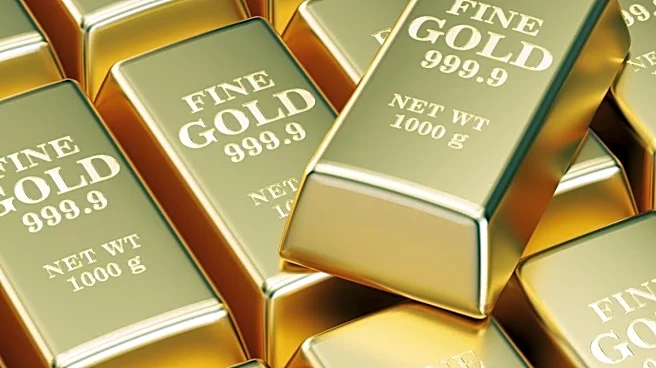
Gold and silver prices moved higher on Wednesday (May 27), supported by a weaker US dollar and ongoing geopolitical tensions in the Wesr Asia, while investors positioned cautiously ahead of key US inflation data and Federal Reserve commentary.
On COMEX, gold futures rose 0.34% to $4,517.70 per ounce, gaining $15.40 anounce from the previous close. Silver outperformed gold, climbing 1.32% to $77.615 per ounce.
Dollar weakness lifts bullion
Bullion drew support from a softer dollar, which improved affordability for holders of other currencies and helped offset some pressure from shifting interest rate expectations. Markets continued to reassess the Federal Reserve’s policy path, with traders awaiting fresh cues on the timing and scale of potential rate cuts.
Attention now turns to the US Personal Consumption Expenditures (PCE) inflation data due later this week, which is expected to play a key role in shaping near-term monetary policy expectations. Investors are also tracking remarks from Fed officials, including Vice Chair Philip Jefferson and Governor Lisa Cook, for signals on how policymakers view inflation risks linked to global developments.
Geopolitical tensions sustain safe-haven interest
Sentiment remained sensitive to developments in US-Iran tensions, with reports of ceasefire violations and renewed strikes near strategic waterways adding to uncertainty. While early escalation risks had boosted safe-haven demand, analysts noted that flows have become more volatile as markets oscillate between hopes of de-escalation and renewed conflict concerns.
US officials indicated that negotiations to reach a broader agreement could take several days, even as earlier statements suggested progress toward a preliminary understanding aimed at easing hostilities and restoring shipping activity through key maritime routes.
Inflation and growth signals mixed
Recent US economic data showed easing consumer confidence in May, with households expressing concern over inflation risks tied to geopolitical developments. Labor market sentiment also weakened, though expectations of improvement later in the year helped limit downside pressure on risk assets.
These mixed signals have reinforced a consolidation phase in bullion markets, with traders avoiding aggressive positioning ahead of critical macroeconomic releases.
Outlook: Range-bound bias with event-driven volatility
Market participants expect gold and silver to remain range-bound in the near term, with price direction largely dependent on inflation trends, interest rate expectations, and geopolitical developments.
“Gold prices have surged recently due to several factors including global geopolitical events and the appreciation of the USD along with changing Central Bank policies. The initial safe haven demand in the conflict in West Asia has now been corrected and markets are following the monetary messages and risk sentiment of global markets,” said Colin Shah, MD, Kama Jewelry.
He added that domestic factors continue to provide support: “In India, the depreciation of the rupee and increasing customs tariff are still contributing to the rise in gold prices. Consumer demand is steady, especially from the wedding and festive categories, but customers are becoming more value aware resulting in a gradual trend towards lighter purchases and investment driven purchases.”
Analysts said bullion will likely remain sensitive to US macro data and geopolitical headlines, with silver expected to maintain relative strength if industrial demand holds steady.
-With Reuters inputs
On COMEX, gold futures rose 0.34% to $4,517.70 per ounce, gaining $15.40 anounce from the previous close. Silver outperformed gold, climbing 1.32% to $77.615 per ounce.
Dollar weakness lifts bullion
Bullion drew support from a softer dollar, which improved affordability for holders of other currencies and helped offset some pressure from shifting interest rate expectations. Markets continued to reassess the Federal Reserve’s policy path, with traders awaiting fresh cues on the timing and scale of potential rate cuts.
Attention now turns to the US Personal Consumption Expenditures (PCE) inflation data due later this week, which is expected to play a key role in shaping near-term monetary policy expectations. Investors are also tracking remarks from Fed officials, including Vice Chair Philip Jefferson and Governor Lisa Cook, for signals on how policymakers view inflation risks linked to global developments.
Geopolitical tensions sustain safe-haven interest
Sentiment remained sensitive to developments in US-Iran tensions, with reports of ceasefire violations and renewed strikes near strategic waterways adding to uncertainty. While early escalation risks had boosted safe-haven demand, analysts noted that flows have become more volatile as markets oscillate between hopes of de-escalation and renewed conflict concerns.
US officials indicated that negotiations to reach a broader agreement could take several days, even as earlier statements suggested progress toward a preliminary understanding aimed at easing hostilities and restoring shipping activity through key maritime routes.
Inflation and growth signals mixed
Recent US economic data showed easing consumer confidence in May, with households expressing concern over inflation risks tied to geopolitical developments. Labor market sentiment also weakened, though expectations of improvement later in the year helped limit downside pressure on risk assets.
These mixed signals have reinforced a consolidation phase in bullion markets, with traders avoiding aggressive positioning ahead of critical macroeconomic releases.
Outlook: Range-bound bias with event-driven volatility
Market participants expect gold and silver to remain range-bound in the near term, with price direction largely dependent on inflation trends, interest rate expectations, and geopolitical developments.
“Gold prices have surged recently due to several factors including global geopolitical events and the appreciation of the USD along with changing Central Bank policies. The initial safe haven demand in the conflict in West Asia has now been corrected and markets are following the monetary messages and risk sentiment of global markets,” said Colin Shah, MD, Kama Jewelry.
He added that domestic factors continue to provide support: “In India, the depreciation of the rupee and increasing customs tariff are still contributing to the rise in gold prices. Consumer demand is steady, especially from the wedding and festive categories, but customers are becoming more value aware resulting in a gradual trend towards lighter purchases and investment driven purchases.”
Analysts said bullion will likely remain sensitive to US macro data and geopolitical headlines, with silver expected to maintain relative strength if industrial demand holds steady.
-With Reuters inputs
/images/ppid_59c68470-image-177984506692376375.webp)
/images/ppid_59c68470-image-177982003430154233.webp)
/images/ppid_59c68470-image-177972760188122747.webp)


/images/ppid_59c68470-image-177981253323736959.webp)

/images/ppid_59c68470-image-17798175469957261.webp)
/images/ppid_59c68470-image-177968752512918644.webp)