/images/ppid_59c68470-image-179192002629884005.webp)


What is the story about?
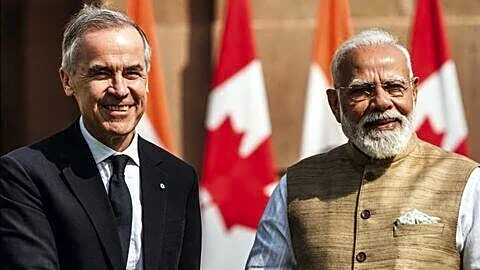
India and Canada have reaffirmed their commitment to conclude negotiations on a Comprehensive Economic Partnership Agreement (CEPA) at the earliest opportunity, with Prime Minister Narendra Modi and Canadian Prime Minister Mark Carney discussing ways to expand cooperation in trade, energy, technology and security.
The proposed trade agreement is expected to support efforts to double bilateral trade by 2030, according to a statement from the Canadian Prime Minister’s Office following the leaders’ telephonic conversation on Tuesday.
Modi described the conversation as “warm and productive” in a post on X, saying the two countries would work towards concrete outcomes across key areas of their strategic partnership.
The Canadian statement said the leaders welcomed increased engagement between the two countries over the past year, including in finance, defence and security, people-to-people ties and artificial intelligence.
Trade and economic cooperation in focus
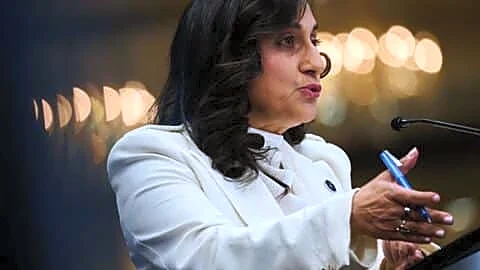
The latest conversation comes as both countries step up engagement on trade. A Team Canada Trade Mission, led by Canadian Minister of International Trade Maninder Sidhu, is currently visiting India. Canadian Foreign Affairs Minister Anita Anand is also visiting New Delhi this week to discuss shared priorities, including trade, energy and people-to-people ties.
India and Canada have been working towards advancing negotiations on the CEPA. During a meeting in New Delhi earlier this month, India’s National Security Adviser Ajit Doval and David Morrison, senior diplomatic and international affairs adviser to the Canadian Prime Minister, welcomed efforts to move the negotiations forward.
The two leaders also discussed geopolitical instability in the Indo-Pacific and the importance of reliable partners in energy and agriculture. Carney thanked Modi for his leadership in seeking a peaceful resolution to Russia’s war on Ukraine, the Canadian statement said.
India, Canada step up security cooperation
The latest leaders’ conversation followed security talks between Doval and Morrison in New Delhi on October 6. Morrison visited India from October 5 to 7 as part of the ongoing bilateral security dialogue at the National Security Adviser level.
According to India’s Ministry of External Affairs (MEA), the two sides reviewed progress in security and law enforcement cooperation, including the implementation of a shared Security Work Plan concluded in February 2026.
They agreed to deepen cooperation against transnational organised crime, terrorism, violent extremism, human and drug trafficking, cybercrime and extortion. The discussions also covered the extradition of criminal offenders and the possibility of structured dialogues on cybersecurity and economic security.
The officials also discussed the potential to develop a more substantive bilateral defence relationship. Previous security dialogues at the NSA level took place in New Delhi in September 2025 and Ottawa in February 2026.
Relations recover after diplomatic tensions
India-Canada relations deteriorated sharply in 2023 after then Canadian Prime Minister Justin Trudeau alleged a potential Indian link to the killing of Khalistan separatist Hardeep Singh Nijjar in Canada. New Delhi rejected the allegation as “absurd”.
Tensions escalated in October 2024, when India recalled its high commissioner, Sanjay Kumar Verma, and five other diplomats after Ottawa sought to link them to the Nijjar case. India also expelled an equal number of Canadian diplomats.
Relations have since improved under Carney, whose Liberal Party won the Canadian parliamentary election in April 2025. Both countries have posted high commissioners in each other’s capitals.
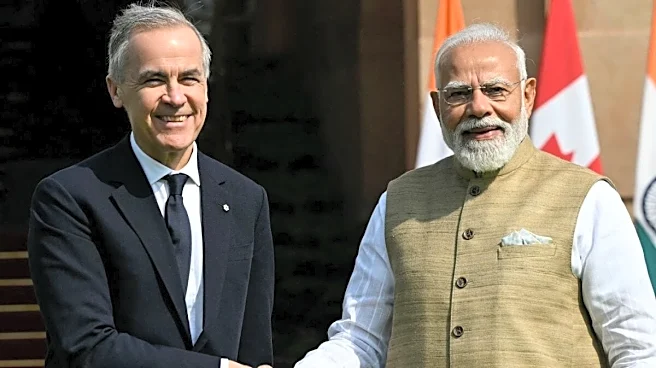
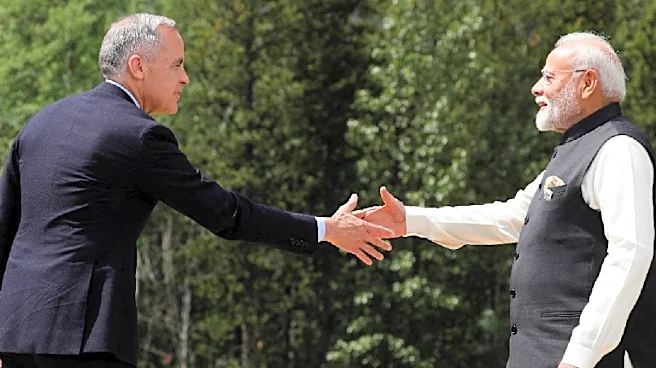
Carney’s visit to India in March 2026 marked a further step in rebuilding bilateral ties. The two prime ministers have now agreed to remain in close contact ahead of Modi’s planned visit to Canada in December, which could provide an opportunity to advance their trade and strategic priorities.
The proposed trade agreement is expected to support efforts to double bilateral trade by 2030, according to a statement from the Canadian Prime Minister’s Office following the leaders’ telephonic conversation on Tuesday.
Modi described the conversation as “warm and productive” in a post on X, saying the two countries would work towards concrete outcomes across key areas of their strategic partnership.
The Canadian statement said the leaders welcomed increased engagement between the two countries over the past year, including in finance, defence and security, people-to-people ties and artificial intelligence.
Trade and economic cooperation in focus
The latest conversation comes as both countries step up engagement on trade. A Team Canada Trade Mission, led by Canadian Minister of International Trade Maninder Sidhu, is currently visiting India. Canadian Foreign Affairs Minister Anita Anand is also visiting New Delhi this week to discuss shared priorities, including trade, energy and people-to-people ties.
India and Canada have been working towards advancing negotiations on the CEPA. During a meeting in New Delhi earlier this month, India’s National Security Adviser Ajit Doval and David Morrison, senior diplomatic and international affairs adviser to the Canadian Prime Minister, welcomed efforts to move the negotiations forward.
The two leaders also discussed geopolitical instability in the Indo-Pacific and the importance of reliable partners in energy and agriculture. Carney thanked Modi for his leadership in seeking a peaceful resolution to Russia’s war on Ukraine, the Canadian statement said.
India, Canada step up security cooperation
The latest leaders’ conversation followed security talks between Doval and Morrison in New Delhi on October 6. Morrison visited India from October 5 to 7 as part of the ongoing bilateral security dialogue at the National Security Adviser level.
According to India’s Ministry of External Affairs (MEA), the two sides reviewed progress in security and law enforcement cooperation, including the implementation of a shared Security Work Plan concluded in February 2026.
They agreed to deepen cooperation against transnational organised crime, terrorism, violent extremism, human and drug trafficking, cybercrime and extortion. The discussions also covered the extradition of criminal offenders and the possibility of structured dialogues on cybersecurity and economic security.
The officials also discussed the potential to develop a more substantive bilateral defence relationship. Previous security dialogues at the NSA level took place in New Delhi in September 2025 and Ottawa in February 2026.
Relations recover after diplomatic tensions
India-Canada relations deteriorated sharply in 2023 after then Canadian Prime Minister Justin Trudeau alleged a potential Indian link to the killing of Khalistan separatist Hardeep Singh Nijjar in Canada. New Delhi rejected the allegation as “absurd”.
Tensions escalated in October 2024, when India recalled its high commissioner, Sanjay Kumar Verma, and five other diplomats after Ottawa sought to link them to the Nijjar case. India also expelled an equal number of Canadian diplomats.
Relations have since improved under Carney, whose Liberal Party won the Canadian parliamentary election in April 2025. Both countries have posted high commissioners in each other’s capitals.
Carney’s visit to India in March 2026 marked a further step in rebuilding bilateral ties. The two prime ministers have now agreed to remain in close contact ahead of Modi’s planned visit to Canada in December, which could provide an opportunity to advance their trade and strategic priorities.



/images/ppid_59c68470-image-179186002350084474.webp)
/images/ppid_59c68470-image-179199505587225296.webp)