/images/ppid_59c68470-image-178047503738066024.webp)


/images/ppid_59c68470-image-17803850764672571.webp)
/images/ppid_59c68470-image-178040752572010151.webp)
What is the story about?
Foreign investors may be selling Indian shares in the secondary market, but they continue to show strong interest in high-quality Indian initial public offerings (IPOs), according to Amol Gupte, CEO-Asia South at Citi. Speaking at the Citi India Conference, Gupte said investors are still willing to back strong Indian businesses despite global uncertainty and market volatility.
“You have to also step away and think about how they’re behaving when there are fresh IPOs,” Gupte said. “We still see FPIs investing in fresh IPOs when they’re high quality.”
Foreign portfolio investors (FPIs) have been net sellers in Indian equities in recent months as global investors rebalance portfolios and allocate more capital towards the US market. Gupte said the strong rally in the US market and large capital raises by global companies are also pulling money away from emerging markets.
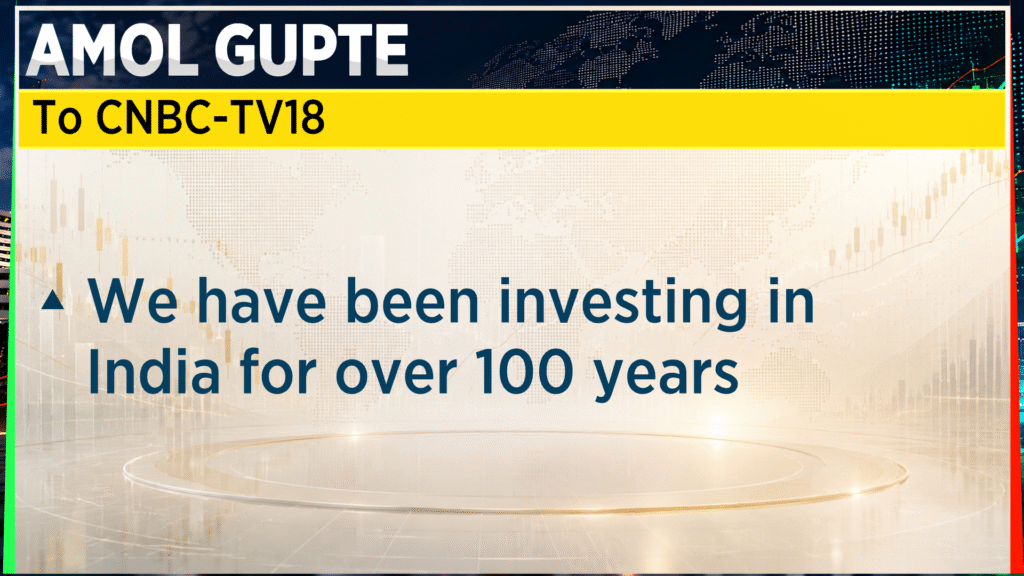
At the same time, he said India’s long-term fundamentals remain strong. According to Gupte, India’s fiscal discipline after COVID, a healthy banking sector and resilient consumer demand continue to support the economy.
“The long-term potential for India remains intact. That story remains intact,” he said.
Also Watch | SBI’s CS Setty says India has built a world-leading digital payments ecosystem
Gupte added that India remains one of Citi’s most important global markets. He noted that Citi holds investor conferences of this scale only in India and China, underlining the country’s growing importance in global capital markets.
He also expects India’s recently signed and proposed free trade agreements (FTAs) with the United Kingdom (UK), the European Union (EU), and the United States (US) to support fresh foreign direct investment (FDI), job creation, and consumption growth in the coming years.
Watch the full conversation here
On manufacturing, Gupte said the China Plus One strategy continues to benefit Asia, especially countries like Vietnam and Malaysia, but India is gradually catching up through reforms and improving infrastructure.
Also Watch | India’s foreign investor selling is more cyclical than structural: BofA
He also highlighted India’s digital ecosystem as a major long-term strength. According to him, investments in artificial intelligence (AI), data centres, and digital infrastructure could become the next drivers of economic growth and capital inflows into the country.
“We see the foundational macro of India really strong,” Gupte said. “The future is bright.”
Catch all the latest updates from the stock market here
“You have to also step away and think about how they’re behaving when there are fresh IPOs,” Gupte said. “We still see FPIs investing in fresh IPOs when they’re high quality.”
Foreign portfolio investors (FPIs) have been net sellers in Indian equities in recent months as global investors rebalance portfolios and allocate more capital towards the US market. Gupte said the strong rally in the US market and large capital raises by global companies are also pulling money away from emerging markets.
At the same time, he said India’s long-term fundamentals remain strong. According to Gupte, India’s fiscal discipline after COVID, a healthy banking sector and resilient consumer demand continue to support the economy.
“The long-term potential for India remains intact. That story remains intact,” he said.
Also Watch | SBI’s CS Setty says India has built a world-leading digital payments ecosystem
Gupte added that India remains one of Citi’s most important global markets. He noted that Citi holds investor conferences of this scale only in India and China, underlining the country’s growing importance in global capital markets.
He also expects India’s recently signed and proposed free trade agreements (FTAs) with the United Kingdom (UK), the European Union (EU), and the United States (US) to support fresh foreign direct investment (FDI), job creation, and consumption growth in the coming years.
Watch the full conversation here
On manufacturing, Gupte said the China Plus One strategy continues to benefit Asia, especially countries like Vietnam and Malaysia, but India is gradually catching up through reforms and improving infrastructure.
Also Watch | India’s foreign investor selling is more cyclical than structural: BofA
He also highlighted India’s digital ecosystem as a major long-term strength. According to him, investments in artificial intelligence (AI), data centres, and digital infrastructure could become the next drivers of economic growth and capital inflows into the country.
“We see the foundational macro of India really strong,” Gupte said. “The future is bright.”
Catch all the latest updates from the stock market here
/images/ppid_59c68470-image-178055003230120419.webp)
/images/ppid_59c68470-image-178055757054458545.webp)
/images/ppid_59c68470-image-178058258254712390.webp)
/images/ppid_59c68470-image-178057003872165726.webp)
/images/ppid_59c68470-image-178048511894527646.webp)

/images/ppid_59c68470-image-178048507220135075.webp)
/images/ppid_59c68470-image-178048504152511562.webp)
/images/ppid_a911dc6a-image-178062306379160454.webp)
