/images/ppid_59c68470-image-178963752429546117.webp)

/images/ppid_59c68470-image-178963005582382546.webp)
/images/ppid_59c68470-image-178957002588157988.webp)
What is the story about?
Vishal Manchanda, Pharma Analyst, Systematix Group, said the sector remains relatively well placed despite the uncertainty around potential US tariffs.
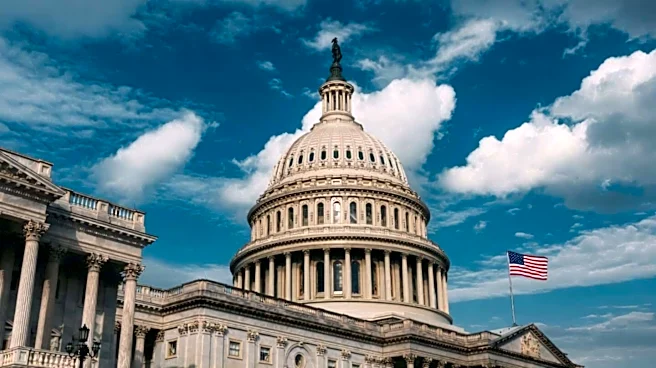
The US House has passed a Russia sanctions bill that could allow US President Donald Trump to impose tariffs of up to 100% on exports from India. However, Manchanda believes India's strong position in pharmaceuticals is supported by the lack of viable alternatives to its supply.
He added, “We have been seeing this tariffs situation coming on and off for the sector. I will maintain my view here, whether we have an exemption or we don't have an exemption, but our situation is strong in terms of there are no alternatives beyond India. And if at all there is a tariff that happens on the space, we will see the companies passing the tariffs to the US customers, and it'll be inflationary for the US economy.”
Sudarshan Jain, Secretary-General, Indian Pharmaceutical Alliance (IPA), said, “We believe that pharma should be exempted from whatever regulation is passed, and tariff should not be part of generics as far as pharma space is concerned.”
According to Jain, around 90% of medicines in the US are generic, with India supplying about 47% of these medicines. He also highlighted the cost advantage of Indian pharmaceuticals, noting that generics account for only around 13% of the value of the US market despite making up 90% of the volume.
Jain said the industry is closely monitoring developments and believes medicines should remain exempt from tariffs.
The possibility of US onshoring is another factor being watched by the sector. Jain said Indian companies could evaluate manufacturing investments in the US, particularly for high-value products where the economics make sense.
However, manufacturing medicines in the US could be significantly more expensive than producing them in India.
Jain said it could cost three to four times more to manufacture medicines in the US compared with India. This means companies are likely to assess onshoring decisions based on the economics of individual products.
"Medicine prices are lowest from India, and we make significant difference to the US healthcare system," Jain said.
He added that affordable medicines supplied by India result in around $200 billion of annual savings for the US healthcare system. A significant tariff, he said, could ultimately push up healthcare costs if companies pass the additional burden on to patients.
Instead of focusing only on tariffs and manufacturing in the US, Jain said building a more resilient pharmaceutical supply chain should remain a priority for both countries.
For the entire discussion, watch the accompanying video
Follow our live blog for more stock market updates
The US House has passed a Russia sanctions bill that could allow US President Donald Trump to impose tariffs of up to 100% on exports from India. However, Manchanda believes India's strong position in pharmaceuticals is supported by the lack of viable alternatives to its supply.
He added, “We have been seeing this tariffs situation coming on and off for the sector. I will maintain my view here, whether we have an exemption or we don't have an exemption, but our situation is strong in terms of there are no alternatives beyond India. And if at all there is a tariff that happens on the space, we will see the companies passing the tariffs to the US customers, and it'll be inflationary for the US economy.”
Sudarshan Jain, Secretary-General, Indian Pharmaceutical Alliance (IPA), said, “We believe that pharma should be exempted from whatever regulation is passed, and tariff should not be part of generics as far as pharma space is concerned.”
According to Jain, around 90% of medicines in the US are generic, with India supplying about 47% of these medicines. He also highlighted the cost advantage of Indian pharmaceuticals, noting that generics account for only around 13% of the value of the US market despite making up 90% of the volume.
Jain said the industry is closely monitoring developments and believes medicines should remain exempt from tariffs.
The possibility of US onshoring is another factor being watched by the sector. Jain said Indian companies could evaluate manufacturing investments in the US, particularly for high-value products where the economics make sense.
However, manufacturing medicines in the US could be significantly more expensive than producing them in India.
Jain said it could cost three to four times more to manufacture medicines in the US compared with India. This means companies are likely to assess onshoring decisions based on the economics of individual products.
"Medicine prices are lowest from India, and we make significant difference to the US healthcare system," Jain said.
He added that affordable medicines supplied by India result in around $200 billion of annual savings for the US healthcare system. A significant tariff, he said, could ultimately push up healthcare costs if companies pass the additional burden on to patients.
Instead of focusing only on tariffs and manufacturing in the US, Jain said building a more resilient pharmaceutical supply chain should remain a priority for both countries.
For the entire discussion, watch the accompanying video
Follow our live blog for more stock market updates



/images/ppid_59c68470-image-178962008477598265.webp)
/images/ppid_59c68470-image-178962503175034689.webp)


/images/ppid_59c68470-image-178960752420974633.webp)