/images/ppid_59c68470-image-177920502915469177.webp)

/images/ppid_59c68470-image-177907252831960362.webp)

What is the story about?
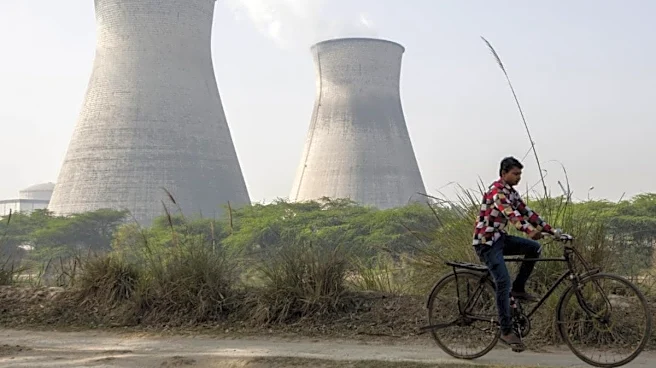
The SHANTI Act has removed one of the biggest hurdles to India-US nuclear cooperation and could pave the way for fresh investments, partnerships and a long-term nuclear buildout driven by rising electricity demand from artificial intelligence and data centres, according to Maria Korsnick, President and CEO of the Nuclear Energy Institute.
Speaking to CNBC-TV18, Korsnick said the legislation addressed long-pending concerns around nuclear liability that had remained unresolved since the India-US civil nuclear agreement signed two decades ago.
“So, back in 2005, we did that civil nuclear cooperation deal, and yet we didn't complete all of the issues and the conversations. That's what the SHANTI Act has done. It has dealt with nuclear liability, which was one of the biggest sticking points back in 2005,” she said.
Korsnick said the latest developments had renewed interest among American nuclear companies looking at India as a major long-term market. She noted that some delegates on the current US trade mission to India had also participated in a similar delegation in 2006 following the original nuclear agreement.
She described the global nuclear opportunity as a multi-trillion-dollar market, citing a recent JP Morgan assessment that estimated the US nuclear sector alone could become a $2.2 trillion market by 2050.
“Globally it's much bigger than that. This isn't a flash in the pan for the next two or three years. This is a long-term buildout for nuclear,” she said.
According to Korsnick, nuclear energy is gaining momentum because countries increasingly want clean, reliable and secure energy supplies. She said nuclear power also aligned closely with the growing electricity requirements of artificial intelligence infrastructure and hyperscale data centres.
“AI is a thirsty technology,” Korsnick said, adding that power demand from data centres in the United States is expected to triple by 2030.
She said large technology companies including Meta, Google and Amazon were increasingly turning towards nuclear energy because of its reliability and round-the-clock availability.
“They don't just want power, they want really reliable power, and that's what nuclear brings,” she said.
Korsnick also backed an “all-of-the-above” nuclear strategy for India, with opportunities spanning large conventional reactors as well as small modular reactors (SMRs).
She said newer reactor technologies could support a wide range of use cases, from powering manufacturing facilities and small towns to supporting off-grid operations and defence applications.
“If you have an energy need, nuclear can be your answer,” she said.
On financing, Korsnick said India would need to develop frameworks that support long-duration nuclear investments, including discussions around foreign direct investment and tariffs.
“Nuclear is a long-term project, a 100-year asset,” she said, adding that first-of-a-kind projects would likely require additional support before costs decline over time.
Despite the massive capital requirements associated with India’s nuclear ambitions, Korsnick said she saw growing interest from the private sector and strong potential for India to emerge as a manufacturing and supply-chain hub for the global nuclear industry.
“We can work together on a couple of projects, build the skill set, build an understanding of the supply chain that's needed,” she said. “You already have a great workforce. It's something that will pay off for many generations in India.”
Also Read | FM Nirmala Sitharaman discusses nuclear energy reforms with US industry delegation
Korsnick also said the India-US nuclear partnership had strategic geopolitical significance at a time when China and Russia were expanding their own nuclear cooperation and global influence.
“The US has demonstrated technology and expertise in this area, and I think this is a great opportunity for India and the US to have a strategic partnership in this way,” she said.
Speaking to CNBC-TV18, Korsnick said the legislation addressed long-pending concerns around nuclear liability that had remained unresolved since the India-US civil nuclear agreement signed two decades ago.
“So, back in 2005, we did that civil nuclear cooperation deal, and yet we didn't complete all of the issues and the conversations. That's what the SHANTI Act has done. It has dealt with nuclear liability, which was one of the biggest sticking points back in 2005,” she said.
Korsnick said the latest developments had renewed interest among American nuclear companies looking at India as a major long-term market. She noted that some delegates on the current US trade mission to India had also participated in a similar delegation in 2006 following the original nuclear agreement.
She described the global nuclear opportunity as a multi-trillion-dollar market, citing a recent JP Morgan assessment that estimated the US nuclear sector alone could become a $2.2 trillion market by 2050.
“Globally it's much bigger than that. This isn't a flash in the pan for the next two or three years. This is a long-term buildout for nuclear,” she said.
According to Korsnick, nuclear energy is gaining momentum because countries increasingly want clean, reliable and secure energy supplies. She said nuclear power also aligned closely with the growing electricity requirements of artificial intelligence infrastructure and hyperscale data centres.
“AI is a thirsty technology,” Korsnick said, adding that power demand from data centres in the United States is expected to triple by 2030.
She said large technology companies including Meta, Google and Amazon were increasingly turning towards nuclear energy because of its reliability and round-the-clock availability.
“They don't just want power, they want really reliable power, and that's what nuclear brings,” she said.
Korsnick also backed an “all-of-the-above” nuclear strategy for India, with opportunities spanning large conventional reactors as well as small modular reactors (SMRs).
She said newer reactor technologies could support a wide range of use cases, from powering manufacturing facilities and small towns to supporting off-grid operations and defence applications.
“If you have an energy need, nuclear can be your answer,” she said.
On financing, Korsnick said India would need to develop frameworks that support long-duration nuclear investments, including discussions around foreign direct investment and tariffs.
“Nuclear is a long-term project, a 100-year asset,” she said, adding that first-of-a-kind projects would likely require additional support before costs decline over time.
Despite the massive capital requirements associated with India’s nuclear ambitions, Korsnick said she saw growing interest from the private sector and strong potential for India to emerge as a manufacturing and supply-chain hub for the global nuclear industry.
“We can work together on a couple of projects, build the skill set, build an understanding of the supply chain that's needed,” she said. “You already have a great workforce. It's something that will pay off for many generations in India.”
Also Read | FM Nirmala Sitharaman discusses nuclear energy reforms with US industry delegation
Korsnick also said the India-US nuclear partnership had strategic geopolitical significance at a time when China and Russia were expanding their own nuclear cooperation and global influence.
“The US has demonstrated technology and expertise in this area, and I think this is a great opportunity for India and the US to have a strategic partnership in this way,” she said.
/images/ppid_59c68470-image-177912760536930455.webp)
/images/ppid_a911dc6a-image-177909553142630500.webp)

/images/ppid_59c68470-image-177911502674525655.webp)

/images/ppid_a911dc6a-image-177915925756880837.webp)
/images/ppid_a911dc6a-image-177919045836965407.webp)


/images/ppid_59c68470-image-177919761789614066.webp)