/images/ppid_59c68470-image-177095003027833058.webp)

/images/ppid_59c68470-image-177070757930160756.webp)
/images/ppid_a911dc6a-image-177072488602377070.webp)
What is the story about?
Gold and silver prices recovered on Friday (February 13) after sliding to one-week lows in the previous session, as bargain-hunting emerged following a sharp selloff triggered by strong US labour data.
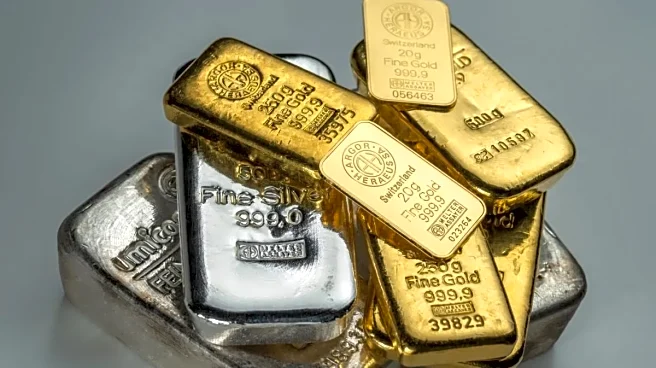
Spot gold rose 1% to $4,966.83 per ounce by 0127 GMT, after dropping more than 3% an ounce on Thursday (February 12) and briefly falling below the key $5,000 an ounce level.
US gold futures for April delivery gained 0.7% to $4,985.40 per ounce.
Silver outperformed, with spot prices climbing 2.1% to $76.76 per ounce, after an 11% an ounce drop earlier in the week.
Why prices fell—and why they rebounded
The earlier decline followed stronger-than-expected US employment data, which tempered expectations of early interest-rate cuts by the Federal Reserve.
Data showed nonfarm payrolls increased by 130,000 jobs in January, while the unemployment rate edged down to 4.3%. Initial jobless claims also fell to 227,000 in the week ended February 7. The data reinforced the view that policymakers could keep interest rates elevated for longer.
Higher interest rates typically reduce the appeal of non-yielding assets such as gold, while a firm US dollar makes dollar-priced metals more expensive for holders of other currencies. The dollar was mostly flat against major peers on Thursday, holding steady after mixed economic indicators.
Investors now await US inflation data due later in the day for clearer signals on the Fed’s policy path.
India: Volatility persists, allocation strategy in focus
In India, precious metals have seen heightened volatility. The gold–silver ratio remains above 60, reflecting divergence between gold’s safe-haven appeal and silver’s industrial demand sensitivity.
On the Multi Commodity Exchange (MCX), short-term swings of 500–1,000 basis points are not uncommon when global bond yields or the US dollar move sharply.
Paramdeep Singh, founder of LongTail Ventures and a financial services veteran across GE Money and SBI Life, said gold works best as a strategic 5–10% portfolio allocation through ETFs or sovereign gold bonds, while silver is better suited as a tactical exposure aligned with an investor’s risk appetite and time horizon.
He advised investors to conduct their own research before taking positions.
Shift toward regulated ETF exposure
As global uncertainty persists and prices hover near multi-year highs, Indian investors are opting for regulated exchange-traded funds over physical holdings.
Wealthtech platform Stable Money reported its highest-ever transaction volumes in gold and silver ETFs. The platform accounts for over 95% of mutual fund transactions on the Open Network for Digital Commerce (ONDC), reflecting growing adoption of open digital infrastructure in financial services.
ONDC recorded nearly 1.5 lakh transactions in January 2026, closing at assets under management of ₹72 crore.
Hrushikesh Mehta, SVP—Financial Services at ONDC, said participation at this scale indicates increasing maturity of network-led distribution models and broader access to regulated investment products.
Saurabh Jain, co-founder and CEO of Stable Money, said investors are choosing SEBI-regulated gold and silver ETFs for transparency, safety and ease of access, particularly during periods of market uncertainty.
-With Reuters inputs
Spot gold rose 1% to $4,966.83 per ounce by 0127 GMT, after dropping more than 3% an ounce on Thursday (February 12) and briefly falling below the key $5,000 an ounce level.
US gold futures for April delivery gained 0.7% to $4,985.40 per ounce.
Silver outperformed, with spot prices climbing 2.1% to $76.76 per ounce, after an 11% an ounce drop earlier in the week.
Why prices fell—and why they rebounded
The earlier decline followed stronger-than-expected US employment data, which tempered expectations of early interest-rate cuts by the Federal Reserve.
Data showed nonfarm payrolls increased by 130,000 jobs in January, while the unemployment rate edged down to 4.3%. Initial jobless claims also fell to 227,000 in the week ended February 7. The data reinforced the view that policymakers could keep interest rates elevated for longer.
Higher interest rates typically reduce the appeal of non-yielding assets such as gold, while a firm US dollar makes dollar-priced metals more expensive for holders of other currencies. The dollar was mostly flat against major peers on Thursday, holding steady after mixed economic indicators.
Investors now await US inflation data due later in the day for clearer signals on the Fed’s policy path.
India: Volatility persists, allocation strategy in focus
In India, precious metals have seen heightened volatility. The gold–silver ratio remains above 60, reflecting divergence between gold’s safe-haven appeal and silver’s industrial demand sensitivity.
On the Multi Commodity Exchange (MCX), short-term swings of 500–1,000 basis points are not uncommon when global bond yields or the US dollar move sharply.
Paramdeep Singh, founder of LongTail Ventures and a financial services veteran across GE Money and SBI Life, said gold works best as a strategic 5–10% portfolio allocation through ETFs or sovereign gold bonds, while silver is better suited as a tactical exposure aligned with an investor’s risk appetite and time horizon.
He advised investors to conduct their own research before taking positions.
Shift toward regulated ETF exposure
As global uncertainty persists and prices hover near multi-year highs, Indian investors are opting for regulated exchange-traded funds over physical holdings.
Wealthtech platform Stable Money reported its highest-ever transaction volumes in gold and silver ETFs. The platform accounts for over 95% of mutual fund transactions on the Open Network for Digital Commerce (ONDC), reflecting growing adoption of open digital infrastructure in financial services.
ONDC recorded nearly 1.5 lakh transactions in January 2026, closing at assets under management of ₹72 crore.
Hrushikesh Mehta, SVP—Financial Services at ONDC, said participation at this scale indicates increasing maturity of network-led distribution models and broader access to regulated investment products.
Saurabh Jain, co-founder and CEO of Stable Money, said investors are choosing SEBI-regulated gold and silver ETFs for transparency, safety and ease of access, particularly during periods of market uncertainty.
-With Reuters inputs
/images/ppid_59c68470-image-177077760046699504.webp)
/images/ppid_59c68470-image-177086513990276343.webp)
/images/ppid_59c68470-image-177091265334011693.webp)
/images/ppid_59c68470-image-17708700482303440.webp)
/images/ppid_59c68470-image-177091253465415201.webp)
/images/ppid_59c68470-image-177069008086153671.webp)
/images/ppid_59c68470-image-177068768683725044.webp)
/images/ppid_59c68470-image-177072253000836336.webp)
/images/ppid_59c68470-image-177070253751678670.webp)