/images/ppid_59c68470-image-178166002592262714.webp)


/images/ppid_59c68470-image-178140502740498512.webp)


What is the story about?
Oil prices held near a three-month low as traders expect the US-Iran deal to reopen the key Strait of Hormuz, which will unleash a wave of supply.
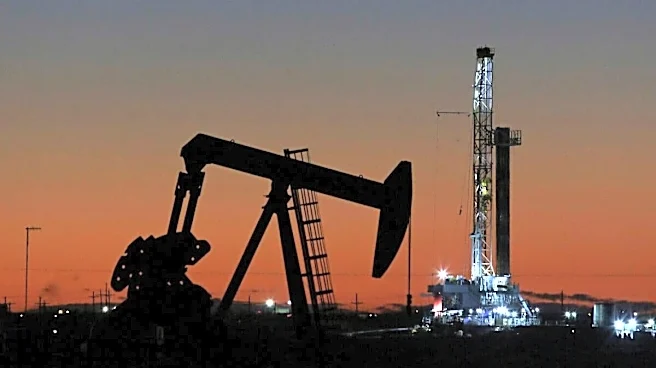
Brent was below $80 a barrel after falling 15% over four days in its longest losing run this year. Meanwhile, West Texas Intermediate was close to $77 a barrel.
The interim pact, which is due to be signed on Friday, offers Tehran broad financial incentives, including the right to sell its oil immediately.
Crude prices have retreated sharply in recent weeks as moves to end the war between Washington and Tehran are seen easing tightness in global energy markets. Producers, shippers and traders are now assessing whether the agreement will prove to be durable, and how long it will take for vessel transits of the Hormuz chokepoint to be revived in earnest.
While technical details are still being finalized and some language may be changed, a 14-point draft memorandum offers the clearest picture yet of the deal, which will pave the way for 60 days of talks aimed at formally ending the war and imposing strict new limits on Iran’s nuclear program.
The points include a requirement for Tehran to ensure the movement of merchant ships and for the US to lift its own blockade of Hormuz. The narrow waterway connects the Persian Gulf to the Indian Ocean, and in peacetime it used to carry about a fifth of global oil supplies.
Also covered is a commitment by Washington to issue waivers for exports of Iranian crude, petrochemical products and their derivatives, and all related services, including banking, insurance, and transportation.
The market’s rapid loosening is reflected in Brent’s much narrower prompt spread, with the difference between the benchmark’s two nearest contracts at just 29 cents a barrel in backwardation on Wednesday. While that remains a bullish pattern — with the nearer price above the later-dated one — the gap had closed at $9.65 in early April on concerns about near-term supplies.
The slump in crude has helped to drag product prices lower, easing inflationary pressures and the burden on consumers. In the US, average nationwide gasoline has dropped back toward $4 a gallon, after peaking above $4.56 in May.
The impact of shifts in energy costs will be among factors considered Wednesday at the Federal Reserve, as policymakers meet to decide on interest rates. No change in borrowing costs is expected at this meeting.
Although a revival in supply is widely expected, crude stockpiles have still been drawing at a rapid pace. A US industry group estimated that US inventories sank by 8.3 million barrels last week, including a substantial drop at the key hub at Cushing, Oklahoma. Official data are due later on Wednesday.
With inputs from Bloomberg
Brent was below $80 a barrel after falling 15% over four days in its longest losing run this year. Meanwhile, West Texas Intermediate was close to $77 a barrel.
The interim pact, which is due to be signed on Friday, offers Tehran broad financial incentives, including the right to sell its oil immediately.
Crude prices have retreated sharply in recent weeks as moves to end the war between Washington and Tehran are seen easing tightness in global energy markets. Producers, shippers and traders are now assessing whether the agreement will prove to be durable, and how long it will take for vessel transits of the Hormuz chokepoint to be revived in earnest.
While technical details are still being finalized and some language may be changed, a 14-point draft memorandum offers the clearest picture yet of the deal, which will pave the way for 60 days of talks aimed at formally ending the war and imposing strict new limits on Iran’s nuclear program.
The points include a requirement for Tehran to ensure the movement of merchant ships and for the US to lift its own blockade of Hormuz. The narrow waterway connects the Persian Gulf to the Indian Ocean, and in peacetime it used to carry about a fifth of global oil supplies.
Also covered is a commitment by Washington to issue waivers for exports of Iranian crude, petrochemical products and their derivatives, and all related services, including banking, insurance, and transportation.
The market’s rapid loosening is reflected in Brent’s much narrower prompt spread, with the difference between the benchmark’s two nearest contracts at just 29 cents a barrel in backwardation on Wednesday. While that remains a bullish pattern — with the nearer price above the later-dated one — the gap had closed at $9.65 in early April on concerns about near-term supplies.
The slump in crude has helped to drag product prices lower, easing inflationary pressures and the burden on consumers. In the US, average nationwide gasoline has dropped back toward $4 a gallon, after peaking above $4.56 in May.
The impact of shifts in energy costs will be among factors considered Wednesday at the Federal Reserve, as policymakers meet to decide on interest rates. No change in borrowing costs is expected at this meeting.
Although a revival in supply is widely expected, crude stockpiles have still been drawing at a rapid pace. A US industry group estimated that US inventories sank by 8.3 million barrels last week, including a substantial drop at the key hub at Cushing, Oklahoma. Official data are due later on Wednesday.
With inputs from Bloomberg
/images/ppid_59c68470-image-178157253775776380.webp)


/images/ppid_59c68470-image-178160255448934247.webp)
/images/ppid_59c68470-image-178147752863996501.webp)



/images/ppid_59c68470-image-178148755334725967.webp)