/images/ppid_59c68470-image-178288252592770023.webp)

/images/ppid_59c68470-image-178272506764459983.webp)
/images/ppid_59c68470-image-17827400306534870.webp)


What is the story about?
BlackRock Investment Institute sees India as a potential beneficiary of a shift in global investor allocations as easing energy prices and improving geopolitical conditions strengthen the country's investment case, according to Ben Powell, Chief APAC & Middle East Investment Strategist at BlackRock Investment Institute.
Powell said India could attract fresh foreign capital in the coming weeks and months as investors rebalance portfolios after strong gains in AI-linked markets such as Taiwan and Korea.
BlackRock remains constructive on artificial intelligence but is becoming more selective on valuations while looking for opportunities elsewhere.
"India would be, we think, a beneficiary of that trade in the weeks and months ahead," Powell said in an interview with CNBC-TV18.
He said India had faced pressure from three factors over recent months: elevated valuations, higher energy prices following the conflict in West Asia, and the perception that it was not the primary AI investment destination.
This is an edited transcript of the interview.Q: I was reading your latest note, and you said India's premium to emerging markets has compressed towards long-term norms, and now lower energy prices have improved India's overall outlook in terms of the trade backdrop. So, what does that mean from an India investment point of view? Does that mean that things are looking attractive, and one can go ahead and buy, or does it just mean that the phase of derating may be behind us now? A: Things are looking up for India. For the foreigners, for the global investors, the combination over the last several months of perhaps a slightly elevated starting position in terms of valuation, combined with the higher energy prices created by the war situation here in West Asia, and lastly, the fact that, for now at least, India is perceived not to be the central AI play. Those three things kind of overlapped and created a significant downdraft.
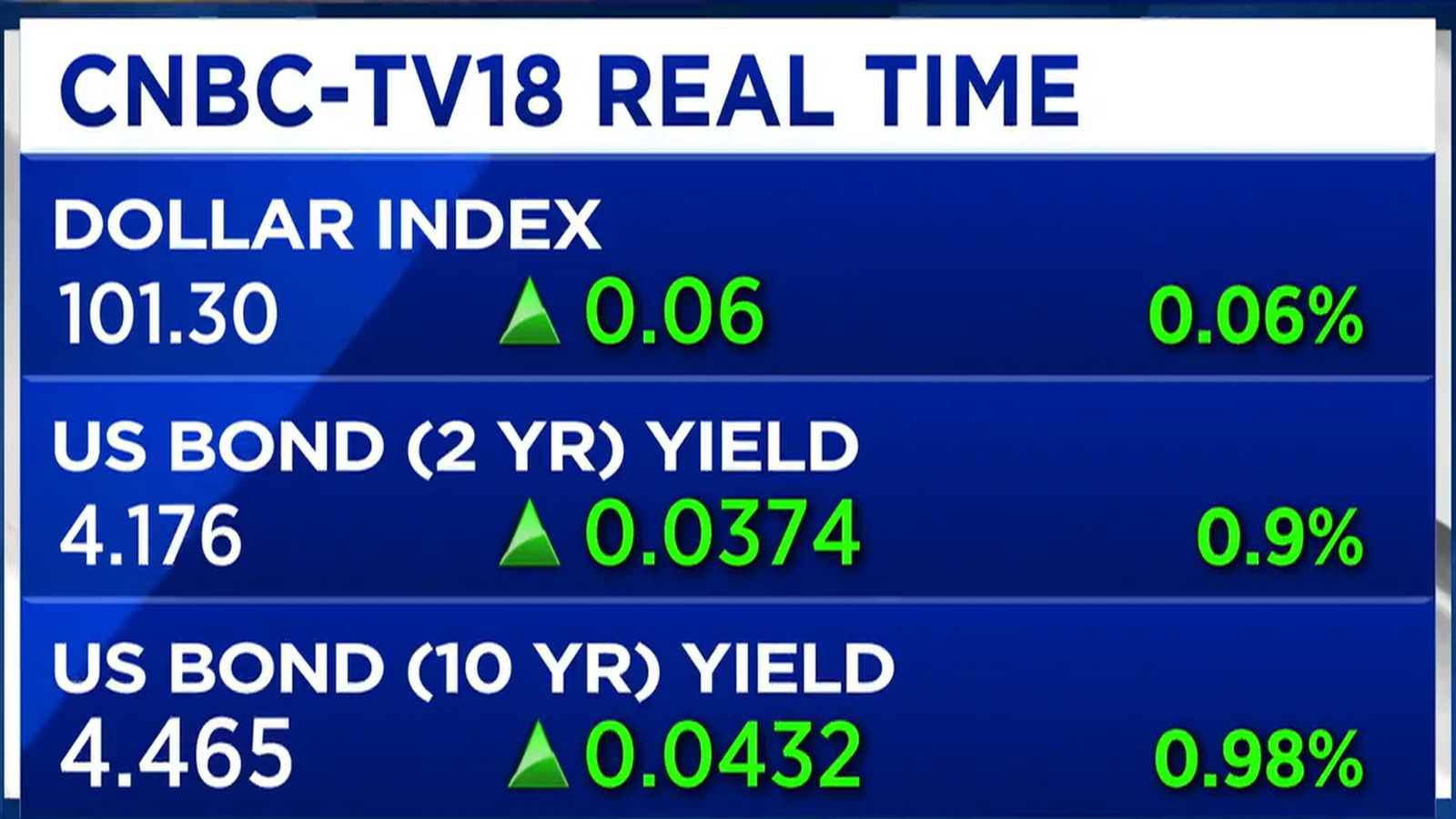
I do think, looking forward from here, the resolution, hopefully the resolution, of the situation in West Asia, and the significant decline we've seen in energy prices, all the way back below where they were on February 27, when the conflict started, are frankly just very good news for India.
And when global investors are looking around for where they can dip their toes in to try and benefit from some of the improvements following the ending of the war, I think India is on that list.
Q: Where on that list? Is it right on top because of the kind of underperformance, or does it still lag, say, the Korean or Taiwanese markets? You said that things are looking up, and we're back on the buyers' list, but where exactly?A: So, we are always trying to think about the whole portfolio. So, I will give you a bit of a both-and answer.
The AI super boom is real. It's ongoing. We'd want to be careful and selective within that, but that's just a fact.
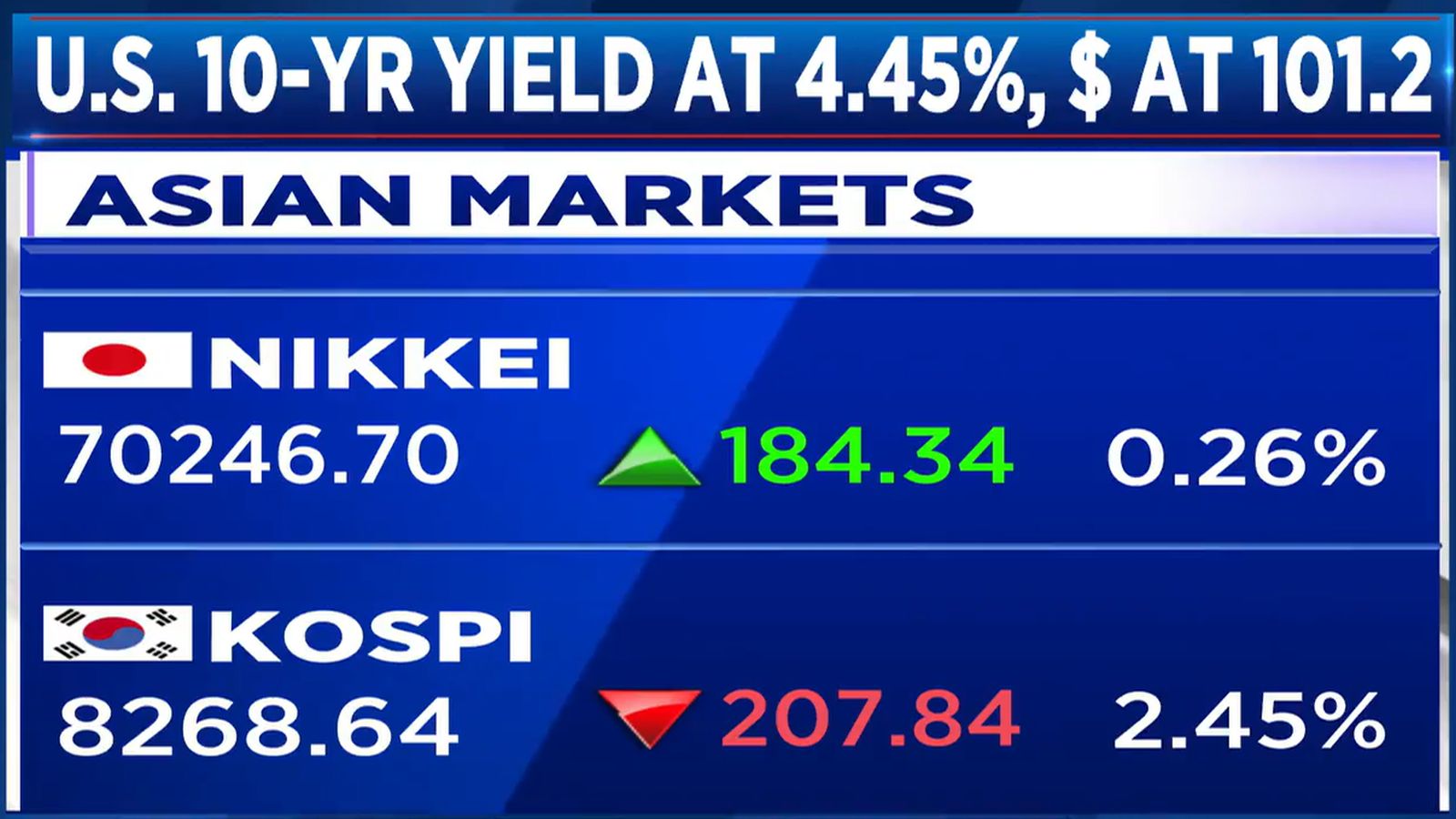
Now, with that being said, we have downgraded emerging market equities to neutral. I want to stress that we're not bearish. We are still fully invested. But the real reason for that is just the extreme performance we have seen in Taiwan and Korea over the last several months.
So, we're still on board with the AI trade, but obviously we want to be kind of valuation- and sentiment-aware, and Korea and Taiwan have just done obviously very well.
There's nothing wrong with that, but we're wondering if we can take some of our chips off that table and reallocate them. India would be, we think, a beneficiary of that trade in the weeks and months ahead.
Q: One quick word on Korea. There's been some $75 billion of foreign selling, and still the market is up nearly 100% in the first six months of the year. This is largely a technical issue because of single-stock exposure limits. That's what it is, right? Otherwise, I mean, overwhelmingly, the view is positive.A: I think that's right. So, structurally, we are still, as discussed, overweight AI. In particular, when we think about AI, we want to think about the bottlenecks.
It might seem a strange thing to say, but the bottlenecks are good news for us as investors. Bottlenecks create higher prices that encourage capital to come in and increase supply and solve the supply shortage.
Obviously, we like investing in things where the prices are going up.
So, we have seen that in memory. Korea and Taiwan are clearly at the epicentre of the AI super boom, so we are on board.
But to your point, we want to be careful. In the very short term, the technicals, the leverage, and the volatility have been a little bit unsettling and have just given us a little bit of food for thought, leading us to reconsider tactically for the next six months - can we be a little bit more careful with that exposure? We think yes, and we are looking to reallocate accordingly.
So, we are still fully on the AI train. That is still, we think, a hinge moment in human history. We're on the path to abundance, but that doesn't mean we should be maximally bullish every day.
Hence, we're taking EM down to neutral, largely driven by the amazing performance in Korea and Taiwan, and looking to reallocate, including into India.
Q: There's lots of reportage which kind of suggests that there are lots of these Chinese models which are lower cost, and that companies and enterprises, even in the US, are using them. I think there was a Wall Street Journal story that said 60% of the enterprises it surveyed are either looking to use or already using some of these models, which give them more access, and they are, of course, much cheaper as well. And then there is the other bit where increasingly, not everything - a simple query like, "Find me a good restaurant in my area," doesn't need to go to a cloud data center, right? That application can be run on your computer. So, my point is, are these things that will build up, and are these risks to this AI boom that we are talking about, where the hyperscalers are writing the checks, and then all of it, of course, flows downstream?A: I think you're making a profoundly important point. So, what I want as a consumer is kind of an overarching conductor of the orchestra who can allocate my query to the right model in real time.
I think that'll probably happen over the next several years. We are not quite there yet, but you are identifying the reason for that.
Don't you need a professor of economics for every question you might have, right? So, you don't need the elite models, to your point, for relatively mundane questions.
And yes, what we are working through now is moving from AI excitement to trying to unpack the specifics. That's true in the AI landscape, which is something you're identifying there. The attraction of some of these open-source models is that they are not just 10% cheaper; they can be 10 times or even 100 times cheaper. That is a lot.
So that seems like something that is going to grow over time.
For most queries, however, these cutting-edge models, if you are trying to run a government or an elite research project, still probably are worth the money.
But yes, trying to unpack that and be more sophisticated in picking our spots, whether it is choosing which model or choosing which investment, we think that is where we are in this story.
We are moving from the euphoria to trying to be more selective, be that in choosing the model or the investment.
Q: This also is the week in which the US celebrates its Independence Day, and this one is a big one, marking 250 years. Do you expect any sort of announcement to be made during those celebrations that may change the course of the geopolitical situation that we are currently in?A: It is very hard to forecast US politics. I find President Donald Trump to be extremely dynamic, so I won't try to get ahead of him.
What I would say is that the US continues to be an exceptional economy, where the future gets created and monetised, and I still think that is true.
So, we are overweight US equities. The economy looks pretty good, unemployment looks more than fine, and the Fed is probably on hold. That is going to give room for the earnings boom to continue, not entirely, but largely driven by this AI phenomenon.
So, happy birthday, America. For now, it remains on the right side of the big boom of our time, and I don't see that being derailed in the near future.
For the full interview, watch the accompanying videoCatch all the latest updates from the stock market here
Powell said India could attract fresh foreign capital in the coming weeks and months as investors rebalance portfolios after strong gains in AI-linked markets such as Taiwan and Korea.
BlackRock remains constructive on artificial intelligence but is becoming more selective on valuations while looking for opportunities elsewhere.
"India would be, we think, a beneficiary of that trade in the weeks and months ahead," Powell said in an interview with CNBC-TV18.
He said India had faced pressure from three factors over recent months: elevated valuations, higher energy prices following the conflict in West Asia, and the perception that it was not the primary AI investment destination.
This is an edited transcript of the interview.Q: I was reading your latest note, and you said India's premium to emerging markets has compressed towards long-term norms, and now lower energy prices have improved India's overall outlook in terms of the trade backdrop. So, what does that mean from an India investment point of view? Does that mean that things are looking attractive, and one can go ahead and buy, or does it just mean that the phase of derating may be behind us now? A: Things are looking up for India. For the foreigners, for the global investors, the combination over the last several months of perhaps a slightly elevated starting position in terms of valuation, combined with the higher energy prices created by the war situation here in West Asia, and lastly, the fact that, for now at least, India is perceived not to be the central AI play. Those three things kind of overlapped and created a significant downdraft.
I do think, looking forward from here, the resolution, hopefully the resolution, of the situation in West Asia, and the significant decline we've seen in energy prices, all the way back below where they were on February 27, when the conflict started, are frankly just very good news for India.
And when global investors are looking around for where they can dip their toes in to try and benefit from some of the improvements following the ending of the war, I think India is on that list.
Q: Where on that list? Is it right on top because of the kind of underperformance, or does it still lag, say, the Korean or Taiwanese markets? You said that things are looking up, and we're back on the buyers' list, but where exactly?A: So, we are always trying to think about the whole portfolio. So, I will give you a bit of a both-and answer.
The AI super boom is real. It's ongoing. We'd want to be careful and selective within that, but that's just a fact.
Now, with that being said, we have downgraded emerging market equities to neutral. I want to stress that we're not bearish. We are still fully invested. But the real reason for that is just the extreme performance we have seen in Taiwan and Korea over the last several months.
So, we're still on board with the AI trade, but obviously we want to be kind of valuation- and sentiment-aware, and Korea and Taiwan have just done obviously very well.
There's nothing wrong with that, but we're wondering if we can take some of our chips off that table and reallocate them. India would be, we think, a beneficiary of that trade in the weeks and months ahead.
Q: One quick word on Korea. There's been some $75 billion of foreign selling, and still the market is up nearly 100% in the first six months of the year. This is largely a technical issue because of single-stock exposure limits. That's what it is, right? Otherwise, I mean, overwhelmingly, the view is positive.A: I think that's right. So, structurally, we are still, as discussed, overweight AI. In particular, when we think about AI, we want to think about the bottlenecks.
It might seem a strange thing to say, but the bottlenecks are good news for us as investors. Bottlenecks create higher prices that encourage capital to come in and increase supply and solve the supply shortage.
Obviously, we like investing in things where the prices are going up.
So, we have seen that in memory. Korea and Taiwan are clearly at the epicentre of the AI super boom, so we are on board.
But to your point, we want to be careful. In the very short term, the technicals, the leverage, and the volatility have been a little bit unsettling and have just given us a little bit of food for thought, leading us to reconsider tactically for the next six months - can we be a little bit more careful with that exposure? We think yes, and we are looking to reallocate accordingly.
So, we are still fully on the AI train. That is still, we think, a hinge moment in human history. We're on the path to abundance, but that doesn't mean we should be maximally bullish every day.
Hence, we're taking EM down to neutral, largely driven by the amazing performance in Korea and Taiwan, and looking to reallocate, including into India.
Q: There's lots of reportage which kind of suggests that there are lots of these Chinese models which are lower cost, and that companies and enterprises, even in the US, are using them. I think there was a Wall Street Journal story that said 60% of the enterprises it surveyed are either looking to use or already using some of these models, which give them more access, and they are, of course, much cheaper as well. And then there is the other bit where increasingly, not everything - a simple query like, "Find me a good restaurant in my area," doesn't need to go to a cloud data center, right? That application can be run on your computer. So, my point is, are these things that will build up, and are these risks to this AI boom that we are talking about, where the hyperscalers are writing the checks, and then all of it, of course, flows downstream?A: I think you're making a profoundly important point. So, what I want as a consumer is kind of an overarching conductor of the orchestra who can allocate my query to the right model in real time.
I think that'll probably happen over the next several years. We are not quite there yet, but you are identifying the reason for that.
Don't you need a professor of economics for every question you might have, right? So, you don't need the elite models, to your point, for relatively mundane questions.
And yes, what we are working through now is moving from AI excitement to trying to unpack the specifics. That's true in the AI landscape, which is something you're identifying there. The attraction of some of these open-source models is that they are not just 10% cheaper; they can be 10 times or even 100 times cheaper. That is a lot.
So that seems like something that is going to grow over time.
For most queries, however, these cutting-edge models, if you are trying to run a government or an elite research project, still probably are worth the money.
But yes, trying to unpack that and be more sophisticated in picking our spots, whether it is choosing which model or choosing which investment, we think that is where we are in this story.
We are moving from the euphoria to trying to be more selective, be that in choosing the model or the investment.
Q: This also is the week in which the US celebrates its Independence Day, and this one is a big one, marking 250 years. Do you expect any sort of announcement to be made during those celebrations that may change the course of the geopolitical situation that we are currently in?A: It is very hard to forecast US politics. I find President Donald Trump to be extremely dynamic, so I won't try to get ahead of him.
What I would say is that the US continues to be an exceptional economy, where the future gets created and monetised, and I still think that is true.
So, we are overweight US equities. The economy looks pretty good, unemployment looks more than fine, and the Fed is probably on hold. That is going to give room for the earnings boom to continue, not entirely, but largely driven by this AI phenomenon.
So, happy birthday, America. For now, it remains on the right side of the big boom of our time, and I don't see that being derailed in the near future.
For the full interview, watch the accompanying videoCatch all the latest updates from the stock market here
/images/ppid_59c68470-image-178288012561876365.webp)


/images/ppid_59c68470-image-17828800244511369.webp)
/images/ppid_a911dc6a-image-178278886815037500.webp)

/images/ppid_59c68470-image-178280006252241302.webp)


/images/ppid_a911dc6a-image-178280445110629222.webp)