/images/ppid_59c68470-image-177848003988551575.webp)

/images/ppid_59c68470-image-17784651129486312.webp)
/images/ppid_a911dc6a-image-177847810265961458.webp)
What is the story about?
Cut fuel use, avoid gold purchases, embrace WFH: PM Modi amid global oil crisis
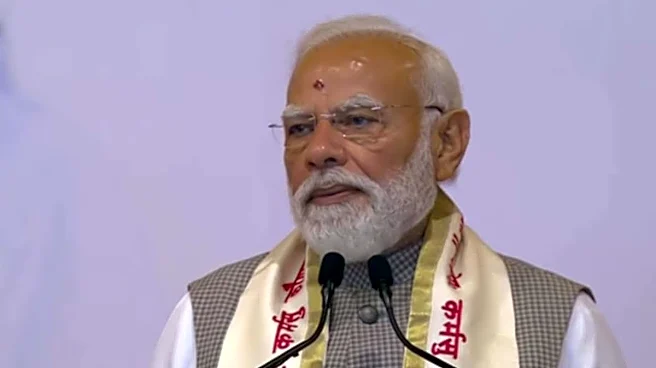
Prime Minister Narendra Modi on Sunday, May 10, called for collective responsibility from citizens to help India navigate global economic disruptions triggered by prolonged shutdown concerns in the Strait of Hormuz, a key oil shipping route, and rising fuel and fertiliser prices due to ongoing international conflicts, including the West Asia crisis.
Speaking in Hyderabad, Modi urged people to use petrol, diesel and other imported fuels only as per need, stressing that judicious consumption would help save foreign exchange and reduce the economic impact of global instability.
He said the Centre is working to shield citizens from the adverse effects of global turmoil, but public participation is equally important in managing pressure on resources.
West Asia conflict bigger threat to India’s CAD than growth, PM remarks focused on economy concerns: Sources
Prime Minister Narendra Modi’s remarks on Sunday, May 10, regarding the economic impact of tensions in West Asia were aimed at addressing growing concerns around India’s macroeconomic stability,particularly the current account deficit (CAD), CNBC-TV18 has learnt from sources.
The Prime Minister had urged citizens to show “collective responsibility” as fears of prolonged disruptions in the Strait of Hormuz threaten global oil supplies and push up fuel and fertiliser prices. Sources said the government currently sees the West Asia conflict as a bigger threat to India’s CAD than to economic growth, unlike the Covid-19 crisis, which had a broader impact on activity and demand.
Sunil Bharti Mittal backs PM Modi’s economic warning, says it's moment to 'double down'
Indian industry must step up investment and reduce dependence on imports such as oil and gold amid rising global economic uncertainty triggered by the prolonged West Asia conflict, Bharti EnterprisesChairman Sunil Bharti Mittal said on Sunday, backing Prime Minister Narendra Modi’s recent appeal for greater economic self-reliance.
On Sunday, PM Modi urged citizens to reduce wasteful consumption and focus on domestic production and resource conservation, remarks that were widely interpreted as a signal of the government’s concern over rising oil prices, inflationary pressures and the potential widening of India’s current account deficit.
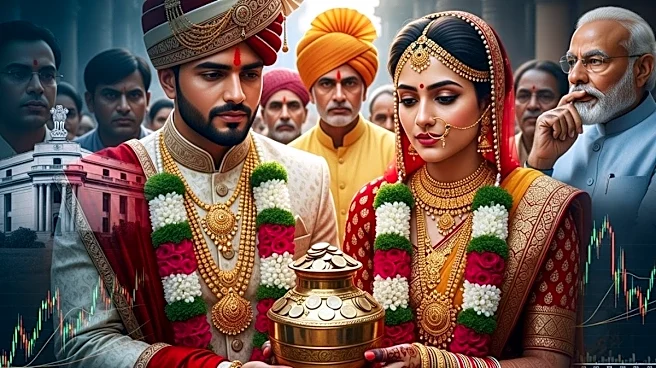
Why PM Modi wants Indians to avoid buying gold for a year
India is among the world’s largest consumers and importers of gold. The country consumes roughly 700–800 tonnes of gold annually but produces barely 1–2 tonnes domestically, making it dependent on imports for over 90% of its supply, as per a Bloomberg report.
Unlike many commodities, gold imports do not directly contribute to industrial production at scale. Yet they require large outflows of dollars, increasing pressure on India’s current account deficit and foreign exchange reserves. The concern becomes sharper when crude oil prices are elevated because India already imports nearly 85% of its oil requirements.
With the West Asia conflict pushing up energy and fertiliser costs, policymakers appear focused on controlling non-essential imports that add to the import bill. Gold accounts for nearly 9% of India’s total import bill, second only to crude oil among major import categories.
PM Modi's appeal is about protecting forex reserves, not rationing: SBI's chief economic adviser
Soumya Kanti Ghosh, Group Chief Economic Advisor at State Bank of India (SBI), said Prime Minister Narendra Modi's appeal to reduce non-essential imports and conserve foreign exchange should not be viewed as rationing, but as a precautionary step to protect the current account deficit (CAD) and maintain macroeconomic stability.
"At $100 per barrel, if that is the average, the CAD hits 1.5%, growth hits around 6.6% and inflation hits 4.6%, which is the current assumptions of the Reserve Bank of India. Any numbers beyond $110 [on oil] actually pushes the CAD towards 2% and the danger is actually when the route touches $120 to 130. But these are assumptions for the full year," he noted.
Ghosh said a hike in petrol and diesel prices remains the last option the government would consider, not an immediate one.
The three auto names that are reacting positively to PM Modi's Sunday speech
Three stocks linked to electric mobility, JBM Auto Ltd., Ola Electric Mobility Ltd., and Ather Energy Ltd. gained up to 7% on Monday, May 11, after Prime Minister Narendra Modi's speech on Sunday, which encouraged the use of electric vehicles.
While JBM Auto is among the top gainers on the Nifty 500 index, trading with gains of over 4%, those of Ather Energy and Ola Electric Mobility are trading with gains between 2% to 3% as well.
Titan, Senco Gold, Kalyan Jewellers shares fall up to 10% on Monday; Key factors explained
Shares of jewellery companies,Titan CompanyLtd.,Senco GoldLtd., Kalyan JewellersLtd., and others fell up to 10% Monday, May 11, after Prime Minister Narendra Modi's speech at an event in Hyderabad over the weekend.
While shares of Titan and Kalyan Jewellers are down between 6% and 8% on Monday, Senco Gold shares have extended their losses of 10%. Shares of Thangamayil Jewellery are also down another 5% on Monday.
Travel & Tourism stocks fall after PM Modi's speech on fuel conservation, international travel
Shares of oil marketing companies (OMCs), aviation, travel and tourism-related companies such asHindustan Petroleum Corporation, Bharat Petroleum Corporation, Indian Oil Corporation,InterGlobe Aviation, The Indian Hotels Company, Lemon Tree Hotels,Le Travenues Technology, BLS International, Yatra Online, among others, are trading lower on Monday, May 11.
Prime Minister Narendra Modi on Sunday urged citizens to reduce fuel consumption and limit non-essential foreign travel amid the escalating West Asia conflict and disruptions around the Strait of Hormuz.
What is Current Account Deficit? Why PM Modi’s import warning could affect your EMIs and bills
Why is PM Narendra Modi warning Indians about imports, fuel use and foreign travel?
The answer lies inIndia’s current account deficit — a key economic indicator that could influence fuel prices, EMIs, inflation and the rupee amid rising global oil prices.
Income tax return filing for FY26: Key changes in new ITR forms explained
The Income Tax Department has revamped the Income Tax Return (ITR) forms for the assessment year 2026-27,widening disclosure requirements for salaried individuals, investors, traders and small businesses ahead of the upcoming filing season.
The revised ITR-1, ITR-2, ITR-3 and ITR-4 forms aim to improve transparency, simplify compliance and allow closer tracking of high-value transactions through stronger data matching with official records such as AIS, TDS filings and GST data.
From 48-hour weekly cap to mandatory rest day: What new Labour Codes rules say
The government has fully operationalised the four Labour Codes after notifying the final set of rules in the official gazette, bringing changes that include a 48-hour weekly work cap, mandatory weekly rest day provisions, and overtime norms, according to a PTI report.
With this, the implementation process of the consolidated labour law framework has been completed.
Prime Minister Narendra Modi on Sunday, May 10, called for collective responsibility from citizens to help India navigate global economic disruptions triggered by prolonged shutdown concerns in the Strait of Hormuz, a key oil shipping route, and rising fuel and fertiliser prices due to ongoing international conflicts, including the West Asia crisis.
Speaking in Hyderabad, Modi urged people to use petrol, diesel and other imported fuels only as per need, stressing that judicious consumption would help save foreign exchange and reduce the economic impact of global instability.
He said the Centre is working to shield citizens from the adverse effects of global turmoil, but public participation is equally important in managing pressure on resources.
West Asia conflict bigger threat to India’s CAD than growth, PM remarks focused on economy concerns: Sources
Prime Minister Narendra Modi’s remarks on Sunday, May 10, regarding the economic impact of tensions in West Asia were aimed at addressing growing concerns around India’s macroeconomic stability,particularly the current account deficit (CAD), CNBC-TV18 has learnt from sources.
The Prime Minister had urged citizens to show “collective responsibility” as fears of prolonged disruptions in the Strait of Hormuz threaten global oil supplies and push up fuel and fertiliser prices. Sources said the government currently sees the West Asia conflict as a bigger threat to India’s CAD than to economic growth, unlike the Covid-19 crisis, which had a broader impact on activity and demand.
Sunil Bharti Mittal backs PM Modi’s economic warning, says it's moment to 'double down'
Indian industry must step up investment and reduce dependence on imports such as oil and gold amid rising global economic uncertainty triggered by the prolonged West Asia conflict, Bharti EnterprisesChairman Sunil Bharti Mittal said on Sunday, backing Prime Minister Narendra Modi’s recent appeal for greater economic self-reliance.
On Sunday, PM Modi urged citizens to reduce wasteful consumption and focus on domestic production and resource conservation, remarks that were widely interpreted as a signal of the government’s concern over rising oil prices, inflationary pressures and the potential widening of India’s current account deficit.
Why PM Modi wants Indians to avoid buying gold for a year
India is among the world’s largest consumers and importers of gold. The country consumes roughly 700–800 tonnes of gold annually but produces barely 1–2 tonnes domestically, making it dependent on imports for over 90% of its supply, as per a Bloomberg report.
Unlike many commodities, gold imports do not directly contribute to industrial production at scale. Yet they require large outflows of dollars, increasing pressure on India’s current account deficit and foreign exchange reserves. The concern becomes sharper when crude oil prices are elevated because India already imports nearly 85% of its oil requirements.
With the West Asia conflict pushing up energy and fertiliser costs, policymakers appear focused on controlling non-essential imports that add to the import bill. Gold accounts for nearly 9% of India’s total import bill, second only to crude oil among major import categories.
PM Modi's appeal is about protecting forex reserves, not rationing: SBI's chief economic adviser
Soumya Kanti Ghosh, Group Chief Economic Advisor at State Bank of India (SBI), said Prime Minister Narendra Modi's appeal to reduce non-essential imports and conserve foreign exchange should not be viewed as rationing, but as a precautionary step to protect the current account deficit (CAD) and maintain macroeconomic stability.
"At $100 per barrel, if that is the average, the CAD hits 1.5%, growth hits around 6.6% and inflation hits 4.6%, which is the current assumptions of the Reserve Bank of India. Any numbers beyond $110 [on oil] actually pushes the CAD towards 2% and the danger is actually when the route touches $120 to 130. But these are assumptions for the full year," he noted.
Ghosh said a hike in petrol and diesel prices remains the last option the government would consider, not an immediate one.
The three auto names that are reacting positively to PM Modi's Sunday speech
Three stocks linked to electric mobility, JBM Auto Ltd., Ola Electric Mobility Ltd., and Ather Energy Ltd. gained up to 7% on Monday, May 11, after Prime Minister Narendra Modi's speech on Sunday, which encouraged the use of electric vehicles.
While JBM Auto is among the top gainers on the Nifty 500 index, trading with gains of over 4%, those of Ather Energy and Ola Electric Mobility are trading with gains between 2% to 3% as well.
Titan, Senco Gold, Kalyan Jewellers shares fall up to 10% on Monday; Key factors explained
Shares of jewellery companies,Titan CompanyLtd.,Senco GoldLtd., Kalyan JewellersLtd., and others fell up to 10% Monday, May 11, after Prime Minister Narendra Modi's speech at an event in Hyderabad over the weekend.
While shares of Titan and Kalyan Jewellers are down between 6% and 8% on Monday, Senco Gold shares have extended their losses of 10%. Shares of Thangamayil Jewellery are also down another 5% on Monday.
Travel & Tourism stocks fall after PM Modi's speech on fuel conservation, international travel
Shares of oil marketing companies (OMCs), aviation, travel and tourism-related companies such asHindustan Petroleum Corporation, Bharat Petroleum Corporation, Indian Oil Corporation,InterGlobe Aviation, The Indian Hotels Company, Lemon Tree Hotels,Le Travenues Technology, BLS International, Yatra Online, among others, are trading lower on Monday, May 11.
Prime Minister Narendra Modi on Sunday urged citizens to reduce fuel consumption and limit non-essential foreign travel amid the escalating West Asia conflict and disruptions around the Strait of Hormuz.
What is Current Account Deficit? Why PM Modi’s import warning could affect your EMIs and bills
Why is PM Narendra Modi warning Indians about imports, fuel use and foreign travel?
The answer lies inIndia’s current account deficit — a key economic indicator that could influence fuel prices, EMIs, inflation and the rupee amid rising global oil prices.
Income tax return filing for FY26: Key changes in new ITR forms explained
The Income Tax Department has revamped the Income Tax Return (ITR) forms for the assessment year 2026-27,widening disclosure requirements for salaried individuals, investors, traders and small businesses ahead of the upcoming filing season.
The revised ITR-1, ITR-2, ITR-3 and ITR-4 forms aim to improve transparency, simplify compliance and allow closer tracking of high-value transactions through stronger data matching with official records such as AIS, TDS filings and GST data.
From 48-hour weekly cap to mandatory rest day: What new Labour Codes rules say
The government has fully operationalised the four Labour Codes after notifying the final set of rules in the official gazette, bringing changes that include a 48-hour weekly work cap, mandatory weekly rest day provisions, and overtime norms, according to a PTI report.
With this, the implementation process of the consolidated labour law framework has been completed.

/images/ppid_59c68470-image-177847763991965366.webp)
/images/ppid_59c68470-image-177847282585122485.webp)
/images/ppid_59c68470-image-177846515038422796.webp)
/images/ppid_59c68470-image-177847752788039117.webp)
/images/ppid_a911dc6a-image-177847026662325596.webp)

/images/ppid_59c68470-image-177847507759662405.webp)
/images/ppid_59c68470-image-177847756530847486.webp)
/images/ppid_59c68470-image-17784726050307241.webp)