/images/ppid_59c68470-image-178970503393174464.webp)


/images/ppid_59c68470-image-178961752747430141.webp)
What is the story about?
Newer business lines — exports, metal cards, RFID tagging and tax stamps — will make up 70 to 80% of Manipal Payment and Identity Solutions' revenue within two years, Chief Financial Officer Ramanath Pai said. The company's traditional PVC card business in India is expected to shrink to 20-30% of the mix over the same period.
"The company has three to four growth levers which should contribute around 40 to 50% of the top line going forward for FY26-27," Pai said, adding that the two-year horizon should push the growth businesses further, to 70-80% of revenue.
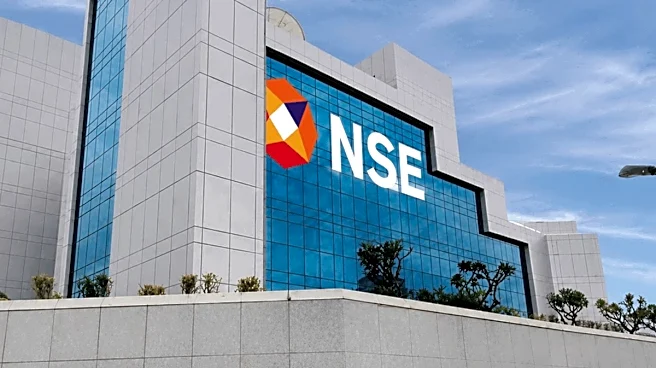
Karnataka-based Manipal Payment and Identity Solutions listed on the stock exchange today (September 17) with a muted debut. The initial public offering (IPO) was subscribed 1.42 times, with anchor investors including Morgan Stanley, Nomura and Citigroup.
Kukkundoor Girish Kini, Exec Director & CEO, Manipal Payment and Identity Solutions, addressed investor sentiment around the listing. "We have been invested into multiple areas like metal, traditional cards, and the export business," he said, pointing to new regions including the UK and US as upcoming contributors to growth.
Pai said the exports segment has grown fast from a small base and will keep expanding. "There has been a 10x growth in exports," he said, adding that exports should reach 25 to 30% of the top line within two to three years, up from around 7.5% currently.
Pai said international contracts carry better margins because they include last-mile personalisation work done locally in each market, tied to data sovereignty requirements. The company already has a facility in Nigeria, sells into the UK and Europe, and exports to 16 countries in total. It is also planning to enter the US market as its next step.
Kini was also asked about a new fee — the merchant discount rate, or MDR, the charge merchants pay on digital transactions — that now applies to UPI payments above ₹2,000. He said the change favors card usage because most UPI transactions were small-value transfers, and the new fee narrows the cost gap between UPI and cards for larger purchases. He said the government's move should support both card issuance and card spending going forward.
Payment cards still account for about 57% of the company's revenue, and Pai laid out where the incremental growth will come from: exports, a shift toward metal cards from plastic, and a push into traceability products such as RFID tags and tax stamps.
On the risk side, the company's top 10 customers account for about 59% of revenue and its top 10 suppliers for about 56%, a concentration flagged as a risk. Kini said the company is selling more products to existing customers while adding entirely new customers in the markets it is entering. On the supply side, he said the company works with tier-one suppliers based in Singapore, Korea and Europe, with contractual protections on delivery and partnership terms.
Of the ₹238 crore raised through the fresh issue, the funds are earmarked for plant and machinery. Pai said the business typically generates six to eight times asset turnover, implying ₹1,200-1,500 crore in incremental revenue from the expansion. Manufacturing capacity has already grown from 11 crore to 22 crore cards in recent years, currently running at about 80% utilisation, with production capacity targeted to reach 17-18 crore cards over the next two to three years as new lines come online.
Pai said the shift toward higher-margin export and growth businesses should support margin expansion over time, though he declined to give a specific target. "Definitely you will see tailwinds on margin accretion as we move forward," he said.
For the full interview, watch the accompanying video
Catch all the latest updates from the stock market here
"The company has three to four growth levers which should contribute around 40 to 50% of the top line going forward for FY26-27," Pai said, adding that the two-year horizon should push the growth businesses further, to 70-80% of revenue.
Karnataka-based Manipal Payment and Identity Solutions listed on the stock exchange today (September 17) with a muted debut. The initial public offering (IPO) was subscribed 1.42 times, with anchor investors including Morgan Stanley, Nomura and Citigroup.
Kukkundoor Girish Kini, Exec Director & CEO, Manipal Payment and Identity Solutions, addressed investor sentiment around the listing. "We have been invested into multiple areas like metal, traditional cards, and the export business," he said, pointing to new regions including the UK and US as upcoming contributors to growth.
Pai said the exports segment has grown fast from a small base and will keep expanding. "There has been a 10x growth in exports," he said, adding that exports should reach 25 to 30% of the top line within two to three years, up from around 7.5% currently.
Pai said international contracts carry better margins because they include last-mile personalisation work done locally in each market, tied to data sovereignty requirements. The company already has a facility in Nigeria, sells into the UK and Europe, and exports to 16 countries in total. It is also planning to enter the US market as its next step.
Kini was also asked about a new fee — the merchant discount rate, or MDR, the charge merchants pay on digital transactions — that now applies to UPI payments above ₹2,000. He said the change favors card usage because most UPI transactions were small-value transfers, and the new fee narrows the cost gap between UPI and cards for larger purchases. He said the government's move should support both card issuance and card spending going forward.
Payment cards still account for about 57% of the company's revenue, and Pai laid out where the incremental growth will come from: exports, a shift toward metal cards from plastic, and a push into traceability products such as RFID tags and tax stamps.
On the risk side, the company's top 10 customers account for about 59% of revenue and its top 10 suppliers for about 56%, a concentration flagged as a risk. Kini said the company is selling more products to existing customers while adding entirely new customers in the markets it is entering. On the supply side, he said the company works with tier-one suppliers based in Singapore, Korea and Europe, with contractual protections on delivery and partnership terms.
Of the ₹238 crore raised through the fresh issue, the funds are earmarked for plant and machinery. Pai said the business typically generates six to eight times asset turnover, implying ₹1,200-1,500 crore in incremental revenue from the expansion. Manufacturing capacity has already grown from 11 crore to 22 crore cards in recent years, currently running at about 80% utilisation, with production capacity targeted to reach 17-18 crore cards over the next two to three years as new lines come online.
Pai said the shift toward higher-margin export and growth businesses should support margin expansion over time, though he declined to give a specific target. "Definitely you will see tailwinds on margin accretion as we move forward," he said.
For the full interview, watch the accompanying video
Catch all the latest updates from the stock market here


/images/ppid_59c68470-image-178982753019621664.webp)


/images/ppid_59c68470-image-17896325265001334.webp)
/images/ppid_59c68470-image-17896650884977305.webp)