


What is the story about?
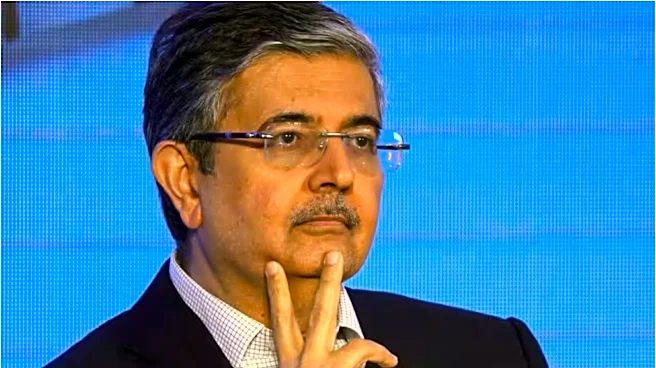
Veteran banker Uday Kotak expects interest rates in India to rise by as much as 75 basis points this financial year, signalling that the Reserve Bank of India may continue tightening policy through multiple review meetings until April 2027.
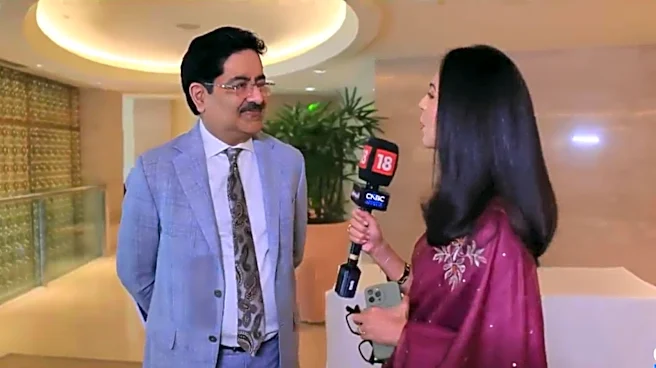
Speaking at the India Business Leader Awards (IBLA) jury deliberations panel, Kotak said borrowing costs are likely to move higher in the coming months, underscoring his cautious view on the interest-rate cycle.
During a discussion moderated by CNBC-TV18's Shereen Bhan, Kotak said the RBI's benchmark repo rate remains on an upward trajectory, with further rate increases likely over the next several policy cycles.
"That's my view. If it's lower, so be it. But I am of the view that interest rates will move up by 75 basis points from here. There are three policy meetings — December, February and April. So, let's see how it goes."
Beyond monetary policy, Kotak called for a structural overhaul of foreign portfolio investor (FPI) taxation and urged policymakers to simplify tax rules for sovereign wealth and pension funds to attract more long-term capital into India.
He also expressed concern over growing retail participation in gold mutual funds, arguing that savings should be channelled towards productive national assets that support economic growth and capital formation.
On market demands for capital gains tax relief to stem foreign outflows, Kotak outlined a differentiated approach rather than an across-the-board cut. He proposed that foreign investors' capital gains tax could be dollar-currency-based rather than rupee-currency-based, while Indian investors remain under the rupee structure to maintain currency parity.
"As an addendum to that, we may want to rethink or consider a relaxation for sovereign funds and pension funds that don't pay taxation in their home markets. They could be considered in a separate category without taxation on the FPI side," he said, citing targeted exemptions previously provided to institutions like the Abu Dhabi Investment Authority.
Kotak also flagged the stark disparity in domestic taxation between equity and fixed income. "I think that in India, while there is a clamour for a reduction in capital gains tax for Indian investors from 12.5%, plus surcharge, which comes to around 14%, the taxation on interest income is at the highest marginal rate of 39%. I think the gap between around 14% and 39% is very wide.
That needs to be narrowed," he observed, clarifying: "I'm not suggesting an increase in long-term capital gains tax on equities, but this gap is too wide... there has to be lower taxation on equity risk versus debt risk, but the gap between 39% and 14% is very wide."
Turning to macroeconomic trade imbalances, Kotak argued that excessive household investment in precious metal funds is draining capital away from manufacturing and infrastructure. He pointed out that while India’s current account deficit stood at $26 billion in March 2026, the country imported $72 billion worth of gold, and projected gold imports of $90 billion against an estimated $70 billion deficit in the current fiscal.
"In my view, let that money go into productive assets. Let it go into chips. Let it go into semiconductors. Let it go into equities. Let it go into debt. Let it go into building new manufacturing capabilities, research, innovation and technology."
Assessing the impact of the US midterm elections, where Democrats took control of Congress, Kotak noted that the outcome should ease immediate competitive pressure on global AI infrastructure: "One thing that seems to be clear is the Democratic win versus the Republicans, which should slow down the speed at which new data centre capacity comes up in the US because of the huge pressure on power consumption, which is a major factor for data. It gives India some breathing time to catch up."
He warned against relying purely on an anti-AI trade to lift domestic bourses and called for deeper commercial collaboration with Beijing to bolster domestic capability.
"We should be rethinking our strategy, including with China, from an economic point of view," Kotak noted. "I would welcome Indian businesses going out there and entering into joint ventures with top-end Chinese companies in various sectors, and moving manufacturing facilities to India."
Addressing market sentiment heading into 2027, Kotak called for greater ambition and urgency from Indian industry: "We have been too comfortable with the narrative that we have arrived. We need a sense of paranoia, and for 2027, I hope every Indian believes that we have to change the world."
Speaking at the India Business Leader Awards (IBLA) jury deliberations panel, Kotak said borrowing costs are likely to move higher in the coming months, underscoring his cautious view on the interest-rate cycle.
During a discussion moderated by CNBC-TV18's Shereen Bhan, Kotak said the RBI's benchmark repo rate remains on an upward trajectory, with further rate increases likely over the next several policy cycles.
I think repo rates will rise by at least 75 basis points between now and April UDAY KOTAK, VETERAN BANKER
"That's my view. If it's lower, so be it. But I am of the view that interest rates will move up by 75 basis points from here. There are three policy meetings — December, February and April. So, let's see how it goes."
I would be surprised if the increase is less than 50 basis points, and I would be surprised if it is more than 100. UDAY KOTAK, VETERAN BANKER
Beyond monetary policy, Kotak called for a structural overhaul of foreign portfolio investor (FPI) taxation and urged policymakers to simplify tax rules for sovereign wealth and pension funds to attract more long-term capital into India.
He also expressed concern over growing retail participation in gold mutual funds, arguing that savings should be channelled towards productive national assets that support economic growth and capital formation.
On market demands for capital gains tax relief to stem foreign outflows, Kotak outlined a differentiated approach rather than an across-the-board cut. He proposed that foreign investors' capital gains tax could be dollar-currency-based rather than rupee-currency-based, while Indian investors remain under the rupee structure to maintain currency parity.
"As an addendum to that, we may want to rethink or consider a relaxation for sovereign funds and pension funds that don't pay taxation in their home markets. They could be considered in a separate category without taxation on the FPI side," he said, citing targeted exemptions previously provided to institutions like the Abu Dhabi Investment Authority.
WILL
TAX CUTS BOOST FOREIGN INFLOWS? @udaykotak Take
'Capital gains tax for foreign investors could be dollar currency based vs rupee'
'We may look at some relaxation for sovereign & pension funds'
#India #IBLA #IBLA2026 #IBLAJury #CNBCTV18Digital @ShereenBhan https://t.co/rz6hi6f1f0
— CNBC-TV18 (@CNBCTV18News) November 4, 2026
Kotak also flagged the stark disparity in domestic taxation between equity and fixed income. "I think that in India, while there is a clamour for a reduction in capital gains tax for Indian investors from 12.5%, plus surcharge, which comes to around 14%, the taxation on interest income is at the highest marginal rate of 39%. I think the gap between around 14% and 39% is very wide.
That needs to be narrowed," he observed, clarifying: "I'm not suggesting an increase in long-term capital gains tax on equities, but this gap is too wide... there has to be lower taxation on equity risk versus debt risk, but the gap between 39% and 14% is very wide."
Turning to macroeconomic trade imbalances, Kotak argued that excessive household investment in precious metal funds is draining capital away from manufacturing and infrastructure. He pointed out that while India’s current account deficit stood at $26 billion in March 2026, the country imported $72 billion worth of gold, and projected gold imports of $90 billion against an estimated $70 billion deficit in the current fiscal.
Why are Indian investors buying gold and silver ETFs and mutual funds as financial assets? This is something the country cannot afford. UDAY KOTAK, VETERAN BANKER
"In my view, let that money go into productive assets. Let it go into chips. Let it go into semiconductors. Let it go into equities. Let it go into debt. Let it go into building new manufacturing capabilities, research, innovation and technology."
Assessing the impact of the US midterm elections, where Democrats took control of Congress, Kotak noted that the outcome should ease immediate competitive pressure on global AI infrastructure: "One thing that seems to be clear is the Democratic win versus the Republicans, which should slow down the speed at which new data centre capacity comes up in the US because of the huge pressure on power consumption, which is a major factor for data. It gives India some breathing time to catch up."
"The #USMidterm outcome could slow the pace of new data centre capacity in the US due to mounting pressure on power consumption, giving India some breathing space", says @udaykotak, Founder & Director, @KotakBankLtd.
“India should go all out in R&D, tech and manufacturing to catch up”
#India #IBLA #IBLA2026 #IBLAJury #CNBCTV18Digital @ShereenBhan
— CNBC-TV18 (@CNBCTV18News) November 4, 2026
He warned against relying purely on an anti-AI trade to lift domestic bourses and called for deeper commercial collaboration with Beijing to bolster domestic capability.
"We should be rethinking our strategy, including with China, from an economic point of view," Kotak noted. "I would welcome Indian businesses going out there and entering into joint ventures with top-end Chinese companies in various sectors, and moving manufacturing facilities to India."
'India needs to rethink its strategy with China from an economics point of view', says @udaykotak, Founder & Director, @KotakBankLtd. He welcomes Indian business doing businesses with Beijing and move mfg facilities in India.
#India #IBLA #IBLA2026 #IBLAJury #CNBCTV18Digital @ShereenBhan
— CNBC-TV18 (@CNBCTV18News) November 4, 2026
Addressing market sentiment heading into 2027, Kotak called for greater ambition and urgency from Indian industry: "We have been too comfortable with the narrative that we have arrived. We need a sense of paranoia, and for 2027, I hope every Indian believes that we have to change the world."