/images/ppid_59c68470-image-178105508053121064.webp)

/images/ppid_59c68470-image-178088509621766953.webp)
/images/ppid_59c68470-image-178084007032059614.webp)

What is the story about?
Oil prices rose on Wednesday, June 10, recovering from multi-week lows hit in the previous session, as fresh US military strikes on Iran raised concerns about the stability of a fragile ceasefire in West Asia and supply data pointed to tighter crude markets.
Brent crude futures gained 0.9% to $92.29 a barrel, while US West Texas Intermediate (WTI) crude rose 0.8% to $88.97 a barrel.
The rebound came after both benchmarks fell sharply on Tuesday. Brent had settled at its lowest level since April 17, while WTI closed at its weakest since May 29, as markets took comfort from a temporary halt in direct hostilities between Iran and Israel.
Also read: Bank Nifty Outlook: Here are the key levels for the banking index after Tuesday's breakout
Sentiment shifted after the US military launched strikes on Iranian targets in response to the downing of an American Apache attack helicopter. The action followed President Donald Trump's pledge to retaliate against what Washington described as Iranian aggression, raising fresh concerns that recent de-escalation efforts could unravel.
The latest strikes add uncertainty to ongoing attempts to secure a more durable peace agreement in the region. While Trump has repeatedly expressed confidence that negotiations remain on track, recent exchanges involving Iran, Israel and Iran-backed Hezbollah have highlighted the fragility of the ceasefire.
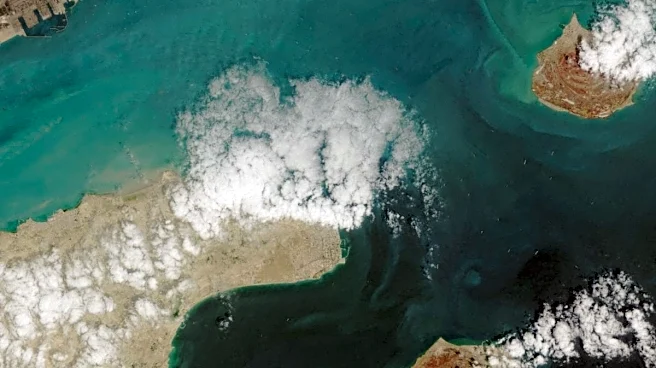
The conflict has also kept attention firmly on the Strait of Hormuz, a critical energy corridor that normally carries around one-fifth of global oil supplies. Disruptions to shipping through the waterway have remained a key concern for energy markets since the conflict escalated earlier this year.
Supporting prices further was a sharp decline in US crude inventories.
According to market sources citing data from the American Petroleum Institute, US crude stockpiles fell by 9.12 million barrels in the week ended June 5, marking an eighth consecutive weekly decline. Gasoline inventories also fell by 1.19 million barrels.
The inventory drawdown comes as the United States has increased crude exports to help offset supply disruptions caused by the conflict. Lower stockpiles could limit future export availability and tighten global supplies further.
Investors are also monitoring shipping activity in the Gulf after US Energy Secretary Chris Wright said oil exports through the Strait of Hormuz are gradually increasing, even as Washington and Tehran continue to struggle to reach a broader settlement to end the conflict.
With inputs from Reuters.
Brent crude futures gained 0.9% to $92.29 a barrel, while US West Texas Intermediate (WTI) crude rose 0.8% to $88.97 a barrel.
The rebound came after both benchmarks fell sharply on Tuesday. Brent had settled at its lowest level since April 17, while WTI closed at its weakest since May 29, as markets took comfort from a temporary halt in direct hostilities between Iran and Israel.
Also read: Bank Nifty Outlook: Here are the key levels for the banking index after Tuesday's breakout
Sentiment shifted after the US military launched strikes on Iranian targets in response to the downing of an American Apache attack helicopter. The action followed President Donald Trump's pledge to retaliate against what Washington described as Iranian aggression, raising fresh concerns that recent de-escalation efforts could unravel.
The latest strikes add uncertainty to ongoing attempts to secure a more durable peace agreement in the region. While Trump has repeatedly expressed confidence that negotiations remain on track, recent exchanges involving Iran, Israel and Iran-backed Hezbollah have highlighted the fragility of the ceasefire.
The conflict has also kept attention firmly on the Strait of Hormuz, a critical energy corridor that normally carries around one-fifth of global oil supplies. Disruptions to shipping through the waterway have remained a key concern for energy markets since the conflict escalated earlier this year.
Supporting prices further was a sharp decline in US crude inventories.
According to market sources citing data from the American Petroleum Institute, US crude stockpiles fell by 9.12 million barrels in the week ended June 5, marking an eighth consecutive weekly decline. Gasoline inventories also fell by 1.19 million barrels.
The inventory drawdown comes as the United States has increased crude exports to help offset supply disruptions caused by the conflict. Lower stockpiles could limit future export availability and tighten global supplies further.
Investors are also monitoring shipping activity in the Gulf after US Energy Secretary Chris Wright said oil exports through the Strait of Hormuz are gradually increasing, even as Washington and Tehran continue to struggle to reach a broader settlement to end the conflict.
With inputs from Reuters.
/images/ppid_59c68470-image-178097007239147205.webp)
/images/ppid_59c68470-image-178099756428037194.webp)
/images/ppid_59c68470-image-178089753502169072.webp)
/images/ppid_59c68470-image-178098510137194482.webp)
/images/ppid_59c68470-image-178101506678639071.webp)
/images/ppid_59c68470-image-178098759125184719.webp)
/images/ppid_59c68470-image-178104253450248986.webp)

/images/ppid_59c68470-image-178102508317565649.webp)