/images/ppid_59c68470-image-176612753430593206.webp)




What is the story about?
Adani Airports is preparing for its next phase of growth with a ₹1 lakh crore investment plan over the next five years, even as the group evaluates strategic options such as an IPO, a demerger from Adani Enterprises, or the induction of a strategic anchor investor to unlock value, Jeet Adani said in an exclusive interview with CNBC-TV18, ahead of the opening of the Navi Mumbai International Airport (NMIA).
The launch of NMIA marks a major inflection point for Adani’s aviation business, which entered the sector just over six years ago and has since emerged as India’s largest private airport operator by portfolio size.
Jeet Adani said the airport business has drawn up a ₹1 lakh crore capital expenditure roadmap for the next five years, covering capacity expansion, refurbishment, and city-side development across its airport network.
Key projects include the phased development of Navi Mumbai Airport, major refurbishment and expansion at Mumbai’s Chhatrapati Shivaji Maharaj International Airport, capacity additions at Ahmedabad, Jaipur, and Lucknow, and expansion works at Guwahati and Trivandrum. All airports in the portfolio, barring Mangaluru, are in expansion mode through 2030, he said.
Below is the excerpt of the interview:
Q: You’ve been leading airports for the Adani Group since your foray into the sector in 2019, but specifically for Navi Mumbai International Airport, what’s been the biggest challenge?
Adani: Moving a mountain—literally moving a mountain out of the site. We had to move about one-and-a-half crore tonne of rock. We actually took that as an opportunity, because we filled the site and raised it by eight metres. So, from a flood protection point of view, it is now one-in-100-year protection. So if there’s a one-in-100-year flooding event, it will still be safe to operate. We basically put all that rock back into the site.
The mountain was there until last year—it was still being blasted and taken out. That’s been the single largest critical part of this project.
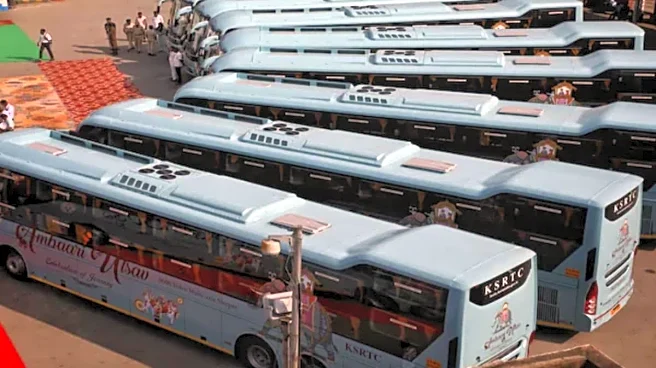
To make this airport successful, connectivity is going to be key. On day one, road connectivity is quite good. It’s not perfect, but it’s quite good. Over the next three to six months, we’ll see the opening of the Navi Mumbai Coastal Road or the Ulwe Coastal Road, which will make road connectivity excellent on the western side. Metro connectivity plans have already been made and the construction will begin shortly. There will be direct connectivity from CSMIA to NMIA, and it will also interconnect with all the major metro lines in Mumbai. Water connectivity will start shortly, and there’s provisioning for e-VTOLs as well. Suburban buses are already operational. So, every form of connectivity you can think of is either available or planned, and connectivity is key to making this airport work.
Q: In 2019, when you decided as a group to enter aviation, it was a challenge individually for you, but also for the group because you had no experience in the airport business. In fact, the rules were changed to allow people without prior airport experience to bid, and you got six airports via the privatisation route. How steep was the learning curve?
Adani: Honestly, it wasn’t that difficult for two reasons. First, some of the basic frameworks of how you view a business — airports and ports — are quite similar. You have to sweat the asset and maximise returns before investing again. In ports, shipping lines are your customers; here, airlines are your customers. The only difference is that here, you deal with people as well as cargo.
The customer experience part was something we had to learn. The other reason it wasn’t difficult is that there’s no dearth of accomplished professionals in this field. The real challenge wasn’t the decision to enter the business — it was getting the team up and running and integrated.
The acquisition of Mumbai helped because we got a team that was already operating a major national asset. We also brought in experts from airlines and airports across the world, including NRIs who came back to India to help us on this journey.
Also Read | Adani Group plans to invest $15 billion to expand airport business by 2030
Now, the challenge is how we keep getting better — how we implement technology. No one in the world is doing this at this scale. How do we improve passenger experience? How do we improve asset efficiency? Even simple things like building management systems — these have existed for years, but how do you link them with airline management, ground handling, retail, and advertising into one integrated system?
Q: Which has also put some people in a quandary, saying there’s a conflict of interest. How do you respond to that?
Adani: I don’t see it as a conflict of interest. I see it as clear accountability. If anything happens there are only two entities responsible: the airline, once the passenger is on the aircraft, and the airport for everything else.
From my point of view, this gives us an opportunity to stitch the passenger experience together. Earlier, you had a very fragmented system with multiple small operators. I used to get frustrated owning the airport but not being able to control anything because it was all outsourced.
Now, by bringing everything under one umbrella, we can cross-sell and upsell better from a revenue perspective, and from an experience perspective, we can control the entire end-to-end journey. The experience you get at parking or a help desk is the same as in a VIP lounge, because everyone is trained under the same philosophy.
Q: So, let’s talk about the airport business then and the financials — Mumbai Airport has crossed 90 million passengers. Even year-on-year revenue growth has seen an uptick, as has EBITDA. What’s the plan now in terms of expansion? There are rumours of a $15 billion expansion plan.
Adani: The dollar number keeps changing with currency movements, so I’ll talk in rupees. Our five-year plan is a ₹1 lakh crore investment. This includes expansion at Navi Mumbai, major refurbishment at Mumbai, expansion in Ahmedabad — especially with the Commonwealth Games — Jaipur, Lucknow, Guwahati, and Trivandrum. Pretty much all assets except Mangaluru are in expansion mode through 2030.
Financially, we see two major cycles in terms of revenue and passenger volume. One is happening now, with another jump over the next year. Then we’ll see steady growth of 10–15% annually. Navi Mumbai will bring a big jump. Another major jump will come around 2029–30 when large assets like Ahmedabad, Jaipur, and Lucknow come online, and city-side developments start contributing revenue. That could represent a 30–40% year-on-year jump.
Q: Speaking of investment, let’s talk about debt — currently around ₹27,000 crore. What’s the debt reduction plan?
Adani: There won’t be immediate debt reduction; it’s more about restructuring. Navi Mumbai is financed using classical project debt from Indian banks. Once operations stabilise, before Phase 2, we’ll refinance and take Indian banks out so we can tap them again for new projects. For long-tenure debt — 10, 15, 20, or 30 years — we tap capital markets, domestic or global.
Q: You recently refinanced about $750 million in June. With the rupee at 91, does currency risk worry you?
Adani: We hedge fully. Our policy is zero exposure to currency and interest rates. We lock both for the full tenure.
Q: There was buzz that proceeds from the Adani Enterprises rights issue could be used to cut airport debt.
Adani: There’s some debt that Adani Enterprises has given to Adani Airports, and that part will get cleaned up. But the eventual end use of the rights issue is expansion.
Q: Capital markets — an IPO for the airport business. When is that likely?
Adani: It’s fluid. There’s an option of a demerger from Adani Enterprises, or an IPO. There’s also the option of bringing in a strategic anchor investor to establish a value benchmark. Over the next two to three years, you’ll see something, but I can’t give a firm date.
Q: As you evaluate a demerger versus an IPO, what are the pros and cons?
Adani: Demerger allows us to unlock value directly for enterprise shareholders, which they expect. An IPO creates buzz but doesn’t do that directly. We’re leaning more towards a demerger, but the decision hasn’t been made yet.
Q: You’ve talked about technology, and you’ve said that the Navi Mumbai Airport showcases your ambition of putting together a new, modern airport for India, but benchmarked to global standards. What’s going to be special and new at the Navi Mumbai Airport?
Adani: Actually, it’s in the name itself — it’s New Mumbai. If you look at the existing Mumbai airport and compare it to this, you’ll see some traces of the same heritage, but everything here has a new feel to it. The entire backbone infrastructure we’re using to run this airport is completely new.
What that allows us to do — one very small use case I’ll share — is address one of the biggest anxieties passengers have: where is their bag, and how long will it take to arrive on the baggage belt? We’re able to track baggage down to 30-second intervals. So we can tell passengers, “Don’t worry, your bag will be here in the next six and a half minutes.” That gives them relief from stress, allows them to do something else, and they get an alert when their bag arrives — something no airport in the world does today. Airports can tell you when a bag has arrived at an airport, but not down to the level of a specific belt.
And this is for individual bags — not for a flight, but individual bags. That’s one example of what this new technology backbone allows us to do.
There are a couple of other things we’re exploring as well, like using AI to automate processes that are repetitive, manual, and SOP-driven. Using agentic frameworks, we can automate things like making phone calls and coordinating with multiple stakeholders using smart voice agents, rather than having people sit and make those calls.
Q: How many were working on the Navi Mumbai project?
Adani: During construction, the Navi Mumbai project employed about 25,000 people. Once we start operations in Phase One, it will directly employ about 5,000 people, with a few thousand more indirectly.
Q: So technology is going to be a big USP for this airport?
Adani: Technology and hospitality.
Also Read | Adani Group eyes up to $5 billion investment in Google’s India AI data centre
Q: What’s going to be different on the hospitality side?
Adani: On hospitality, we’ve trained our entire staff — housekeeping staff, shop staff, lounge staff, and ground handling staff — at a hospitality school. We want people to get the same experience they would get at a Taj or an Oberoi, but at an airport.
When you speak to someone, it shouldn’t feel overbearing. The way people greet you, guide you around the airport, or deal with you during check-in should mirror the experience of a five-star hotel — but for the common man.
Q: Speaking of hospitality, one of the issues we saw at the Mumbai airport was a lounge operator saying they were squeezed out. How do you respond to that? And don’t you believe there should be access to more than just your services?
Adani: Absolutely, there should be. I believe in efficiency. What was happening wasn’t unique to Mumbai — it was happening across India. These companies were acting as middlemen. Once you have scale, all we did was cut out the middleman and pass a lot of the benefit to the consumer.
When the consumer benefits, our margins improve as well. That’s just efficiency being created in the system. It’s not about anyone being squeezed out.
Q: So across the board, even on the retail side, you’ll continue to control everything?
Adani: Absolutely. But we work with partners and will continue to do so. At Navi Mumbai, we’ve worked with international brands as partners. Tata Cliq is a retail partner, Reliance Brands is another. On the back end, we’ve partnered with many players. At the end of the day, our focus is on delivering the right experience for the customer.
Q: How much retail space have you already curated?
Adani: I believe there’s just one store left.
Q: How many stores do you have in place?
Adani: Roughly around 200.
Q: In terms of aeronautical and non-aeronautical revenue, do you see that mix changing over the next few years?
Adani: Right now, at a platform level, we’re roughly 50–50. Mumbai is slightly higher, with about 60% non-aero and 40% aero. Over the next 10 years, we see aero contributing only about 10% of overall revenue. Around 40–50% will come from non-aero, and another roughly 40% from city-side development.
Q: So the actual aero operations will be down to about 10%?
Adani: Absolutely. It’s the most critical part of the business, but it won’t be the most revenue-generating part in the larger scheme of things.
Q: When you talk about city-side development, outline the roadmap for us.
Adani: Across our existing portfolio, we have a pipeline of about 400–500 million square feet of development, timed according to market conditions. In the first phase, we’re doing about 22 million square feet of construction, with 14.5 million square feet of leasable area across Mumbai, Navi Mumbai, Ahmedabad, Lucknow, and Jaipur.
In terms of product, we’re focusing on hospitality-led retail, hospitality-led commercial and office space, and hospitality-led entertainment. In Navi Mumbai, we’ll ultimately have around 15 hotels across five-star, four-star, three-star, and transit categories — actually more than 15. We’re also building an arena that can host 25,000 people, given the excellent connectivity of the location.
We’re planning upwards of 7–8 million square feet of office space, a massive retail mall that will begin as one of India’s first outlet malls—a concept that doesn’t really exist here — and eventually transition into a high street as the area develops.
The first phase of about 14 million square feet will come online around 2029–30.
Q: A large part of airport operations is still not entirely under your control — especially air traffic control and the discussion around a third runway. What do you make of that?
Adani: It’s definitely welcome. We’re evaluating what a third runway could mean, because it would allow us to sweat this asset more rather than waiting for a third airport in Mumbai.
Q: Do we need a third airport?
Adani: Absolutely. Given how India and Mumbai are growing, a city of this size and GDP growth will need a third — and maybe even a fourth — airport. London has five airports; why can’t Mumbai have three?
Q: We may not know about a third airport yet, but we certainly have a second. You’re looking at 20 million passengers annually. You hope to reach that next year?
Adani: Yes. We’ll end next year with a run rate of 20 million passengers, and the year after that will see a full year at that level.
Q: You’ve spoken about volume growth in India, but there’s currently a challenge on the airline side. Could that constrain aspirations?
Adani: There are two challenges — not airlines per se, but pilots and aircraft availability. Aircraft supply constraints are easing, with over 2,100 planes on order. We’re also seeing early signs of aircraft manufacturing interest in India, which will help.
On the pilot side, there’s significant expansion in training. We’ve acquired a company and are expanding it. It had 15 simulators, and the target over the next two to three years is to reach 50 simulators, along with expanding cadet training and recertification programmes. We’re very bullish on aviation.
Q: You’re also in the MRO business. What’s the ambition there?
Adani: India spends a couple of billion dollars on MRO services, and 90% of that goes overseas. For a country with our fleet size and aviation market, that didn’t make sense. The challenge has always been the upfront investment required.
We’re investing heavily — starting with basic and heavy checks, painting, and so on. The acquisition of Air Works brought significant capability and talent, and we’ve retained 100% of that talent. Now we’re expanding the footprint — at Hosur and Ahmedabad.
The next challenge is bringing engine MRO into India. Margins aren’t very high, but the value is significant.
Q: When do you expect that?
Adani: It’ll take time—about four to five years.
Q: On ground handling, how big is the aspiration there?
Adani: We acquired the Indo Thai venture under Adani Ground Handling. The aspiration is to have a sizeable share at our airports and also expand into other private, non-Adani airports. The core reason is accountability — I want to control as much of the passenger experience as possible.
Q: When situations like what happened last week arise, how do you deal with being the single point of blame?
Adani: You accept responsibility, identify where the mistake occurred, and improve. That’s the only mature approach. I’m actually very proud of the Mumbai team — the response during the IndiGo disruption was widely appreciated.
Q: As you look back at the last six years, leading from the front through COVID and other challenges, what’s been the biggest learning?
Adani: You’re never done learning. Every day brings a new challenge and a new opportunity. As a group and as a family, we’ve faced many ups and downs and come out stronger. The key learning is to face challenges head-on, believe in the intent of the business, and keep moving forward.
Q: Is it all hands-on deck until December 25? Are you essentially parked here?
Adani: I’m between here and Guwahati — we’re inaugurating Guwahati airport on the 20th, just before this.
Q: But much smaller, though?
Adani: Yes, much smaller.
Q: So, what is it like just before opening day?
Adani: You test and test and test, but there’s always that 1% chance something could go wrong. All we want on the 25th is a smooth, simple opening with no complaints.
The launch of NMIA marks a major inflection point for Adani’s aviation business, which entered the sector just over six years ago and has since emerged as India’s largest private airport operator by portfolio size.
Jeet Adani said the airport business has drawn up a ₹1 lakh crore capital expenditure roadmap for the next five years, covering capacity expansion, refurbishment, and city-side development across its airport network.
Key projects include the phased development of Navi Mumbai Airport, major refurbishment and expansion at Mumbai’s Chhatrapati Shivaji Maharaj International Airport, capacity additions at Ahmedabad, Jaipur, and Lucknow, and expansion works at Guwahati and Trivandrum. All airports in the portfolio, barring Mangaluru, are in expansion mode through 2030, he said.
Below is the excerpt of the interview:
Q: You’ve been leading airports for the Adani Group since your foray into the sector in 2019, but specifically for Navi Mumbai International Airport, what’s been the biggest challenge?
Adani: Moving a mountain—literally moving a mountain out of the site. We had to move about one-and-a-half crore tonne of rock. We actually took that as an opportunity, because we filled the site and raised it by eight metres. So, from a flood protection point of view, it is now one-in-100-year protection. So if there’s a one-in-100-year flooding event, it will still be safe to operate. We basically put all that rock back into the site.
The mountain was there until last year—it was still being blasted and taken out. That’s been the single largest critical part of this project.
To make this airport successful, connectivity is going to be key. On day one, road connectivity is quite good. It’s not perfect, but it’s quite good. Over the next three to six months, we’ll see the opening of the Navi Mumbai Coastal Road or the Ulwe Coastal Road, which will make road connectivity excellent on the western side. Metro connectivity plans have already been made and the construction will begin shortly. There will be direct connectivity from CSMIA to NMIA, and it will also interconnect with all the major metro lines in Mumbai. Water connectivity will start shortly, and there’s provisioning for e-VTOLs as well. Suburban buses are already operational. So, every form of connectivity you can think of is either available or planned, and connectivity is key to making this airport work.
Q: In 2019, when you decided as a group to enter aviation, it was a challenge individually for you, but also for the group because you had no experience in the airport business. In fact, the rules were changed to allow people without prior airport experience to bid, and you got six airports via the privatisation route. How steep was the learning curve?
Adani: Honestly, it wasn’t that difficult for two reasons. First, some of the basic frameworks of how you view a business — airports and ports — are quite similar. You have to sweat the asset and maximise returns before investing again. In ports, shipping lines are your customers; here, airlines are your customers. The only difference is that here, you deal with people as well as cargo.
The customer experience part was something we had to learn. The other reason it wasn’t difficult is that there’s no dearth of accomplished professionals in this field. The real challenge wasn’t the decision to enter the business — it was getting the team up and running and integrated.
The acquisition of Mumbai helped because we got a team that was already operating a major national asset. We also brought in experts from airlines and airports across the world, including NRIs who came back to India to help us on this journey.
Also Read | Adani Group plans to invest $15 billion to expand airport business by 2030
Now, the challenge is how we keep getting better — how we implement technology. No one in the world is doing this at this scale. How do we improve passenger experience? How do we improve asset efficiency? Even simple things like building management systems — these have existed for years, but how do you link them with airline management, ground handling, retail, and advertising into one integrated system?
Q: Which has also put some people in a quandary, saying there’s a conflict of interest. How do you respond to that?
Adani: I don’t see it as a conflict of interest. I see it as clear accountability. If anything happens there are only two entities responsible: the airline, once the passenger is on the aircraft, and the airport for everything else.
From my point of view, this gives us an opportunity to stitch the passenger experience together. Earlier, you had a very fragmented system with multiple small operators. I used to get frustrated owning the airport but not being able to control anything because it was all outsourced.
Now, by bringing everything under one umbrella, we can cross-sell and upsell better from a revenue perspective, and from an experience perspective, we can control the entire end-to-end journey. The experience you get at parking or a help desk is the same as in a VIP lounge, because everyone is trained under the same philosophy.
Q: So, let’s talk about the airport business then and the financials — Mumbai Airport has crossed 90 million passengers. Even year-on-year revenue growth has seen an uptick, as has EBITDA. What’s the plan now in terms of expansion? There are rumours of a $15 billion expansion plan.
Adani: The dollar number keeps changing with currency movements, so I’ll talk in rupees. Our five-year plan is a ₹1 lakh crore investment. This includes expansion at Navi Mumbai, major refurbishment at Mumbai, expansion in Ahmedabad — especially with the Commonwealth Games — Jaipur, Lucknow, Guwahati, and Trivandrum. Pretty much all assets except Mangaluru are in expansion mode through 2030.
Financially, we see two major cycles in terms of revenue and passenger volume. One is happening now, with another jump over the next year. Then we’ll see steady growth of 10–15% annually. Navi Mumbai will bring a big jump. Another major jump will come around 2029–30 when large assets like Ahmedabad, Jaipur, and Lucknow come online, and city-side developments start contributing revenue. That could represent a 30–40% year-on-year jump.
Q: Speaking of investment, let’s talk about debt — currently around ₹27,000 crore. What’s the debt reduction plan?
Adani: There won’t be immediate debt reduction; it’s more about restructuring. Navi Mumbai is financed using classical project debt from Indian banks. Once operations stabilise, before Phase 2, we’ll refinance and take Indian banks out so we can tap them again for new projects. For long-tenure debt — 10, 15, 20, or 30 years — we tap capital markets, domestic or global.
Q: You recently refinanced about $750 million in June. With the rupee at 91, does currency risk worry you?
Adani: We hedge fully. Our policy is zero exposure to currency and interest rates. We lock both for the full tenure.
Q: There was buzz that proceeds from the Adani Enterprises rights issue could be used to cut airport debt.
Adani: There’s some debt that Adani Enterprises has given to Adani Airports, and that part will get cleaned up. But the eventual end use of the rights issue is expansion.
Q: Capital markets — an IPO for the airport business. When is that likely?
Adani: It’s fluid. There’s an option of a demerger from Adani Enterprises, or an IPO. There’s also the option of bringing in a strategic anchor investor to establish a value benchmark. Over the next two to three years, you’ll see something, but I can’t give a firm date.
Q: As you evaluate a demerger versus an IPO, what are the pros and cons?
Adani: Demerger allows us to unlock value directly for enterprise shareholders, which they expect. An IPO creates buzz but doesn’t do that directly. We’re leaning more towards a demerger, but the decision hasn’t been made yet.
Q: You’ve talked about technology, and you’ve said that the Navi Mumbai Airport showcases your ambition of putting together a new, modern airport for India, but benchmarked to global standards. What’s going to be special and new at the Navi Mumbai Airport?
Adani: Actually, it’s in the name itself — it’s New Mumbai. If you look at the existing Mumbai airport and compare it to this, you’ll see some traces of the same heritage, but everything here has a new feel to it. The entire backbone infrastructure we’re using to run this airport is completely new.
What that allows us to do — one very small use case I’ll share — is address one of the biggest anxieties passengers have: where is their bag, and how long will it take to arrive on the baggage belt? We’re able to track baggage down to 30-second intervals. So we can tell passengers, “Don’t worry, your bag will be here in the next six and a half minutes.” That gives them relief from stress, allows them to do something else, and they get an alert when their bag arrives — something no airport in the world does today. Airports can tell you when a bag has arrived at an airport, but not down to the level of a specific belt.
And this is for individual bags — not for a flight, but individual bags. That’s one example of what this new technology backbone allows us to do.
There are a couple of other things we’re exploring as well, like using AI to automate processes that are repetitive, manual, and SOP-driven. Using agentic frameworks, we can automate things like making phone calls and coordinating with multiple stakeholders using smart voice agents, rather than having people sit and make those calls.
Q: How many were working on the Navi Mumbai project?
Adani: During construction, the Navi Mumbai project employed about 25,000 people. Once we start operations in Phase One, it will directly employ about 5,000 people, with a few thousand more indirectly.
Q: So technology is going to be a big USP for this airport?
Adani: Technology and hospitality.
Also Read | Adani Group eyes up to $5 billion investment in Google’s India AI data centre
Q: What’s going to be different on the hospitality side?
Adani: On hospitality, we’ve trained our entire staff — housekeeping staff, shop staff, lounge staff, and ground handling staff — at a hospitality school. We want people to get the same experience they would get at a Taj or an Oberoi, but at an airport.
When you speak to someone, it shouldn’t feel overbearing. The way people greet you, guide you around the airport, or deal with you during check-in should mirror the experience of a five-star hotel — but for the common man.
Q: Speaking of hospitality, one of the issues we saw at the Mumbai airport was a lounge operator saying they were squeezed out. How do you respond to that? And don’t you believe there should be access to more than just your services?
Adani: Absolutely, there should be. I believe in efficiency. What was happening wasn’t unique to Mumbai — it was happening across India. These companies were acting as middlemen. Once you have scale, all we did was cut out the middleman and pass a lot of the benefit to the consumer.
When the consumer benefits, our margins improve as well. That’s just efficiency being created in the system. It’s not about anyone being squeezed out.
Q: So across the board, even on the retail side, you’ll continue to control everything?
Adani: Absolutely. But we work with partners and will continue to do so. At Navi Mumbai, we’ve worked with international brands as partners. Tata Cliq is a retail partner, Reliance Brands is another. On the back end, we’ve partnered with many players. At the end of the day, our focus is on delivering the right experience for the customer.
Q: How much retail space have you already curated?
Adani: I believe there’s just one store left.
Q: How many stores do you have in place?
Adani: Roughly around 200.
Q: In terms of aeronautical and non-aeronautical revenue, do you see that mix changing over the next few years?
Adani: Right now, at a platform level, we’re roughly 50–50. Mumbai is slightly higher, with about 60% non-aero and 40% aero. Over the next 10 years, we see aero contributing only about 10% of overall revenue. Around 40–50% will come from non-aero, and another roughly 40% from city-side development.
Q: So the actual aero operations will be down to about 10%?
Adani: Absolutely. It’s the most critical part of the business, but it won’t be the most revenue-generating part in the larger scheme of things.
Q: When you talk about city-side development, outline the roadmap for us.
Adani: Across our existing portfolio, we have a pipeline of about 400–500 million square feet of development, timed according to market conditions. In the first phase, we’re doing about 22 million square feet of construction, with 14.5 million square feet of leasable area across Mumbai, Navi Mumbai, Ahmedabad, Lucknow, and Jaipur.
In terms of product, we’re focusing on hospitality-led retail, hospitality-led commercial and office space, and hospitality-led entertainment. In Navi Mumbai, we’ll ultimately have around 15 hotels across five-star, four-star, three-star, and transit categories — actually more than 15. We’re also building an arena that can host 25,000 people, given the excellent connectivity of the location.
We’re planning upwards of 7–8 million square feet of office space, a massive retail mall that will begin as one of India’s first outlet malls—a concept that doesn’t really exist here — and eventually transition into a high street as the area develops.
The first phase of about 14 million square feet will come online around 2029–30.
Q: A large part of airport operations is still not entirely under your control — especially air traffic control and the discussion around a third runway. What do you make of that?
Adani: It’s definitely welcome. We’re evaluating what a third runway could mean, because it would allow us to sweat this asset more rather than waiting for a third airport in Mumbai.
Q: Do we need a third airport?
Adani: Absolutely. Given how India and Mumbai are growing, a city of this size and GDP growth will need a third — and maybe even a fourth — airport. London has five airports; why can’t Mumbai have three?
Q: We may not know about a third airport yet, but we certainly have a second. You’re looking at 20 million passengers annually. You hope to reach that next year?
Adani: Yes. We’ll end next year with a run rate of 20 million passengers, and the year after that will see a full year at that level.
Q: You’ve spoken about volume growth in India, but there’s currently a challenge on the airline side. Could that constrain aspirations?
Adani: There are two challenges — not airlines per se, but pilots and aircraft availability. Aircraft supply constraints are easing, with over 2,100 planes on order. We’re also seeing early signs of aircraft manufacturing interest in India, which will help.
On the pilot side, there’s significant expansion in training. We’ve acquired a company and are expanding it. It had 15 simulators, and the target over the next two to three years is to reach 50 simulators, along with expanding cadet training and recertification programmes. We’re very bullish on aviation.
Q: You’re also in the MRO business. What’s the ambition there?
Adani: India spends a couple of billion dollars on MRO services, and 90% of that goes overseas. For a country with our fleet size and aviation market, that didn’t make sense. The challenge has always been the upfront investment required.
We’re investing heavily — starting with basic and heavy checks, painting, and so on. The acquisition of Air Works brought significant capability and talent, and we’ve retained 100% of that talent. Now we’re expanding the footprint — at Hosur and Ahmedabad.
The next challenge is bringing engine MRO into India. Margins aren’t very high, but the value is significant.
Q: When do you expect that?
Adani: It’ll take time—about four to five years.
Q: On ground handling, how big is the aspiration there?
Adani: We acquired the Indo Thai venture under Adani Ground Handling. The aspiration is to have a sizeable share at our airports and also expand into other private, non-Adani airports. The core reason is accountability — I want to control as much of the passenger experience as possible.
Q: When situations like what happened last week arise, how do you deal with being the single point of blame?
Adani: You accept responsibility, identify where the mistake occurred, and improve. That’s the only mature approach. I’m actually very proud of the Mumbai team — the response during the IndiGo disruption was widely appreciated.
Q: As you look back at the last six years, leading from the front through COVID and other challenges, what’s been the biggest learning?
Adani: You’re never done learning. Every day brings a new challenge and a new opportunity. As a group and as a family, we’ve faced many ups and downs and come out stronger. The key learning is to face challenges head-on, believe in the intent of the business, and keep moving forward.
Q: Is it all hands-on deck until December 25? Are you essentially parked here?
Adani: I’m between here and Guwahati — we’re inaugurating Guwahati airport on the 20th, just before this.
Q: But much smaller, though?
Adani: Yes, much smaller.
Q: So, what is it like just before opening day?
Adani: You test and test and test, but there’s always that 1% chance something could go wrong. All we want on the 25th is a smooth, simple opening with no complaints.

/images/ppid_a911dc6a-image-17710700586131340.webp)

/images/ppid_a911dc6a-image-177107002875928030.webp)
/images/ppid_a911dc6a-image-177107008754197673.webp)