/images/ppid_59c68470-image-178057003644461853.webp)




What is the story about?
Mumbai-based tyre manufacturer CEAT expects its acquisition of off-highway tyre (OHT) business CAMSO to contribute more than $150 million in revenue in the financial year 2027-28 (FY28) and turn earnings accretive by 2027-28 or 2028-29 (FY29), according to Managing Director and CEO Arnab Banerjee.
The company is currently integrating CAMSO's operations following the acquisition, which closed in September 2025. CEAT expects to complete customer transition by September 2026 and fully integrate manufacturing and supply-chain operations by March 2027.
"Scaling up in 2027-28 we expect to go past $150 million, and from there move progressively up to the full capacity of the plant, which is $225 to 230 million," Banerjee said.
Also Read | CEAT Q4 profit more than doubles; margins expand, flags cost pressures
The acquisition is expected to strengthen CEAT's presence in the off-highway tyre segment and expand its international footprint. Banerjee said the company will begin handling the entire CAMSO value chain independently from 2027-28, including raw material procurement, manufacturing and customer servicing.
Alongside the CAMSO integration, CEAT is navigating a sharp increase in raw material costs. Banerjee said the company's raw material basket has risen by around 20% sequentially and could remain elevated through the second quarter of 2026-27 (FY27).
To offset the impact, CEAT has already implemented price hikes of around 6-7% across domestic aftermarket and international businesses and plans further increases of about 5-6% during June and early July.
The company expects margin pressure in the first half of 2026-27 because of the lag between rising input costs and price increases. While CEAT does not provide margin guidance, management acknowledged that profitability will be affected in the near term.
Also Read | CEAT has raw material visibility till May, warns of disruption if conflict continues
Despite the cost pressures, demand remains healthy across key categories including truck and bus radials and two-wheelers. Banerjee said demand trends seen in the previous quarters have continued into the current quarter, although higher prices could lead to moderation in the second quarter.
CEAT is also focusing on expanding its international business, which currently contributes around 20% of revenue. The CAMSO acquisition is expected to increase that share to 23-24% immediately.
Over the next three to five years, the company aims to raise international business contribution to around one-third of consolidated revenue through exports, local product development, overseas sales teams and distribution infrastructure.
"We may look at an ambitious target of one-third of our entire turnover coming from international business," Banerjee said.
The company also plans to strengthen its position in key domestic segments. CEAT is already a market leader in the two-wheeler tyre segment and aims to become a leader in passenger vehicle tyres over the next three to five years while increasing its market share in truck and bus radials.
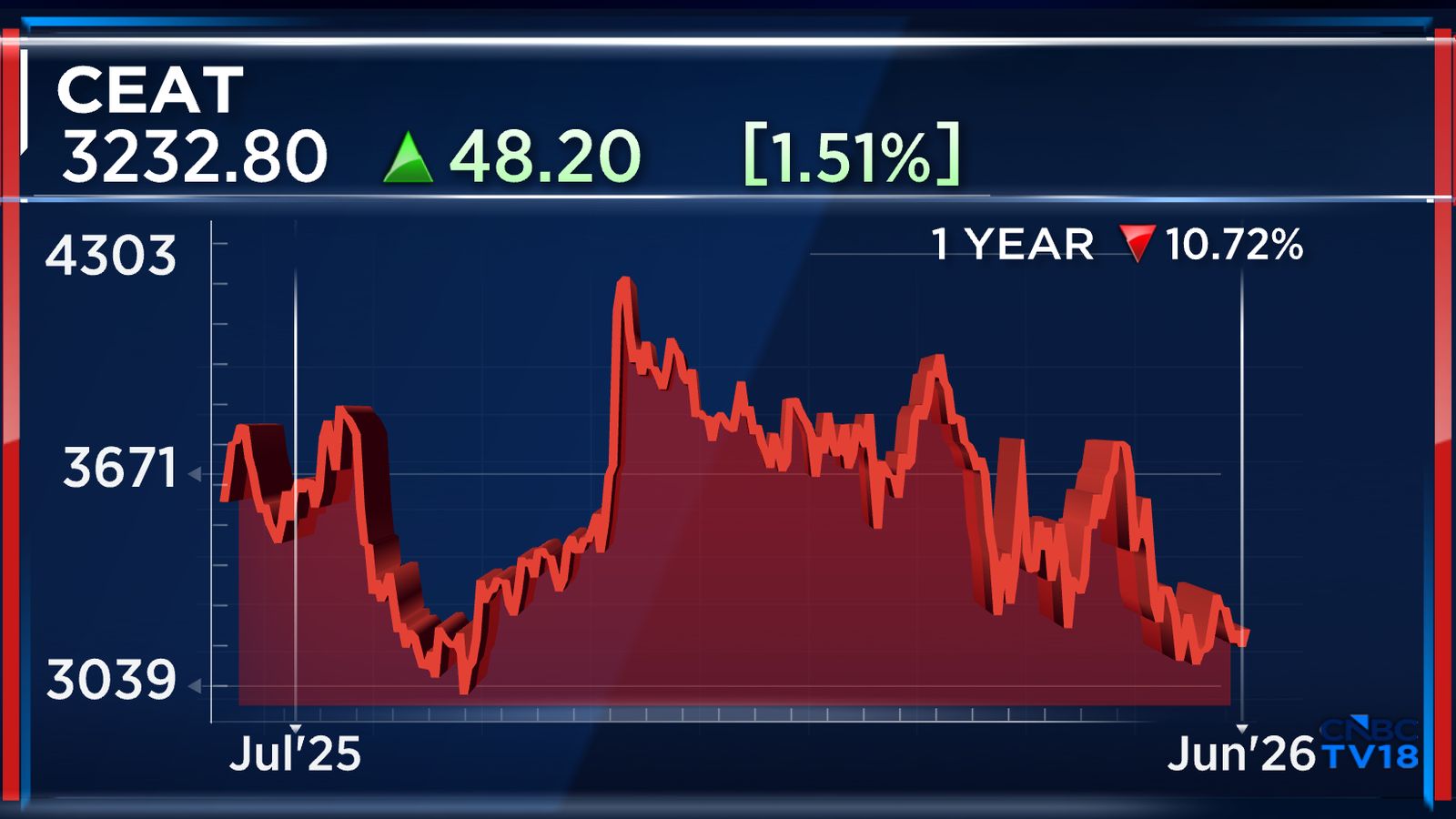
The company, which has a current market capitalisation of ₹13,045.76 crore, has seen its shares lose more than 11% over the last year.
For the full interview, watch the accompanying videoCatch all the latest updates from the stock market here
The company is currently integrating CAMSO's operations following the acquisition, which closed in September 2025. CEAT expects to complete customer transition by September 2026 and fully integrate manufacturing and supply-chain operations by March 2027.
"Scaling up in 2027-28 we expect to go past $150 million, and from there move progressively up to the full capacity of the plant, which is $225 to 230 million," Banerjee said.
Also Read | CEAT Q4 profit more than doubles; margins expand, flags cost pressures
The acquisition is expected to strengthen CEAT's presence in the off-highway tyre segment and expand its international footprint. Banerjee said the company will begin handling the entire CAMSO value chain independently from 2027-28, including raw material procurement, manufacturing and customer servicing.
Alongside the CAMSO integration, CEAT is navigating a sharp increase in raw material costs. Banerjee said the company's raw material basket has risen by around 20% sequentially and could remain elevated through the second quarter of 2026-27 (FY27).
To offset the impact, CEAT has already implemented price hikes of around 6-7% across domestic aftermarket and international businesses and plans further increases of about 5-6% during June and early July.
The company expects margin pressure in the first half of 2026-27 because of the lag between rising input costs and price increases. While CEAT does not provide margin guidance, management acknowledged that profitability will be affected in the near term.
Also Read | CEAT has raw material visibility till May, warns of disruption if conflict continues
Despite the cost pressures, demand remains healthy across key categories including truck and bus radials and two-wheelers. Banerjee said demand trends seen in the previous quarters have continued into the current quarter, although higher prices could lead to moderation in the second quarter.
CEAT is also focusing on expanding its international business, which currently contributes around 20% of revenue. The CAMSO acquisition is expected to increase that share to 23-24% immediately.
Over the next three to five years, the company aims to raise international business contribution to around one-third of consolidated revenue through exports, local product development, overseas sales teams and distribution infrastructure.
"We may look at an ambitious target of one-third of our entire turnover coming from international business," Banerjee said.
The company also plans to strengthen its position in key domestic segments. CEAT is already a market leader in the two-wheeler tyre segment and aims to become a leader in passenger vehicle tyres over the next three to five years while increasing its market share in truck and bus radials.
The company, which has a current market capitalisation of ₹13,045.76 crore, has seen its shares lose more than 11% over the last year.
For the full interview, watch the accompanying videoCatch all the latest updates from the stock market here
/images/ppid_59c68470-image-178040253882155324.webp)




/images/ppid_59c68470-image-178048255882533373.webp)



/images/ppid_59c68470-image-178039009537814245.webp)